Skip to content

An Encyclopedia of Gardening for Colored Children

An Encyclopedia of Gardening for Colored Children is an innovative book by writer Jamaica Kincaid and artist Kara Walker. Despite the title, it is not for the youngest of readers, and the word ‘colored’ is a pointed, satirical use of an antiquated term. The second half of the title indicates the book’s purpose: An Alphabetary of the Colonized World. In form, the book calls to mind children’s books of centuries past, which were meant as vehicles of moral education. This aim is true here, too, but the content is distinctive for its intense focus on plant discovery and naming in the historical context of conquest, colonial exploitation, and slavery. This book is a necessary counter-narrative to traditional white Eurocentric perspectives on botany and human-plant relationships.

Kincaid is known for her literary style and her deep botanical knowledge; Walker is best known for her silhouettes and large art installations that both employ and transform racist imagery of past eras. Though each alphabetical entry is brief, all are dense with layers of meaning. Kincaid’s sentences twist and turn as they disentangle a plant’s context. Here are excerpts from the Amaranth entry:

“When the Spaniards were not committing genocide against the peoples they met, who had made a comfortable life for themselves and created extraordinary, glorious monuments to their civilizations, they were forcing them to abandon this source of physical and spiritual nourishment and replace it with barley wheat, and other European grains. This, along with many other cruelties, led to the decline of the Aztecs and the Inca.” Contemporary gardeners are not immune to a bit of sly critique: “Some gardeners, when reflecting on its [amaranth’s] history and its appearance in their garden as an ornamental, have a very fleeting debate within themselves over the ethics of growing food as an ornamental.”

Walker’s illustrations are thought-provoking: two enslaved Black men laboring under the weight of enormous cotton bolls while, on top of one puff of cotton, a white man in colonial dress takes his ease, smoking a pipe. The illustration accompanying the Guava entry shows a Black woman reaching toward a fruit while poised on a shipping crate marked “Exotic Fruits,” “For Export,” while an impish white boy lifts up the back of her dress. The visual double entendre here speaks volumes.

Though at times veering toward didactic or opaquely allusive language, there is much to learn from this book and its illuminating explorations of plants and their complex histories.

Reviewed by Rebecca Alexander.
The Weeds


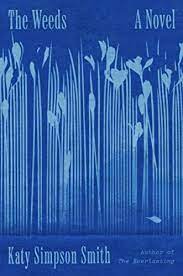
It’s hard to imagine a more botanical novel than Katy Simpson-Smith’s The Weeds, which takes its narrative structure from Richard Deakin’s 1855 book Flora of the Colosseum of Rome, or, Illustrations and Descriptions of Four Hundred and Twenty Plants Growing Spontaneously upon the Ruins of the Colosseum of Rome. The primary characters are two intentionally unnamed women, one in 2018 and the other in 1854, and the occasional refrain of a ghost, the unsettled spirit of Richard Deakin hovering over the Colosseum.

The contemporary woman is a graduate student from Mississippi, gathering plant observations for her thesis advisor. She is a keen observer of plants and people, and we soon learn she has recently lost her mother (who also had a strong connection with plants). As she works on the Rome Colosseum project, she develops an idea for a thesis exploring climate change through the plant life in Jackson’s Mississippi Coliseum. The 19th century woman has transgressed the norms of society: she is eager to avoid an arranged marriage and takes up petty thievery to make herself unmarriageable. The “you” addressed in her narrative is her lover, a woman. She works as Deakin’s indentured assistant, observing and describing the plants.

Both women consider the wild plants in context (how are they used by humans and animals, how they fit in an ecosystem, how climate affects them). For this, both are rebuked. The thesis advisor is dismissive, telling his student she has “an anecdotal mind,” whereas true scientists (men) are rational, and do not allow sentiment to intrude. Her role is to record and learn, his role is to interpret and author. The fictional Deakin tells his assistant that science is knowledge freed from emotion, and she wonders “how many days or centuries it will take for him to be proven wrong.” Whenever either woman mentions mystical, medical, or agricultural associations of the plants, they are told these things are irrelevant. But the 19th century woman believes “there is a bias against time here, and I must fault science for its disregard of history. Does it think knowledge is not accumulated but sudden?”

By turns furious, hilarious, and botanically erudite, this deeply feminist novel shines a light on the relative invisibility of women’s contributions to botany in particular and science in general. The women characters are never named because that has so often been the case in real life. Nothing in the historical record suggests a resemblance between the fictional Richard Deakin and the real one, but there are undoubtedly many instances of women overlooked and omitted as co-authors and researchers, whose contributions to the pool of knowledge remain unrecognized. Their absence from the record is a ghost that should haunt us.

The book includes a dozen exquisite graphite drawings by Kathy Schermer-Gramm, depicting selected plants of the character’s proposed Flora Colisea Mississippiana. If you want to explore Deakin’s book, a digitized copy is linked here and in the catalog record.

Reviewed by Rebecca Alexander, published in the Leaflet for Scholars, Volume 10, Issue 10, October 2023.

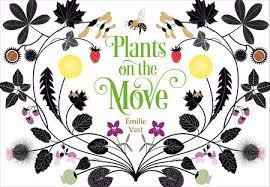
Plants on the Move

With its stylized but clearly recognizable illustrations, Plants on the Move introduces readers of all ages to the various ways plants travel and multiply. It is divided into sections by type of movement: plants that creep or explode of their own accord, and those that move with the aid of wind, water, or the help of mammals, birds, and ants, including those that carry, drop, or ingest their fruits and leave the seeds behind. Humans also help distribute plants, both inadvertently and intentionally.

Especially entertaining are the cutaway diagrams of the digestive tracts of a blackbird and a mouse, mapping the journey of a berry from one end to the other. The charming illustrations do an excellent job of representing traits of some plants that are prolific spreaders if not downright invasive: note the bursting seedy artillery of impatiens and violets (which also have reaching stolons), the hooked fruits of burdock, the creeping tendencies of buttercup, and the tunneling habits of lily of the valley.

The section on cultivated plants explains the role of anthropochory (plant movement generated by human intervention), and lists many plants that now exist worldwide because we saved seeds, transported, and planted them. There is a short list of other scientific terms (all ending in –chory) which are so effectively illustrated throughout the book.

Reviewed by Rebecca Alexander

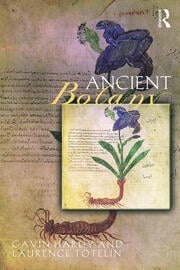
Ancient Botany

People in classical Greece and Rome knew a lot about botany. As Hardy and Totelin explain, modern readers just need to adjust their understanding of botany to fit the lenses through which the ancients were looking.

This book plumbs the works of an amazing number of Greek and Roman authors for descriptions of and references to plants. Hardy and Totelin place this information in the social, economic and cultural context of the times the texts were written, using an impressive multidisciplinary approach.

Ancient Botany is organized into chapters on how ancient authors knew about plants (for instance, by reading previous authors, personal observations, and hearsay); how they understood the organization of the plant world; how they named and described plants; how they described a plant’s life cycle; and how they understood the connection between a plant and its location. Each chapter is clearly organized, well developed, and supported by copious attribution of sources.

Hardy and Totelin make clear throughout where there are problems with the sources. They note when a text uses an older text for its information, and where previous scholars have assigned a text to the wrong author.

They also note where ancient scholars warn readers about earlier authors’ incorrect information. In one example, Theophrastus, a major Greek source of plant information, notes that the idea that it is necessary to dig peonies at night to avoid being attacked by woodpeckers “seems ludicrous and far-fetched” (p. 45).

Ancient Botany includes brief discussion of modern controversies related to the study of botany. The text also includes many places where questions are still unanswered and more work needs to be done – helpful hints for Ph.D. candidates looking for dissertation topics.
Another helpful aspect of this book is how it connects ancient understanding to modern. For instance, some ancient texts include lichens and fungi in the plant world. Hardy and Totelin explain why modern science has removed them, partly because of our knowledge of chemistry the ancients did not have. The book makes a good case for the value of the ancients’ organization and description of plants, given the information available at the time.
For the ancients, plants were valued and described primarily for their practical value. These texts focus on the medical value of plants, their usefulness as food sources, and as sources of construction material and fuel. An example of this value is that the Romans were “fascinated (obsessed even)” (p. 134) by grafting to improve fruit production. Several authors use sexual analogy to describe the process, common anthropomorphizing in ancient writing about plants.
Of particular interest to ornamental gardeners, the section on Roman gardens describes serious competition among gardeners. The wealthy developed very elaborate gardens as symbols of their wealth and power. Pliny the Elder attacked these “useless” gardens because they produced no food and thus robbed the poor of the food that might have been grown there. Martial praised a farm for its focus on crops and animals. He wrote approvingly that it “Is not ordered with idle myrtle-groves,/Widowed plane trees, and clipped box-rows” (p. 165). Here he alludes to topiary art, reportedly perfected during the reign of Augustus Caesar.
Much intriguing detail can be mined from this book. It provides a convincing picture of how the Greeks and Romans understood the plant world. The reader can learn about what people knew then, where their knowledge differed from modern understanding, and where traces of that classical knowledge remain with us.
Published in the Leaflet for Scholars, April 2022, Volume 9, Issue 4.

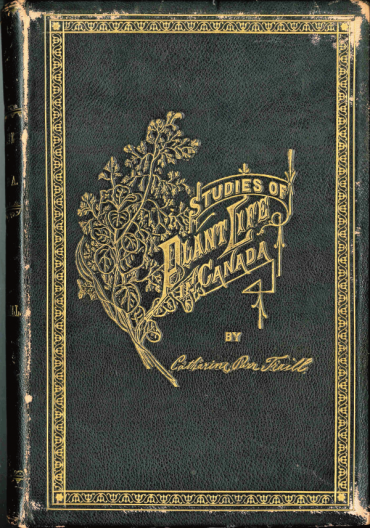
Studies of Plant Life in Canada

Catharine Parr Traill (1802-1899) and Susanna Moodie (1803-1885) were sisters who immigrated to Canada from England in 1832.  Both newly married, they were part of a movement of settlers from Britain seeking to escape poverty by moving to Upper Canada (now the province of Ontario), where they hoped to establish a prosperous new home.

The reality was quite different.  Although they settled within 50 miles of each other, the harshness of travel and limited communications prevented them from visiting each other for two years.  “Sisters in the Wilderness” is a biography by Charlotte Gray about the two sisters who both eventually thrived as authors in their new home, despite a bleak beginning.

The sisters had a relatively good start in life.  Gray described their household of six sisters and two brothers – all who lived long lives – as rich in books and creativity.  The family was related to Sir Isaac Newton and inherited much of his library.  But the father died young, and the family was left with limited resources.  Out of this experience, six of the siblings became published authors, a very unusual success rate spurred by necessity.

The two Canadian sisters were especially prolific.  Susanna Moodie is best known for “Roughing it in the Bush,” her 1852 book about her early years in North America.  Her work was the inspiration for modern Canadian writer, Margaret Atwood, in her 1970 book of poetry, “The Journals of Susanna Moodie.”

However, the focus of this review is on Catharine Parr Traill.  Named after the surviving, last wife of King Henry VIII of England (and a distant relation), she was a survivor herself, living to 97 and achieving a great deal of fame in her later life, primarily for her books about the wildflowers of Canada.  She was an avid field botanist and “took a serious interest in every aspect of a plant: its appearance, its life cycle, its medicinal and food value, its relation to other plants.”  She also recognized that the wild country in which she struggled to survive was beginning to disappear, and along with it many of the native plants.

To help with her research, she acquired a small library of books intended for professional botanists.  However, her goal was to publish a book for a more general audience.  She began by writing articles for both Canadian and American popular magazines.

Traill was an excellent observer and writing, but she lacked the artistic skills to illustrate the book she hoped to publish.  By the 1860s, her sister’s children had grown up and one of them, Agnes Moodie Fitzgibbon (1833-1913), was an accomplished painter.  Fitzgibbon also became a tireless promoter of her aunt’s book, signing up many buyers before the book was printed.  A young widow, she drew ten illustrations for the book and printed 500 copies of each.  She then engaged her three daughters, ages 16, 13, and 10, at their dining room table to hand color every one – a total of 5,000 illustrations!

Canadian Wild Flowers” was published in 1868.  The timing was excellent, as it was just a year after Canadian independence.  Traill writes in the Preface: “With a patriotic pride in her native land, Mrs. F. [Agnes Moodie Fitzgibbon] was desirous that the book should be entirely of Canadian production, without any foreign aid, and thus far her design has been carried out; whether successfully or not, remains for the public to decide.”  This gamble was very successful as the book was indeed a popular expression of national pride.  The Miller Library has a facsimile of this book.

Traill’s contribution to this first book was in the form of narrative descriptions of the plants in the illustrations.  As this only totaled 30 species, the botanical information is limited, but the sumptuous illustrations ensured the book’s popularity.

Traill’s second wild flower book, “Studies of Plant Life in Canada,” was published in 1885 with the rich details of author’s significant knowledge of the native plants where she had now lived for over 50 years, roughly 100 miles northeast of Toronto.  Once again, her niece (now remarried and credited as Mrs. Chamberlain) provided the illustrations, but these are smaller and were printed using chromolithography, a relatively new process that eliminated the need for hand coloring.  Instead, the focus of this later book (in the Miller Library collection) is on the text with descriptions of over 400 species, including trees, shrubs, and ferns.


Excerpted from the Winter 2022 issue of the Arboretum Bulletin


Plants of the world

[Plants of the World] cover

“Plants of the World” by Maarten J. M. Christenhusz, Michael F. Fay, and Mark W. Chase is the first book to explore systematically every vascular plant family in the world. The plants are organized in a modern phylogenetic order, in which more than 450 families are described and illustrated.

Following an introduction that sets out the various aspects that are covered in the treatments, the entries follow an encyclopedic format with information about distribution, phylogeny and evolution, numbers of genera and species, uses, largest genome, and etymology. Illustrations are color photographs showing key features of selected representatives. Small global distribution maps are included.

The information isn’t detailed but the entries capture in a summary manner the basic features of every vascular plant family in the world. The end matter includes a glossary, further reading, general references and index.

This ambitious book seems like an important reference work that will set the tone for further works to follow.

Excerpted from the June 2019 Leaflet for Scholars Volume 6, Issue 6

Flora : inside the secret world of plants

[Flora] cover

I didn’t expect to like “Flora: Inside the Secret World of Plants.” Publications from big institutions (in this case the Smithsonian and Kew Gardens) can be ponderous. At first glance, it looks like an overblown coffee table book. Lovely photos, but – yawn – not much interesting content.

I was wrong. I recommend this to every gardener. Start with the Table of Contents – pedantic advice, yes, but seeing the layout helps you understand the book’s flow. First, it answers the question, what is a plant?

The rest is very systematic, starting from the ground up with roots, moving along the stems and branches to the leaves and flowers, and finally seeds and fruits. It makes a lot of sense to read this in order.

The publisher is DK, well known for books with strong graphic design and as expected, the illustrations are excellent and enhance the text. The individual concepts are brief, easy bites, but as you read, you’ll pick up all sorts of knowledge about the plants you love that will inform your gardening. Along the way, too, there are brief bios of the people of plants – the botanists, the gardeners, the illustrators. It’s a surprisingly complete package.

Excerpted from the June 2019 Leaflet Volume 6, Issue 6

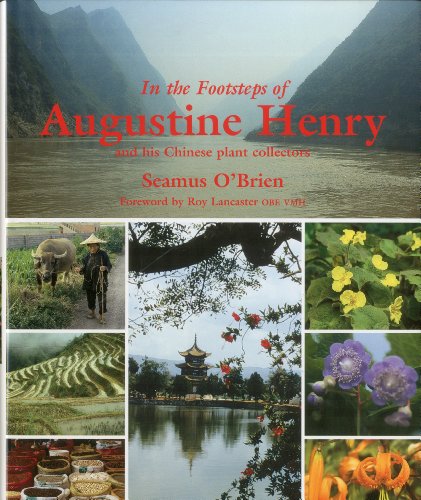
In the Footsteps of Augustine Henry and his Chinese Plant Collectors

While you’re browsing the tables at your favorite plant sale or nursery, you may notice that many of the plant treasures tempting you have “henryi” or some similar variation in their name. In most cases, these honor Augustine Henry, the Irish customs official who worked for the Chinese government in western China during the 1880s and 1890s.

Henry was not sent there to collect plant specimens, but that was his passion, and his day job allowed him far greater access than most outsiders had to the rich flora of the countryside. His discoveries and his tireless efforts to share those discoveries—through his letters and the seeds, bulbs, and dried plant specimens he sent back to Europe—led to many, many important plants being introduced to western horticulture.

My excitement over Henry was sparked by my recent reading of In the Footsteps of Augustine Henry and his Chinese plant collectors by Seamus O’Brien. The author not only tells the history of his fellow Irishman, he also tells of his own recent expeditions to the areas that Henry explored, especially those that were soon after destroyed by the rising waters of the Three Gorges Dam.

You can join in celebrating Henry by buying some of his plants, including Lilium henryi, Parthenocissus henryana (Silvervein Creeper), and Rhododendron augustinii. Other plants introduced because of his research—and the enthusiasm for the plants of western China that his research sparked—include Acer griseum (Paperbark Maple), Davidia involucrata (Dove Tree), and Hamamelis mollis (Chinese Witch Hazel).

In the Footsteps is also a winner of The Council on Botanical and Horticultural Libraries’ Annual Literature Award for 2012, one of the highest awards for a book on horticulture or botany. Please come and take a look at this very special book in the Miller Library.


Published in Garden Notes: Northwest Horticultural Society, Fall 2012