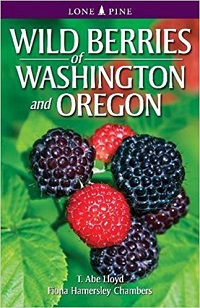
There are several books in the Miller Library collection on the wild berries and similar fruit of the native plants of the Pacific Northwest. However, none of these are recent, so it is delightful to add “Wild Berries of Washington and Oregon” to the collection, especially as it is published by Lone Pine, which has a history of publishing excellent field guides with nearly weatherproof covers, for exploring our region.
T. Abe Lloyd and Fiona Hamersley Chambers have created a practical guide to finding, foraging, and savoring the bounty of our local berries. It is a beautiful book, too, with excellent close-up photographs. If these don’t make your mouth water, the authors’ favorite recipes—and they are both experienced foragers—surely will.
This is not an ethnobotany book, although both of the authors studied with noted ethnobotanist Nancy Turner at the University of Victoria. It is not surprising that the entries in this book include the historical, Native American uses of each fruit, including the management of the prized plants that produce them. This includes more recent adaptations native peoples learned from Europeans, such as this treatment of red-osier dogwood (Cornus sericea) berries: “They were also occasionally stored for winter use, either alone or mashed with sweeter fruits such as serviceberries, and in more modern times with sugar.”
Berries are defined here in the popular sense, so included are drupes, pomes, and a few other fruits such as rose hips and juniper “berries”. Escaped and invasive berry producing plants such as the several types of introduced blackberries (Rubus species) are given equal treatment since you’ll easily find these, and most are tasty. Poisonous berries are carefully described, as are toxic parts of plants bearing edible fruit.
Excerpted from the Spring 2016 Arboretum Bulletin.
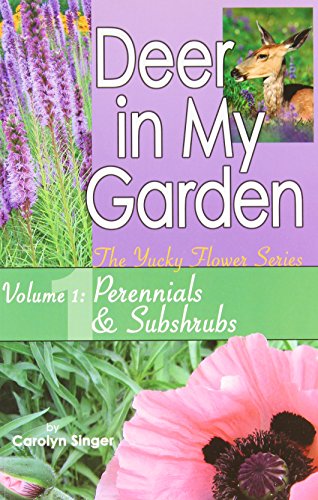 Grass Valley, California is on the outer rim of our region, but the resident gardening columnist Carolyn Singer is worth knowing about, especially for gardeners in the foothills of the Cascades. She is very experienced with the ravages of deer, and address this concern in two books. “Deer in My Garden” (2006), was largely written while the author spent the summer of 2005 in Seattle and focuses on perennials and subshrubs. “Deer in My Garden: Volume 2” (2008) considers the impact on groundcovers and garden edge plants.
Both books are part of “The Yucky Flower Series,” honoring the advice of her then 3-year-old grandson: “The deer wouldn’t eat yucky flowers!” So that is what she planted. Her deer-resistant recommendations are based on her own experience, or those of gardeners who grew trial plants for her, knowing that in the interest of science (or cervid consumer selection), the trial plants might disappear.
While yucky to deer, the selected plants are all quite lovely to gardeners and would make many other recommended plant lists. Most are drought tolerant and adapted to a wide temperature range. Best of all, the author enthusiastically rates the maintenance requirements of most as “EASY!” to “VERY, VERY EASY!” Deer or no deer, these are great garden plants.
Excerpted from the Spring 2015 Arboretum Bulletin
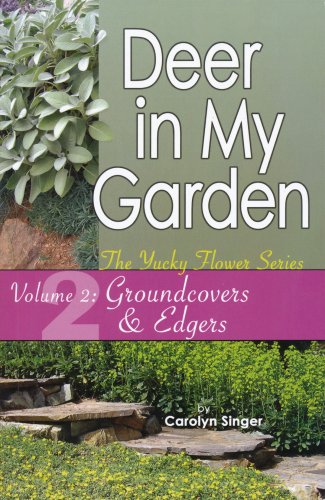 Grass Valley, California is on the outer rim of our region, but the resident gardening columnist Carolyn Singer is worth knowing about, especially for gardeners in the foothills of the Cascades. She is very experienced with the ravages of deer, and address this concern in two books. “Deer in My Garden” (2006), was largely written while the author spent the summer of 2005 in Seattle and focuses on perennials and subshrubs. “Deer in My Garden: Volume 2” (2008) considers the impact on groundcovers and garden edge plants.
Both books are part of “The Yucky Flower Series,” honoring the advice of her then 3-year-old grandson: “The deer wouldn’t eat yucky flowers!” So that is what she planted. Her deer-resistant recommendations are based on her own experience, or those of gardeners who grew trial plants for her, knowing that in the interest of science (or cervid consumer selection), the trial plants might disappear.
While yucky to deer, the selected plants are all quite lovely to gardeners and would make many other recommended plant lists. Most are drought tolerant and adapted to a wide temperature range. Best of all, the author enthusiastically rates the maintenance requirements of most as “EASY!” to “VERY, VERY EASY!” Deer or no deer, these are great garden plants.
Excerpted from the Spring 2015 Arboretum Bulletin
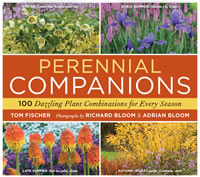 From Oregon, Timber Press editor-in-chief Tom Fischer has created his own book, “Perennial Companions,” that demonstrates 100 design combinations using herbaceous perennials and ornamental grasses. I found it best to look at the right hand, full page photographs first (almost like a flip book), then stopping at my favorites to read the interpretive material on the matching left hand page.
Excerpted from the Fall 2010 Arboretum Bulletin.