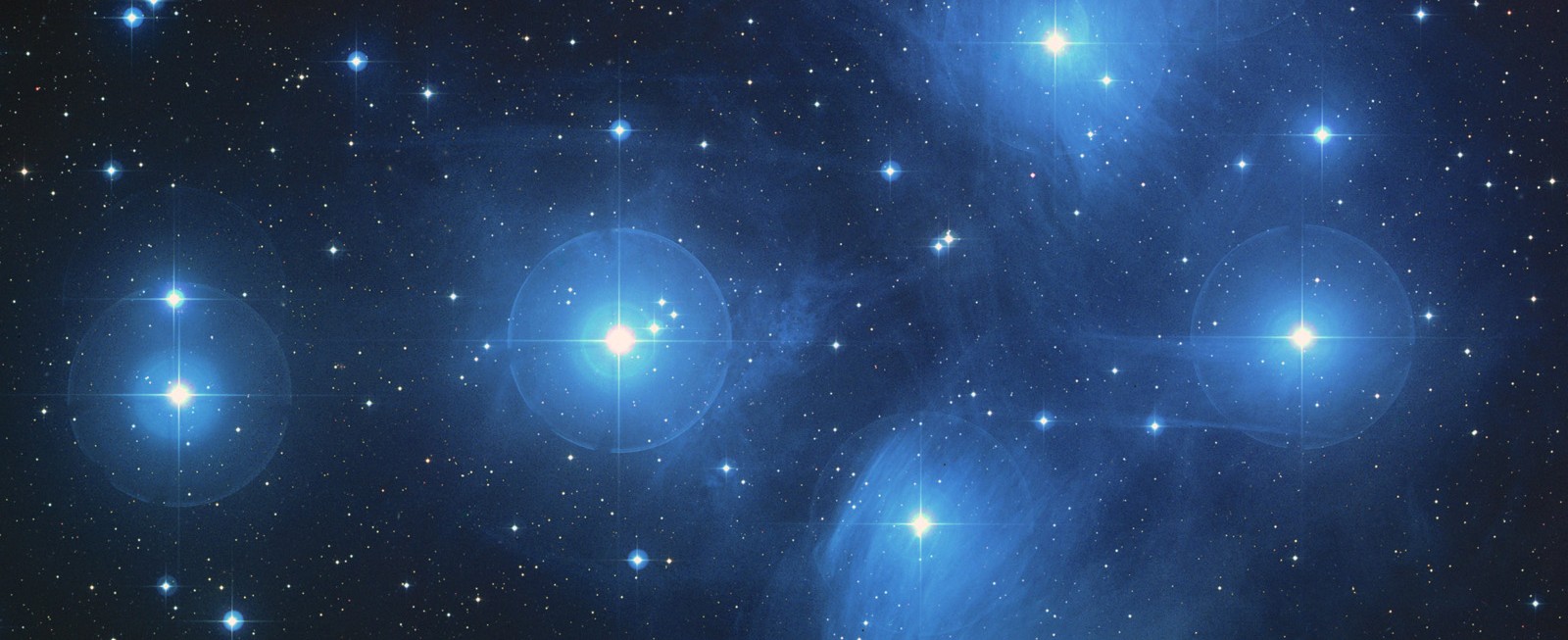
Roughly half of the coursework in Pre-MAP will be spent working on a research project in a very small group with mentors from the Astronomy Department, such as graduate students, postdoctoral fellows, or faculty advisors. The research projects typically advance the research goals of your mentor, and so the projects that we offer cover a variety of topics and size-scales from stars to galaxies.
Title: Can Tidal Forces Lead to Habitability on Close-in Earth-
like/Super-Earth Exoplanets?
Mentors: Héctor Emanuel Delgado Díaz
Students:
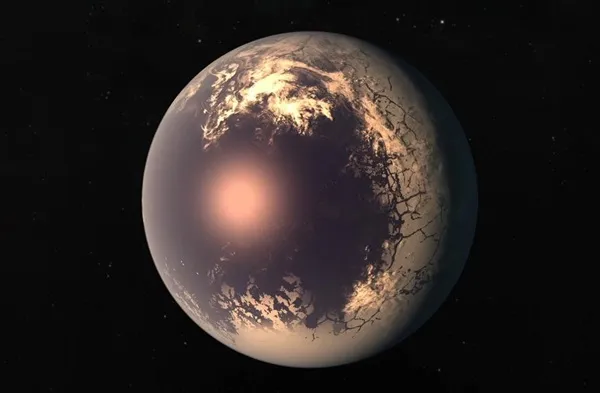

Earth-like and Super-Earths (planets more massive and/or bigger than Earth) have been discovered orbiting other stars. Since these planets may resemble Earth, scientists are wondering whether life (like on Earth) could form there. But because they orbit other stars, this means those stars may not be like the Sun. One such type of star is the M type, the smallest, coolest type of star that we have seen in our sky. Some of these planets orbit M stars and they are pretty close to the star! This is good because if the star is cooler, it releases less heat hence the planet should be closer to feel the same heat we feel here on Earth with respect to the Sun. But it comes with a risk (or many, but I want to focus on one): being too close to the star would create an effect called “tidal forces” that can alter the orbit and the rotation of the planet. My previous work has shown that these forces can take a planet with good temperatures for life and alter it to extreme temperatures inhospitable for life. However, there could be a chance that the opposite could happen where the planet has extreme temperatures and could be changed to perfect conditions for life. Your job for this project would be to find the conditions needed for this to occur!
Software: UNIX commands, numpy, matplotlib
Size of data: Data will be more than 5GB so I will be guiding the students to join the RCC club on Hyak Klone.
Title: Confirming Galaxy-Galaxy Strong Lens Candidates with Euclid DR1
Mentor: Juliana Karp
Students:
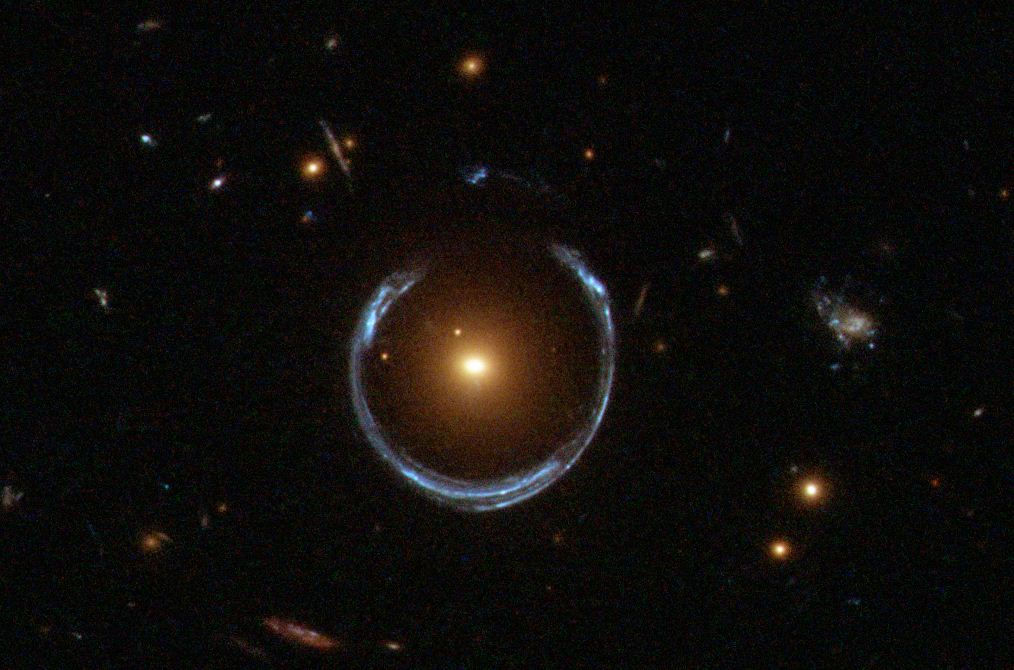
Strong gravitational lensing is a phenomenon where light from a background source is bent by a foreground mass due to Einstein’s theory of general relativity. Galaxy-galaxy lensing occurs when one galaxy lenses light from another galaxy, creating multiple distorted and arc-like images of the background galaxy. Galaxy-galaxy lenses are valuable because modeling them can tell us about the distribution of dark matter in the foreground galaxy, and we can measure the Hubble constant using time delays between images of lensed supernovae. In this project, we will confirm new arcsecond-scale galaxy-galaxy lens candidates identified in spectra from the Dark Energy Spectroscopic Instrument using images from the Euclid telescope.
Software: numpy, matplotlib, astropy
Title: Using Stellar Streams to Map Dark Matter
Mentor: Ella Marin
Students:
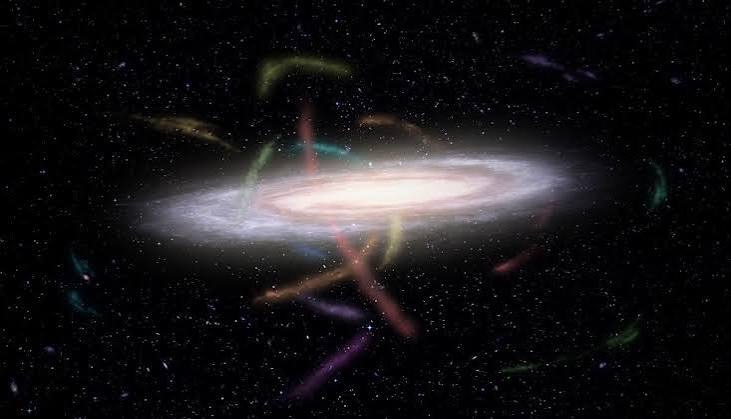
Stellar streams are among the best probes of the dark matter substructure within the Milky Way. As streams interact with dark matter, they retain evidence of those encounters in their structure which can then be used to constrain dark matter properties. In this project, we will explore different techniques to most accurately and completely identify member stars of a specific stellar stream, Ylgr. The results of this project will contribute to the growing list of Milky Way streams, which will give us a better understanding of the structural diversity across the stellar stream population.
Software: python, astropy, matplotlib
Title: Galaxy Morphology Fitting of Euclid Space Telescope Galaxies
Mentor: Charlie Willard
Students:
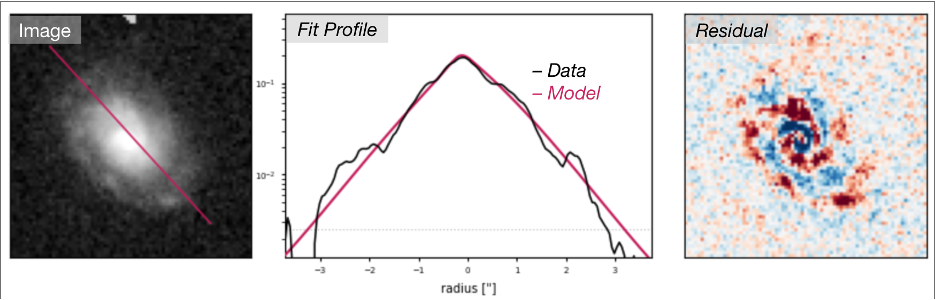
To analyze images of galaxies, we often describe them by the distribution of light in the galactic disk versus the central galactic bulge. Galaxy Morphology is a fundamental subfield of astronomy, and we have come a long way since the Hubble tuning-fork diagram. To do this quantitatively, we now use light profile fitting tools which fit ‘sersic profiles’ to the images. PySersic is an example code package which performs such light profile fitting. We will test the performance of this light fitting tool on simulated Euclid Space Telescope images. Because these are simulations, we know the ground truth. We will compare the PySersic light profile to this ground truth to understand the systematic biases that these methods contain. My research is creating image convolutional neural networks to perform this light profile fitting task using ML. However we still train off of these traditional fitting tools, so we must understand their limitations. There is also the option of fitting on real Euclid Images and comparing to my own models. Depending on how far we get, we can also have you fit light profiles onto real Euclid images, and I can then compare your PySersic results to my own fitting pipeline which uses a tool called GALFIT.
Software: Python, pandas, numpy, matplotlib, conda
Title: Dark Matter in Simulated Disrupting Galaxies
Mentor: Gray Thoron
Students:
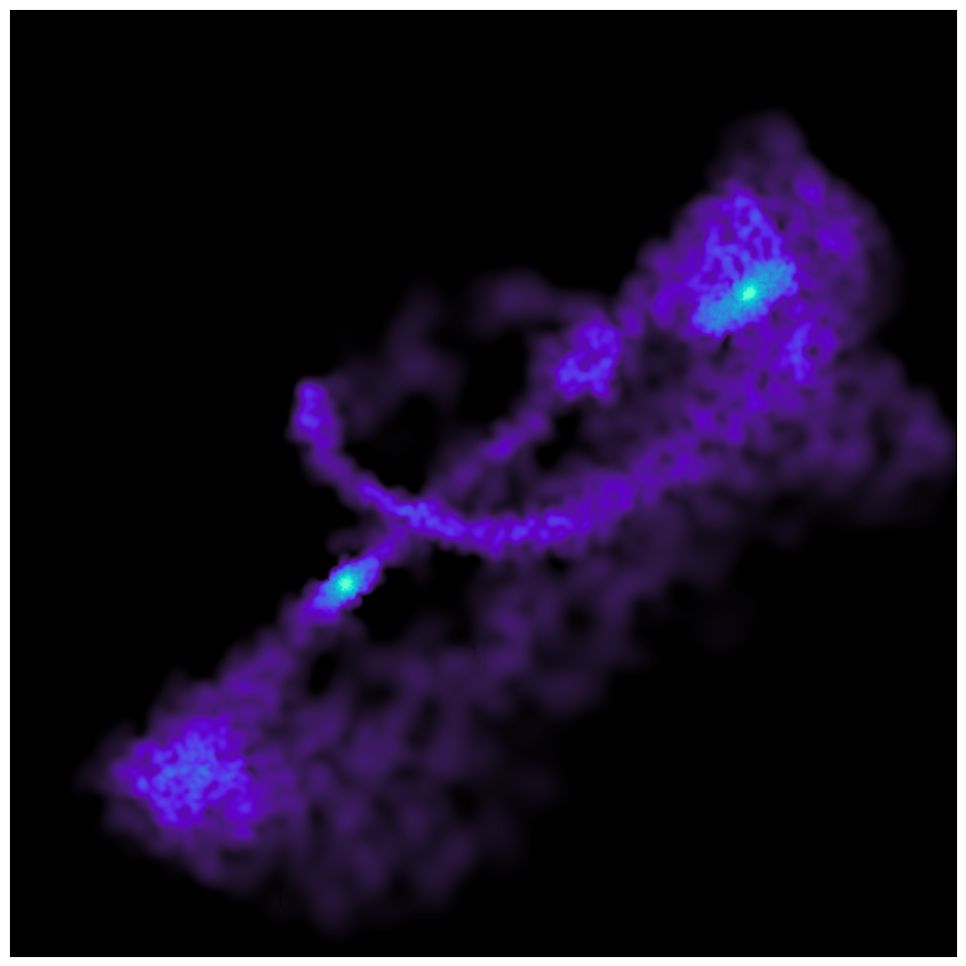
Dark matter, a mysterious substance that only interacts with normal matter through gravity, makes up the bulk of a small galaxy’s mass. Yet it remains unseen as it doesn’t interact with light. We can instead only see its effects on stars and gas. This project asks what does the dark matter and the stars do as a small galaxy falls into the gravitational well of a larger galaxy? In this project we will look at simulated dwarf galaxies around a Milky-Way like host galaxy. We will investigate their velocities and see how these properties change as they disrupt.
Software: Python, numpy, matplotlib
Title: Estimations of Dust Yields from AGB Stars within Dusty Star Forming Galaxies
Mentor: Lauryn Williams and Tiara Anderson
Students:
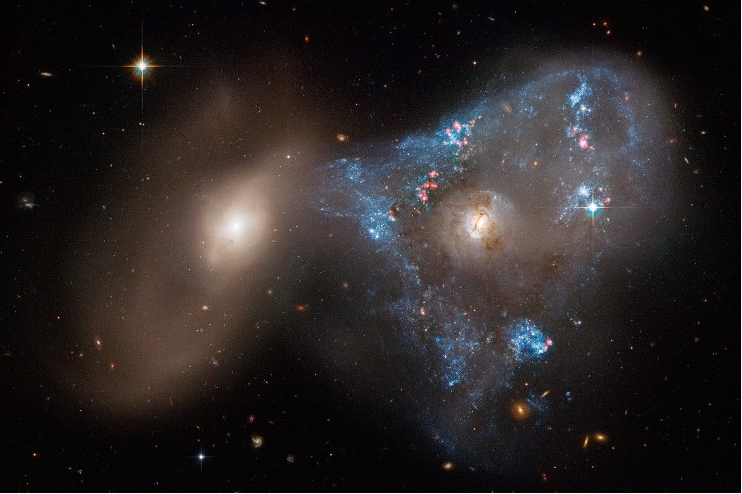
Dusty star forming galaxies (DSFG) go through phases of rapid star formation compared to “regular” galaxies due to the amount of dust they contain. There are multiple mechanisms, both known and unknown, that produce the dust we see in these galaxies, i.e. mergers, active galactic nuclei (AGN), inflows, etc. The student will be looking at the morphologies of these galaxies to learn how to discern where the dust may have come from. Asymptotic giant branch (AGB) stars are known to be major contributors to the dust content within galaxies. The student will be incorporating both observational and theoretical research methods within this project. The observational data provided will include redshifts, stellar mass, and dust attenuation values which tells us how much of the light from the galaxy is interacting with dust. From the observational data, the student will be able to make assumptions about the number of AGB stars within different regions of morphologically differing galaxies. Using those measurements the student will utilize the powerful stellar evolution code, Modules and Experiments in Stellar Astrophysics (MESA), to model AGB stars, their mass loss, and dust contribution to the DSFGs.
Software: MESA, Python/Fortran, matplotlib, astropy