|
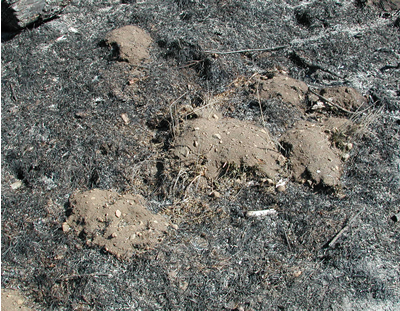
Soil
disturbances by the western pocket gopher, Thomomys
mazama, are conspicuous features at Bunchgrass Ridge and
in meadows throughout the Cascades. Through their tunneling and
mounding activities, gophers
- initiate
succession by removing or burying plants
- reduce
the dominance of grasses and increase the diversity of less competitive
forbs (and the animals and insects that depend on them)
- increase
the heterogeneity of species composition on mounds and at larger
spatial scales within meadows
- provide
sites for establishment of disturbance-dependent species which
would otherwise be absent.
A. Plant succession on gopher mounds
B. Contributions of gopher mounds and castings to meadow community structure
Most
studies of the relationships between gopher disturbance and plant
community structure have been conducted in low-elevation prairies
or grasslands of central and eastern North America. Studies from
higher elevation mountain ecosystems, such as Bunchgrass Ridge, are rare. |
| Soil
disturbance by gophers |
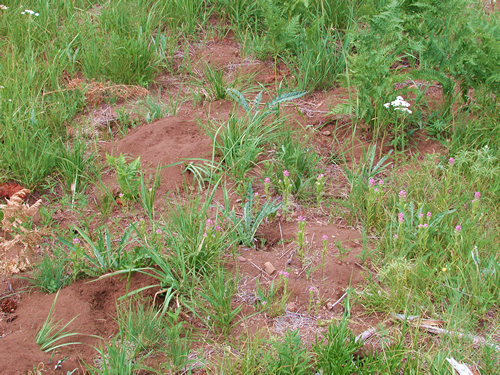 |
| Gopher
activity disturbs the soil, initiating
succession and enhancing plant species diversity. |
|
|
|