February 2, 2026
Researchers convene to disseminate findings that can inform future HIV and TB care in Kenya
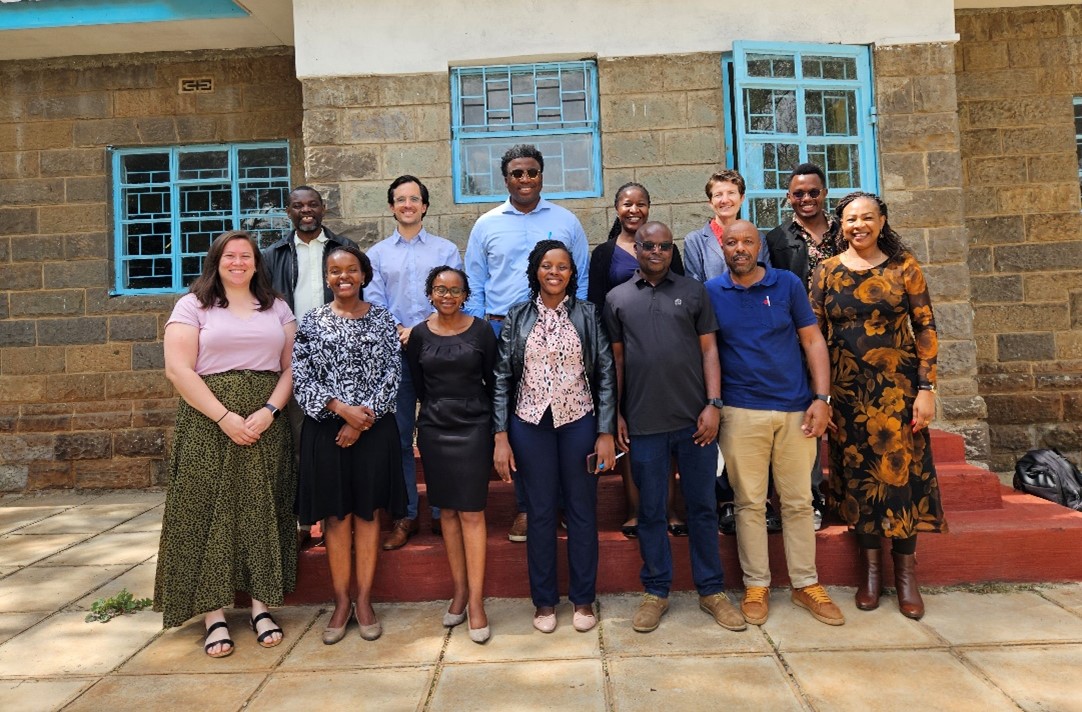
Researchers convened in Nairobi, Kenya on November 14, 2025.
In November 2025, researchers on multiple UW and Kenyatta National Hospital (KNH) collaborative projects focusing on HIV and tuberculosis (TB) convened in Nairobi to share key findings and discuss future directions. Dr. Sylvia LaCourse (Associate Professor with joint appointments in Department of Medicine – Allergy & Infectious Diseases and Global Health) presented on the role of HIV on TB infection detection, prevention strategies and immunity in pregnant women and children.
The shared results concluded more than 10 years of dedicated work by collaborators at UW (Dr. Grace John-Stewart, Dr. Tom Hawn, Dr. Barbra Richardson, Dr. Irene Njuguna), Emory University (Dr. Cheryl Day, Dr. Lisa Marie Cranmer), University of Nairobi (Dr. Lisa Maleche-Obimbo), and Kenyatta National Hospital (Dr. John Kinuthia). Future directions include considerations for policy to guide HIV and TB treatment and preventative strategies to improve health outcomes in Kenya.
From analyzing samples from past cohorts of children with HIV, exposed to HIV but not infected, and not exposed HIV, the research team led by Drs. LaCourse, John-Stewart, and Day looked at predictors of anti-mycobacterial immunity (including HIV exposure, HIV infection, antiretroviral treatment, and other factors), the influence of HIV exposure or infection on ‘trained immunity’, and the effects of this immunity on susceptibility to TB.
In a randomized controlled trial, the study team found that isoniazid (an antibiotic used to treat or prevent TB) did not significantly prevent infection in HIV-exposed infants (LaCourse 2021).
Dr. Samantha Kaplan, Jaclyn Escudero, and Jerphason Mecha led clinical analyses that found that pregnancy significantly influenced TB diagnostics and immunity. Compared to a skin test (TST) to detect latent TB infection, the QFT-Plus advanced blood test identified three times as many pregnant women with TB infection (Kaplan 2022). Women with HIV were more likely to test positive for TB infection by TST during pregnancy and postpartum than women without HIV (Escudero 2023). Similarly, risk of infant TB infection as measured by TST was three times higher in HIV-exposed infants compared to HIV-unexposed infants (Mecha 2024).
In the realm of more advanced TB infection assessments, when a team led by Dr. Day looked beyond the usual immune signal (interferon-gamma), they found many more children whose immune systems had reacted to TB. A UW team led by Dr. Javeed Shah found that immune responses specific to TB were dynamic across pregnancy, and responses in early postpartum may contribute to increased risk for progression to TB disease (Saha 2022).
Exposure to maternal HIV/ART modified infant immune responses in the short-term, with some later-term impact, while ART in children living with HIV rapidly improved general and Mtb-specific CD4 responses (Day 2025). With the support of an NIH Diversity Supplement, Dr. Ashenafi Cherkos determined that overall, IPT (Isoniazid Preventive Therapy) and TB co-infection had very little effect on infant growth and clinical outcomes.
We look forward to sharing future updates later this year.