March 4, 2026
RISE collaborators attend launch meeting in Kenya for HIV/ART exposure on child neurodevelopment research
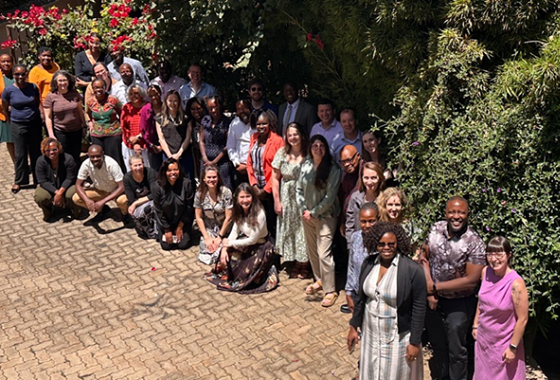
RISE collaborators from multiple research institutes met in Nairobi, Kenya.
Awarded in late 2025, RISE aims to evaluate tools for screening children for neurodevelopmental delays and to identify interventions to optimize neurodevelopment among children with and without in-utero HIV/ART exposure in Botswana, Kenya, and Zimbabwe. It includes three distinct research Projects and three Cores that provide shared resources, focusing on scientific administrative support, data management and analysis, and dissemination and stakeholder engagement, to facilitate the Projects. Investigators come from partner institutions in Kenya (University of Nairobi, Kenyatta National Hospital, UW-Kenya, Kenya Medical Research Institute), Zimbabwe (Zvitambo, Queen Mary University, London), Botswana (Botswana Harvard Partnership, Mass General Hospital), Mayo Clinic, Seattle Children’s Hospital, University of California, San Diego (UCSD), Emory University, and Indiana University.
Multiple Principal Investigators, Dr. Grace John-Stewart (University of Washington), Prof. Dalton Wamalwa (University of Nairobi), Dr. Kathleen Powis (Botswana Harvard Partnership, Mass General Hospital), and Prof. Andrew Prendergast (Queen Mary University of London) prioritize building research capacity and elevating the scholarly contributions of early-career researchers. They used the opportunity of the launch meeting to lead engaging discussions on global priorities for children who are exposed to but infected with HIV and how RISE addresses them, opportunities for the next generation of scientists, and optimizing dissemination and impact of the program.
Additional meeting highlights included discussing new directions in neurodevelopment (influential biologic and social exposures, caregiver engagement), sharing the latest advances in neuroimaging, and individual presentations by early-stage investigators on their areas of expertise that benefit RISE. Dr. Cyrus Mugo (Kenyatta National Hospital) facilitated a panel discussion – comprised of public health stakeholders from Botswana, Kenya, and Zimbabwe – focusing on ministry of health priorities for neurodevelopment screening and interventions and the best way to move research into programs.
There also was a demonstration of the Friendship Bench intervention, which trains community health workers to provide basic Cognitive Behavioural Therapy with an emphasis on Problem Solving Therapy, activity scheduling, and peer led group support, conducted by intervention facilitators from another trial based in Mbagathi, Kenya. It was a valuable learning experience for RISE collaborators to watch the demonstration and learn more about the skills and training to conduct the intervention successfully. In of the projects nested in RISE, the Friendship Bench is one of three evidence-based interventions that will be adapted and refined to create a novel maternal-infant intervention that will be tested for efficacy.
The last day of the meeting included learning about research in Botswana, Zimbabwe, and Kenya related to HIV/ART exposure on children, leading to a larger discussion on the natural synergies to optimize between the research portfolios.
The next RISE meeting will be held in Botswana in 2027. We look forward to sharing future updates as the program progresses.