July 14, 2026
BONDS study engages stakeholders to adapt a child development intervention package in Kenya
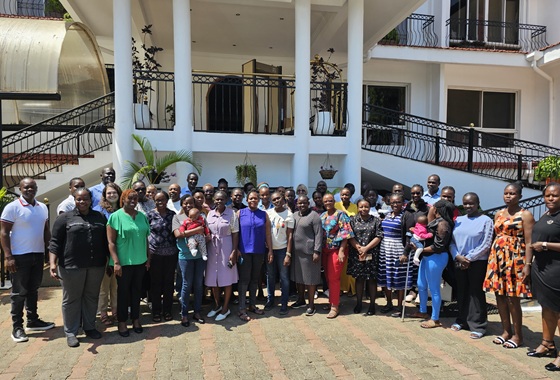
BONDS study team members and participants at the Intervention Adaptation Workshop in Kenya
On June 10-12, 2026, the BONDS study team hosted about 30 partners and community collaborators in Kenya for a workshop to review a child development intervention package and identify adaptations to make it culturally appropriate for use in Kenya. Participants included healthcare providers, community health promoters, pregnant women, mothers of small children, and County Ministry of Health representatives.
The BONDS study (Building Opportunities for Nurturing care to enhance child Development in Eastern and Southern Africa) is part of the Researching Interventions and Implementation Strategies to Evaluate the Health and Development of Children Affected by HIV in Sub-Saharan Africa (RISE) Consortium. Kenya study team members, Dr. Irene Njuguna (Emory University), Dr. Christine McGrath and Dr. Sarah Hicks (UW Department of Global Health), and Professor Dalton Wamalwa, Dr. Caren Mburu, and Dr. Beatrice Mutai (University of Nairobi), attended the workshop.
The study will be implemented in Botswana, Kenya, and Zimbabwe and seeks to determine whether a scalable, community health worker-administered package of evidence-based interventions improves neurodevelopment for all children and closes the developmental gap between children who are exposed or not exposed to HIV. The intervention package includes caregiver problem-solving therapy (Friendship Bench), a curriculum-based infant and young child feeding program, and a play-based early learning curriculum, delivered from pregnancy through the first two years of life.
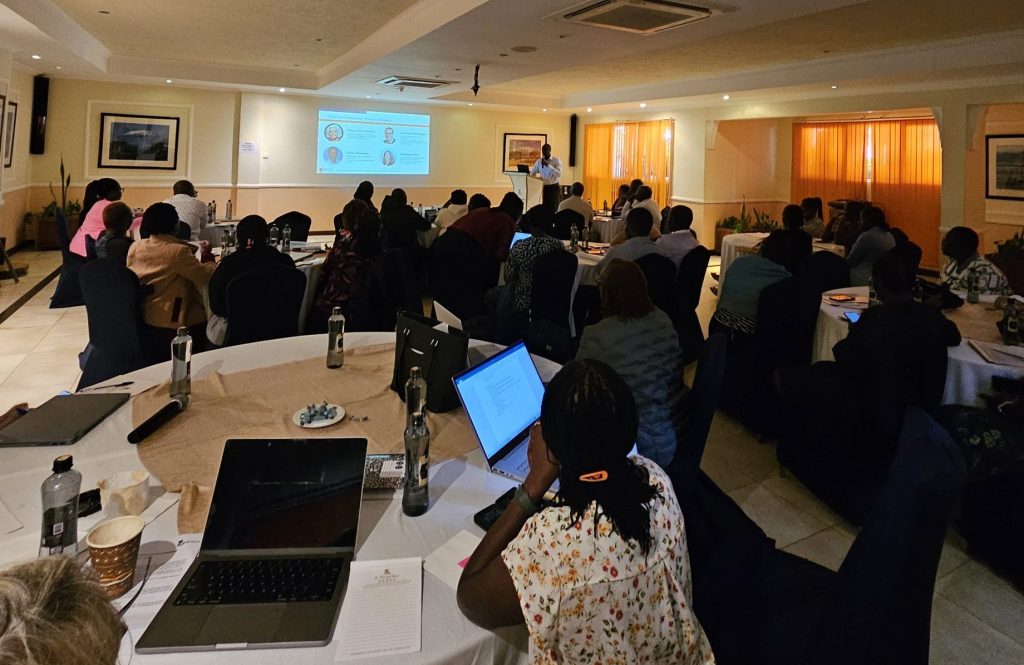
Participants engaged during the workshop
Input from the workshop will be incorporated into the intervention protocol and participant materials, then piloted among pregnant women and young children in Kenya. The BONDS study team plans to convene a workshop in Botswana in mid-July to culturally adapt the intervention for the local context. By engaging partners early in the process, the study design is better aligned with local priorities and needs and preferences of participants, improving implementation of the adapted interventions and increasing the likelihood that study findings will be translated into policy and practice in each country setting.