“Learning the art of drawing is a skill. Therefore, anyone can learn to draw, if you have patience, persistence, and passion.” With these words of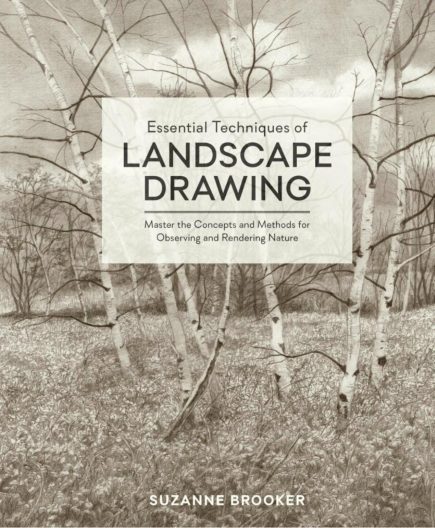 encouragement, Seattle author and artist Suzanne Brooker begins “Essential Techniques of Landscape Drawing.”
To start, it is important to realize that the key element of drawing is what the author calls “visual thinking,” a practice that does not involve verbal language. By drawing, one develops this mode of noticing and perceiving, no matter the quality of the results.
Of course, techniques are important building blocks and Chapter 2 starts with an introduction to the primary tool of drawing, the graphite pencil. This may seem like a simple topic, but there are many options, including how to hold and direct the pencil. Each step of this tutorial is clearly illustrated, with strokes to practice and even exercises to help your hands adjust to this unfamiliar physical activity.
The following chapters continue in this same, gentle teaching manner with basic concepts such as lighting and composition. At last, about halfway through the book, the student is ready to consider the elements to capture in landscape drawing, including the sky, the geometric planes and textures of terrain, trees and their foliage, and water.
The last chapter gives a brief introduction to other types of pencils, including colored and pastel that could lead the reader in another direction. As Brooker concludes, “the activity of drawing is filled with exploration and experimentation.”
Reviewed by: Brian Thompson on August 22, 2023
Excerpted from the Fall 2023 issue of the Arboretum Bulletin