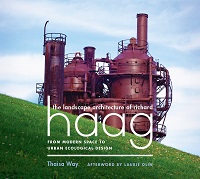
Richard Haag’s life story, as told in “The Landscape Architecture of Richard Haag”, a new biography by Thaïsa Way, has many twists and turns before he arrived in the Pacific Northwest. Growing up on a family nursery and farm near Louisville, Kentucky, he studied and was mentored on both coasts and in Midwest, but a two year visit to Japan, as one of the first recipients of a Fulbright scholarship to visit that country, he later claimed “changed my whole life.” Here he learned “conservation and economy…[and] working with what you have.”
He came to Seattle in 1958 to develop what became the Landscape Architecture Department at the University of Washington. One of the core courses, “Theory and Perception”, Haag taught from 1959 to 1996, “using it to articulate his vision of landscape architecture as a melding of the humanities, the arts, and the sciences, a means of stewardship of the earth and its cultures.”
He continued his private practice as well, and it is from this that he has his greatest fame today, primarily through two projects. The first, Gas Works Park, is the result of a nearly 20-year public debate. Haag’s ability as a designer is almost overshadowed by his ability as a political operator. His techniques for transforming a highly toxic site into a safe place for the public, all with the minimum of soil removal, is also a remarkable. He certainly mastered “working with what you have.”
The story of his work at the Bloedel Reserve is not quite as unqualified a success. Some of his designs, most notably the Garden of Planes, were later removed. Other plans were altered despite the notable accolades they received. A thread throughout this book is the challenges Haag faced to be honored in his profession, and—since he is now in his 90s—to see his projects live on as he intended.
Excerpted from the Fall 2015 Arboretum Bulletin.
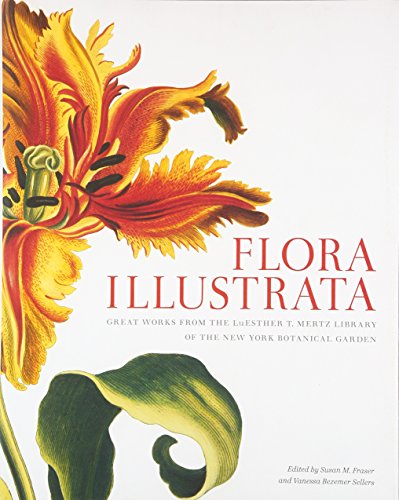 New on the shelves of the Miller Library is a wonderful book, Flora Illustrata, about the LuEsther T. Mertz Library of the New York Botanical Garden. What makes it so wonderful? Why write a whole book about a library? The editors, Susan M. Fraser and Vanessa Bezemer Sellers, answer these questions in their preface. “We hope that Flora Illustrata captures the wonderful experience of spending an afternoon…among the rustling sound of turning pages, the smell of age-worn paper-worlds of wonder emerging from the heavy sheets.”
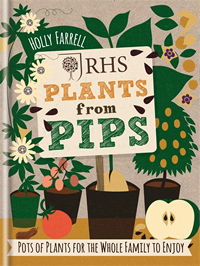 Working in the kitchen, have you ever wondered whether you could grow peppers from pepper seeds? How about a mango tree from a mango pit? This book for gardeners of all ages explains how to germinate a wide range of commonly-seen seeds most people would usually toss in the bin. The entries detail what each plant would need to grow on to maturity, while an illustrated section at the end highlights basic gardening techniques as well as common problems and solutions.
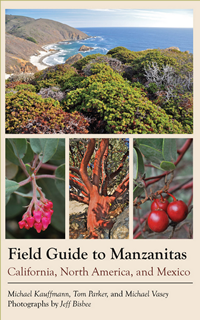 “Field Guide to Manzanitas” is a nearly comprehensive review of the genus Arctostaphylos, covering 104 of the 105 taxa in the world. Why is one missing? The excellent introduction to this book will answer that question and explore the origins and diversification that has led to one species (Arctostaphylos uva-ursi) being found throughout the northern hemisphere, while 60% of the remaining taxa are considered local endemics within the California Floristic Province. This book is a must for botanizing in California and helpful in making horticultural selections in the Pacific Northwest.
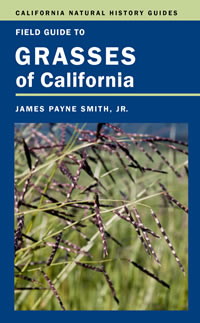 “Field Guide to Grasses of California” is an excellent survey of the most common of the 603 taxa, both native and naturalized, in the state. James P. Smith is a professor emeritus of Humboldt State University and his teaching skills are evident throughout. While many species are not found in Washington (only 337 taxa), there is overlap especially with northern California. If you study grasses, this book is well worth reading for its methodology and for a confession (p. 123): “I do not want to discourage you, but you will not be able to identify every grass that you run through the key in this book…” The absolution that follows will lighten the heart of any student botanist.
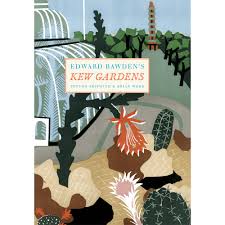 This book defies easy categorization. Bawden was a renowned British illustrator, graphic artist, and painter who served as an official War Artist during World War II. He and his contemporary Eric Ravilious studied with surrealist landscape painter and engraver Paul Nash, and his influence can be felt in Bawden’s lively calligraphic line, and his modernist approach to landscapes and cityscapes. Until exploring this book, I was most familiar with his posters for London Transport, depicting sights and scenes around London.
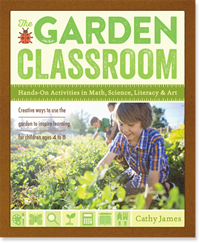 “Anything you can teach in an indoor classroom can be taught outdoors, often in ways that are more enjoyable for children.” This bold assertion opens Cathy James’ new book, and she proves her point with simple steps anyone who teaches children can take to enhance the curriculum outdoors. The projects are flexible, affordable and practical for small or large groups, aged 4 to 8. An invaluable resource for early education!