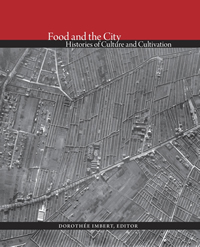
 The UW Farm is a great example of the increasing interest in urban agriculture, but this is not a new movement. Food and the City: Histories of Culture and Cultivation provides historical snapshots of food growing projects from around the world, concentrating on the late 19th century through the mid-20th century. Two global depressions and two world wars made this a particularly difficult time for city dwellers.
These essays were developed from lectures given at a “Food and the City” symposium held at the Dumbarton Oaks research institution in Washington, D.C. in May 2012 that “…sought to historically contextualize the current discourse on urban agriculture.” I found the chapter written by Laura Lawson and Luke Drake of Rutgers University particularly engaging with its focus on American cities and because Lawson was a co-author of the 2009 book Greening Cities Growing Communities: Learning from Seattle’s Urban Community Gardens.
Both books bring an academic perspective on this very human activity of gardening. However, neither is locked in a strictly scholarly discourse. At the end of Lawson and Drake’s chapter in Food and the City, the authors conclude “In cities across America, food is being grown to feed families, to enliven communities, to provide economic opportunities, and to educate young and old…it is reassuring to realize that gardening for food is a normal part of the urban landscape…”
Published in the November 2016 Leaflet for Scholars Volume 3, Issue 11.

 New on our shelves this month you’ll find Richard Louv’s new book,
 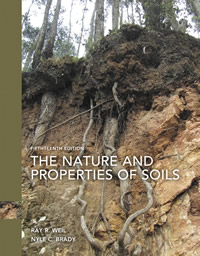 “If you are a student…you have chosen a truly auspicious time to take up the study of soil science.” This encouragement is found in the preface of the new fifteenth edition and is explained by emphasizing the growing need across many fields for scientists and managers with this expertise.