“Morning walk with binoculars” is what I call my weekly trek from the Elisabeth C. Miller Library across the Union Bay Natural Area to the bus. I look for birds along the way. That pattern echoes the suggestion of David B. Williams’s book to spend some time noticing nature while walking in Seattle.
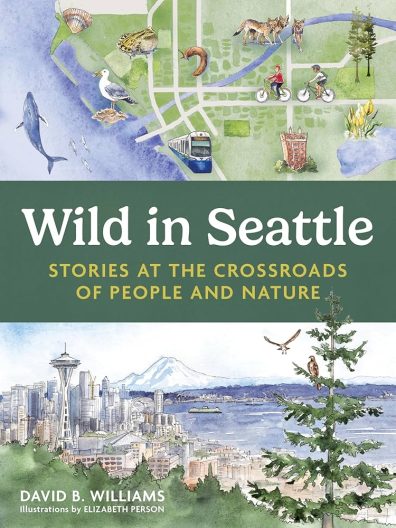 Wild in Seattle is a collection of the Street Smart Naturalist newsletters Williams writes weekly, each two or three pages long. Its three sections – “Geology,” “Fauna,” and “Flora and Habitat” – lay out various discoveries Williams has made patrolling the city on foot. He emphasizes that one need not be a professional scientist to enjoy these encounters.
In “The Giddiness of Time” he writes about the rock used to build the Exchange Building at Second Avenue and Marion Street. It is Morton Gneiss, which formed 3,524,000,000 years ago, the oldest rock most of us will ever see. He combines that information with description of the rock’s appearance: “[It] resembles what would happen if you took a series of photos while stirring together cans of pink and black paint.” The entry is typical of the content of most entries, description plus a little background information.
In “Tails of the City: Cattails,” Williams cites the cattails’ many uses by Indigenous people: stalks for weaving material and down for pillows, mattresses, and even for burial rituals. He lists several of the wetlands cattails call home that have been lost to development but names as a bright spot the restored wetland at the Center for Urban Horticulture I cross every week. It’s a great spot for birds.
Reviewed by Priscilla Grundy
Excerpted from The Leaflet, Volume 13, Issue 1, January 2026