College of the Environment | University of Washington Block W Logo
Library Home | Catalog | Calendar | College Home
Volume 9, Issue 4 | April 2022
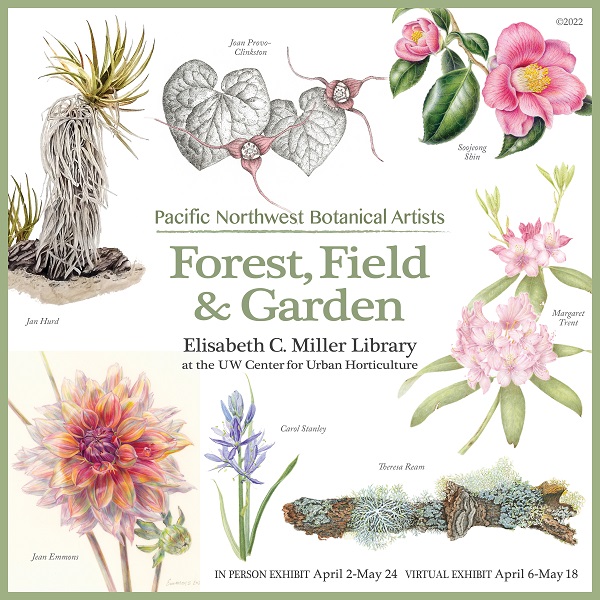
Forest, Field & Garden exhibit April 2 - May 24
Forest, Field & Garden posterWe are excited to announce that the Pacific Northwest Botanical Artists are back at the Miller Library this month. Their exhibit Forest, Field & Garden will be offered in person and online. PNBA is a chapter of the American Society of Botanical Artists, a nonprofit organization dedicated to promoting public awareness of contemporary botanical art, honoring its traditions and furthering its development.

PNBA members from across the region are bringing exquisite work to this group show, and some artists will be present Friday, April 8, from 4 to 7 pm and Saturday, April 9, from 9 am to 3 pm to answer questions.

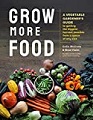
The first Friday and Saturday of the show coincide with our Garden Lovers' Book Sale. This year's celebration of plant-related books and community includes a book signing and author appearance by Riz Reyes. He'll showcase his new book for young readers, Grow, reviewed below.
Ask a Librarian: Where can I smell sweetgrass?
Researched by Rebecca Alexander

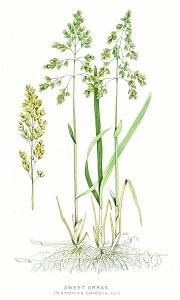
1906 Sweet-Grass illustration by Norman Criddleg
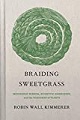
Q: My book club is reading Robin Kimmerer’s Braiding Sweetgrass. Do you know anywhere I could go to smell and see the plant? Might some be planted outside the Burke Museum, or at the Center for Urban Horticulture? What are local native uses of the plant?

A: In the context of Robin Wall Kimmerer’s book, sweetgrass probably refers to the plant whose scientific name is Hierochloe odorata. It grows in limited locations in Washington State. We do not have it here at the Center for Urban Horticulture. It is unlikely to have been planted around the Burke Museum, given its preference for marshy areas. Most of their plantings are at the edges of the parking lot. However, you could call and ask. You might be able to smell sweetgrass in woven items made from the plant, though the fragrance might not be as intense as the odor of the living plants.

The trouble with common names is that they may refer to different plants (not only a different species, but even a different genus and family), depending on what region of the world one inhabits. Kimmerer, who lives in Syracuse, New York, is a member of the Potawatomi tribe. The name she uses for sweetgrass is wiingashk ᐐᓐᑲᔥᒃ᙮, which is Ojibwe, a language that is linguistically similar to Potawatomi.

To give just one example of the potential for confusion, there is a Pacific Northwest ‘sweetgrass’ used by basket weavers on the Olympic Peninsula which is Schoenoplectus pungens, also called chairmaker’s clubrush or common three square, an entirely different genus in the sedge family (not in the grass family). The book does not mention its use for incense or fragrance, but the species name (pungens) does suggest it has an aroma, though possibly a sharp but not a sweet one [source: From the Hands of a Weaver: Olympic Peninsula Basketry through Time, University of Oklahoma Press, 2012].

Examples of Hierochloe odorata’s use in the Pacific Northwest:
  • The Okanagan-Colville tribe has a tradition of storing the braided blades among clothing, to lend a pleasant fragrance.
  • The Haisla and Hanaksiala use blades in basketry.
  • In the book Thompson Ethnobotany: Knowledge and Usage of Plants by the Indians of British Columbia (by Nancy J. Turner et al., 1990), the plant goes by several names in the tribal language, all of which refer to a good scent. Sweetgrass also goes by the name vanillagrass and the Thompson tribal tradition is to tie the grass in one’s hair, or wear it as a fragrant neck or arm ornament.
  • The book Ancient Pathways, Ancestral Knowledge: Ethnobotany and Ecological Wisdom of Indigenous Peoples of Northwestern North America (Nancy J. Turner, 2014) mentions the use of sweetgrass braids (using Hierochloe) in ceremonial smudging for spiritual protection.
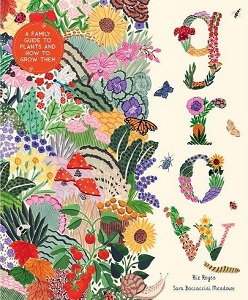
Grow by Riz Reyes and Sara Boccaccini Meadows
Reviewed by Laura Blumhagen
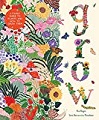
book cover Pacific Northwest horticulturist Riz Reyes worked with illustrator Sara Boccaccini Meadows for his debut children's book, Grow, new this year from Magic Cat Publishing. This vibrant "family guide to plants and how to grow them" introduces the botanical relatives and superpowers of familiar plants and fungi. Each short section features a different familiar plant (including mint, daffodils, pineapple, carrots, tea, aloe, maple and eight more), with informative text and colorful images detailing the plant's life cycle, its history with people, and a related hands-on project.

New in our lending collection this month, the book is uniquely useful and completely enchanting! Meet the author at a book launch event during our Garden Lovers' Book Sale, which runs 4-7 pm on Friday, April 8 and 9 am - 3 pm on Saturday, April 9.
garden lovers' book sale

Friday, April 8, 4 - 7 pm & Saturday, April 9, 9 am - 3 pm
Thousands of gently used plant books for sale. Cash and checks preferred. The Pacific Northwest Botanical Artists will be showcasing their work. Also, Riz Reyes will launch his new book, Grow: A Family Guide to Plants and How to Grow Them.

Remaining book sale inventory will be available at discounted prices in the Library Program Room during our open hours April 11 - 30.

Digital resources
   UWBG pine cone logo
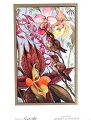
Catasetum and Cypripediums from Hours of Gladness, M.
 Maeterlinck, 1912  Miller Library book and flower logo
New to the library
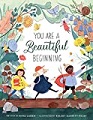
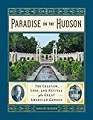
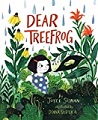
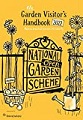
cover image    cover image    cover image
cover image     cover image    cover image
cover image    cover image     cover image
cover image    cover image    cover image
cover image    cover image
  give     Miller_LibraryLogo293px.gif    
Facebook    Twitter    Instagram    Pinterest
Contact Us   |   Privacy   |   Terms
© 2022 University of Washington Botanic Gardens