College of the Environment | University of Washington Block W Logo
Library Home | Catalog | Calendar | College Home
Volume 8, Issue 12 | December 2021
The Book of Difficult Fruit by Kate Lebo
Reviewed by Tracy Mehlin

cover image
Fruit might be considered difficult because it's hard to grow, arduous to prepare, almost impossible to buy or else fraught with emotional associations.

Kate Lebo's talent lies in weaving her personal fascination with the various fruits — and a couple of non-fruits such as wheat and sugarcane — with her efforts to use it in some way. Every chapter has at least one recipe. I'm most tempted to try making huckleberry pie, juniper bitters, pickled rhubarb, and whipped vanilla body cream. She explores historical uses, native habitat and growing requirements. However, the entries are not encyclopedic. Instead, each entry is also an opportunity to remember and reflect on her personal relationships, her own and others' health challenges and the foods used to manage those challenges.

While preparing for her grandfather's funeral she discovers an elderberry shrub covered in fruit in her parents' backyard. She also discovers a missing set of aunts. She includes a recipe for elderflower cordial and throughout the book the mystery of the missing aunts reveals a confounding secret in her own family.

In the chapter on dandelions, filed under F for "faceclock," an old common name, we learn a little about folklore and childhood rituals of blowing seeds off the puffy seedheads. We also learn how Lebo would weed her dandelion-choked lawn when depression prevented her from doing anything else. The recipe for faceclock greens, fennel sausage and barley soup is recommended for early spring preparation and sounds delicious.

Nothing makes a librarian happier than to help a patron find answers to questions within the books we've spent years curating. Even better is when that Spokane, Washington based patron writes a book filled with those answers and recalls the hours she spent researching in the Miller Library (in the chapter on juniper berries). Kate Lebo's book of essays is compelling, sometimes humorous, and always insightful.
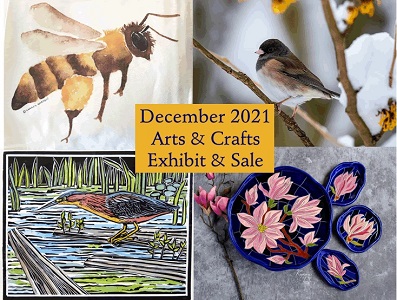
Arts & Crafts Exhibit & Sale features local artists
arts & crafts sampler
Four artists join us this year with artwork and crafts that celebrate gardens and nature:
  • Chavah's Garden produces kitchen linens, stickers, and other objects with illustrations of insects, animals, and plants 
  • Al Dodson takes engaging photographs of birds and trees available framed or as prints
  • Molly Hashimoto creates watercolors and wood block prints inspired by Northwest natural areas
  • Kupava Art Home crafts hand-thrown ceramic plates and bowls with floral motifs
A portion of the proceeds benefits the Miller Library. Exhibit open during Library open hours.

Meet the artists: Friday December 10, from 5 to 7 p.m.

Due to COVID-19 restrictions proof of vaccination is required for entry to the Friday event. The University of Washington requires masks in all indoor spaces for all individuals, regardless of vaccination status. The UW Botanic Gardens continues to follow all advice and directives set forth by the UW. Due to coronavirus, no food or drinks will be served, but good company is guaranteed!
In the Garden: Essays on Nature and Growing
Reviewed by Rebecca Alexander
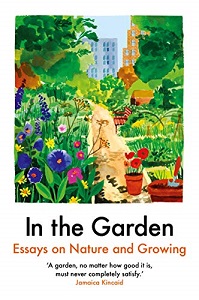
In the Garden: Essays on Nature an cover image d Growing is a slim volume that covers a lot of ground. There are essays by well-known writers like Penelope Fitzgerald and Jamaica Kincaid, but American readers will likely be unfamiliar with most of the other contributors. The book is divided in thematic sections: The Garden Remembered, The Collective Garden, The Language of the Garden, and The Sustainable Garden. Fitzgerald writes of a long life in gardens (a childhood garden in Egypt with eucalyptus, lantana and banyan; large gardens in Oxfordshire full of educational trial and error, and now a much smaller London garden). Like several of the essayists, she reflects on the importance of having a green space during the pandemic in which to find solace.
Several essays are by writers who are descendants of immigrants. I found Paul Mendez's "The Earth I Inherit" especially poignant. His grandparents came to the industrial West Midlands of England from Jamaica in the 1950s, where they faced racial prejudice on a personal and national scale. They tried to coast beneath the notice of their neighbors by fitting in — planting fragrant plants to conceal ‘strange’ cooking smells that might incite ire, growing plants found in typical urban front gardens (roses, lavender, daffodils, herbs, and vegetables), avoiding anything that might seem outlandish or ostentatious. Still, they derived great pleasure from having even this small patch of earth to nurture and remind them of the home and heritage they left behind.

The communal experience of gardens is the subject of several writers, from a brief history of London's squares, to the conversion of an abandoned cricket pitch in East London into a thriving community garden where the plants are as diverse as the gardeners, growing what reminds them of their own roots (in Bangladesh, the West Indies and elsewhere).

Gardens are places where several of the essayists find common ground with their parents. Niellah Arboine and her mother spent many happy days wandering around Kew, but it is their time in the allotment plot that felt like paradise for the author as a child. She abandoned these visits as a teenager, but later reconnected with green spaces and growing things through a gardening group for women of color. During the pandemic, she returned to the allotment with her mother after a long absence; it was the only place they could safely spend time together during lockdown.

Another persistent thread in the essays is the therapeutic and restorative potential of gardens and gardening. Singapore-born Zing Tsjeng's mother suffers from depression, but has always been an enthusiastic gardener, from tending orchids (which she nourishes with steeped banana peels) and lemongrass to the Japanese maple languishing in her daughter's garden which she restores to good health. Although her mother has returned to Singapore, she continues to send gardening advice to her daughter, who is gradually becoming more of a gardener.

Poet Victoria Adukwei Bulley's "What We Know, What We Grow at the End of the World" is philosophical and prompts thoughts of the garden as metaphor: "In a time during which it is necessary to ask what structures must be dismantled in order for all peoples to live freely and well, thoughts about what will need to be abolished come in tandem with those asking what we will need to learn to grow."

thank you for your support
Thanks to community support, the Miller Library offers the best in horticultural reference assistance and outreach. We appreciate your generosity!
Digital resources
   UWBG pine cone logo
cover of Euphorbia World, Dec 2020  Miller Library book and flower logo
New to the library
cover image    cover image    cover image
cover image     cover image    cover image
cover image   cover image
cover image    cover image    cover image
cover image    cover image   cover image
cover image    cover image
cover image    cover image    cover image
  give     Miller_LibraryLogo293px.gif    
Facebook    Twitter    Instagram    Pinterest
Contact Us   |   Privacy   |   Terms
© 2021 University of Washington Botanic Gardens