College of the Environment | University of Washington Block W Logo
Library Home | Catalog | Calendar | College Home
VOLUME 9, ISSUE 3 | March 2022
Field Notes by Lou Cabeen
In the Miller Library March 3-30
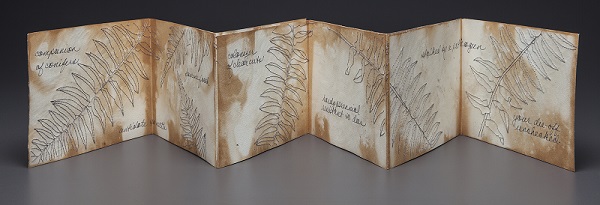
Fern Book by Lou CabeenLou Cabeen returns to the Miller Library this month with new work that combines plant study with book stitching, embroidery and painting. In her own words:

The artworks in this exhibition are my Field Notes of life in pandemic isolation. The horizons of my world narrowed to my yard, my immediate neighborhood, and the Union Bay Natural Area. In the face of cancellations, postponements, supply shortages, grief and worry, the life arising from the dirt under my feet provided companionship. Collecting specimens, making drawings, studying maps helped deepen my awareness of these fellow travelers, who flourished immune from politics and the virus.

Please join us for a meet-the-artist event at the Miller Library on Thursday, March 3, from 5 to 7 p.m. Proof of vaccination is required for this evening event. If you are a student or employee of the UW, please bring your Husky Card. All other guests over the age of 12 will need to provide proof of vaccination or proof of a negative COVID-19 PCR test taken within 72 hours of the event. Mask wearing is required for all library visitors.
Ask the Plant Answer Line: What is this "beach potato"?
Researched by Rebecca Alexander

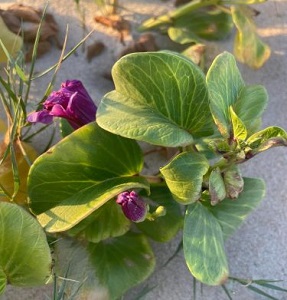
flowering plant in sandQ: Can you confirm the identity of this plant growing on the northeastern coast of Brazil? I’m told it is called batata-da-praia, or batata-do-mar (beach or sea potato). Does that mean it’s edible?

A: This is Ipomoea pes-caprae, probably the subspecies brasiliensis, given the location. It is pantropical, found along the beaches of the tropical regions of the Atlantic, Pacific, and Indian oceans. (It produces air-filled seed capsules that float and drift in water, contributing to its wide distribution.)

Common names in English include railroad vine (referring to the ‘tracks’ created by its stoloniferous habit of spreading along the ground’s surface, sometimes over 100 feet), goat’s foot (translation of the botanical species name, given for the hoof-like leaf shape), beach morning glory (since it is in the morning glory family, Convolvulaceae), and beach hops (because of the vining habit).

Cooked roots, stems, and leaves have been eaten in small quantities as a famine food, and it has a history of medicinal uses. However, it is not a major food source like its cousin, the sweet potato (Ipomoea batatas). Toxic Plants of North America (Burrows & Tyrl, 2013) considers this species of Ipomoea to be of toxicological concern.

The Garden Lovers' Book Sale is back!
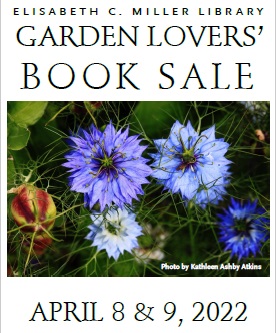
Garden Lovers' Book Sale posterDon't miss the Garden Lovers' Book Sale, where extra copies of gardening books are transmuted into book-budget gold by generous library supporters like you.

Friday, April 8, 4 - 7 p.m. &
Saturday, April 9, 9 a.m. - 3 p.m.

Shop thousands of gently used books for sale on gardening, plants, ecology and related topics at this free event. Mingle with fellow plant lovers while shopping for unique horticultural books. Proof of vaccination is required for these events. If you are a student or employee of the UW, please bring your Husky Card. All other guests over the age of 12 will need to provide proof of vaccination or proof of a negative COVID-19 PCR or NAATs test taken within 72 hours of the event. 

Remaining books will be available at discounted prices in the Library Program Room during Library open hours April 11 - 30.
gardening answers
Search for garden wisdom with us. You'll find researched answers,
gardening tips, book reviews, and recommended websites.
Digital resources
   UWBG pine cone logo
cover of Tree Physiology January 2022 issue  Miller Library book and flower logo
New to the library
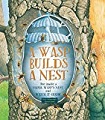
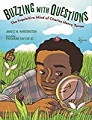
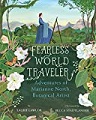
cover image    cover image    cover image
cover image     cover image    cover image
cover image    cover image     cover image
cover image    cover image    cover image
cover image    cover image     cover image
cover image    cover image    cover image
Donate to the Miller Library Fund    Miller_LibraryLogo293px.gif
  Facebook    Twitter    Instagram     Pinterest
Contact Us   |   Privacy   |   Terms
© 2022 University of Washington Botanic Gardens