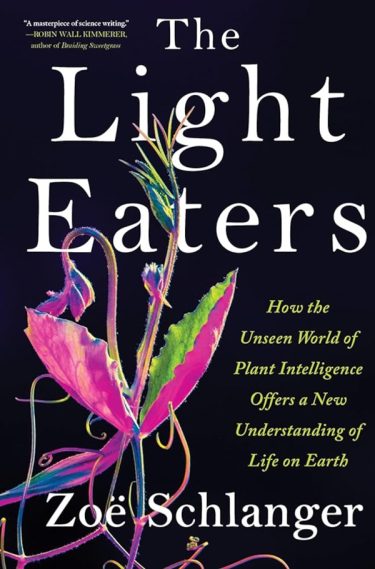
Plants do astonishing things. This book presents multiple descriptions of the ways they interact with each other and with the environment, including with us. For most readers this information alone will make the book worth reading and contemplating.
One plant, Arabidopsis, responds to gentle strokes with a soft paintbrush with dramatic hormonal and genetic changes that cause it to bulk up or slow its growth. In nature, the plant may be reacting to frequent wind gusts.
Corn plants attacked by caterpillars release a gas that attracts the specific wasps that eat those specific caterpillars. Rye plants, previously scraggly weeds in wheat fields, changed shape to mimic wheat to avoid being pulled out. Eventually they became the rye crop grown for its own value.
Underlying all this activity is the question of how we should think about plants in the light of this information. What language should we use, and what conclusions should we draw from that choice of language? Are plants intelligent beings? The book’s title offers an example. When plants take in sunlight and convert it to chlorophyll, is that “eating”? When plants interact in ways that in animals can happen only with the use of a brain, which plants don’t have, is that “thinking?”
Or should we develop language to describe all this that doesn’t compare plants to animals? The choice of language has a major effect on our thinking. If plants are essentially like us, they deserve higher ranking on our lists of priorities for protection or destruction.
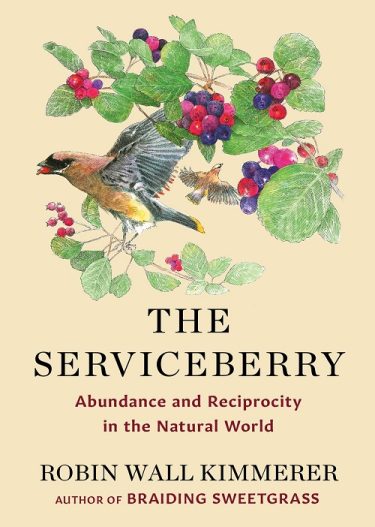 The Serviceberry tree lives in a reciprocal relationship with its environment – it takes only what it needs to grow and gives its fruit abundantly. Robin Wall Kimmerer uses the plant, especially in its Native American context, as a model for the gift economy she argues we must create.

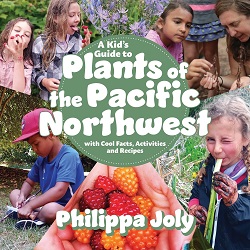 Did you know that skunk cabbage roots look like pale, ropy space aliens? Would you like to learn to make maple syrup from bigleaf maple sap? How about some rose-petal honey for your next tea party?