Skip to content

Under Western Skies: Visionary Gardens from the Rocky Mountains to the Pacific Coast

[Under Western Skies] cover

An omnibus of garden profiles is a popular format for many horticultural authors, and yet I find Under Western Skies: Visionary Gardens from the Rocky Mountains to the Pacific Coast especially engaging. Author Jennifer Jewell brings broad and creative perspectives to what makes each place noteworthy.

Although Jewell wrote the text, she gives first title page credit to Caitlin Atkinson, the photographer, an appropriate decision for a book as sumptuous as this one. The gardens of the geographic range, from the Rocky Mountains to the Pacific Coast, have only infrequently been considered before, and the choice of subjects is quite remarkable.

A handful are well-known, such as Heronswood, but even its story is quite different now under the ownership of the Port Gamble S’Klallam Tribe. Most were new to me. In Washington State, this includes private gardens in north Seattle, Castle Rock, and Pullman. Others in the region are found in Hood River, Oregon and Tofino, British Columbia.

While I can envision visiting some of the gardens that have public access, this is not a travel guide. By profiling the place, the people, and the plants, each location is presented with a sense of its space in a bigger world. This is done in part by a brief description of the climate, geology, and human history of the indigenous peoples that once dwelt on the land. The photography, rarely showing close-ups, enhances the feeling of lightly defined borders. These gardens, while often providing sanctuary, are not isolated from their surroundings or their past.

Jewell writes in the preface, “Most gardens are a three-part alchemy between the riches and constraints of the natural and/or cultural history of the place, the individual creativity and personality of the gardener, and the gardening culture in which both the garden and the gardener exist.” While I won’t use “Under Western Skies” to plan my next garden touring itinerary, it does give me a better sense of my place and purpose as a gardener, especially in this part of the world.

Published in The Leaflet, Volume 8, Issue 7, July 2021.

The Wardian Case: How a Simple Box Moved Plants and Changed the World

What is a Wardian Case?  Any English gardener between 1850 and 1900 could have easily answered that question, but today it is mostly forgotten.  Partly because the term was used for two distinct variations of the device.  The first was a decorative, enclosed case – the forerunner to the terrarium – that allowed Victorian plant lovers to grow their ferns and orchids despite the heavily polluted air of London and other cities.  The second was a tool for transporting plants on long sea voyages, and that form is the subject of “The Wardian Case: How a Simple Box Moved Plants and Changed the World” by Luke Keogh.

In part, this book is also a biography of Nathaniel Bradshaw Ward (1791-1868), a London physician who was a passionate, amateur botanist.  His experiments with sealed environments led to the highly successful efforts in the 1830s to transport plants for the many months it took to travel from, for example, Sydney to London.  Prior attempts had mostly failed because of damage from salt spray or a shortage of fresh water.  This invention became so popular that by later in the 1800s “there were thousands if not tens of thousands of these cases in operation, moving plants around the globe.  Our choices of what we drink, eat, smell, and wear have all been transformed by the movement of plants.”

This movement of plants had a profound impact on human cultures, especially those colonized by European powers.  The Wardian Case allowed for the transport of many valuable crops to be grown in colony plantations with suitable climates, typically destroying the native flora and often subjugating the local population to work these foreign crops.  Examples include tea, rubber, cocoa, and cinchona, the source of quinine used to fight malaria.

These plants did not travel alone.  In their soil and on their leaves came various animal species and plant diseases eager to attack a susceptible flora.  Many of the plants themselves became invasive.  All this led to efforts in the 20th century to using these cases (now better known as cages) to send predatory insects to attack unwanted plants and destructive pests.  The advance of air travel ended the prominence of the Wardian Case but for about a century it was closely linked to all aspects of the global movement of plants for profit, research, and horticulture.

Winner of the 2021 Award of Excellence in History from the Council on Botanical and Horticultural Libraries


Excerpted from the Summer 2021 issue of the Arboretum Bulletin
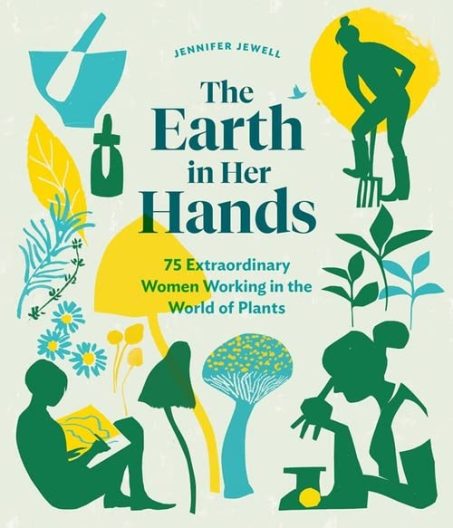
The Earth in Her Hands: 75 Extraordinary Women Working in the World of Plants

Jennifer Jewell has gained a wide following for her blog “Cultivating Place.”  Produced from her home in northern California, it is self-described as a “conversation on natural history & the human impulse to garden.”

That same description could apply in part to Jewell’s first book, “The Earth in Her Hands: 75 Extraordinary Women Working in the World of Plants.”  This is a wide-ranging discussion on this gardening impulse, using a very broad definition of the idea of horticulture, captured in a series of pithy biographies.  The profiled women have careers in and a passion for plants, expressed in botany, landscape architecture, floriculture, agriculture, plant hunting and breeding, food justice, garden writing, and photography.

Many of the subjects are from the Pacific Northwest.  An example is Cara Loriz, the executive director of the Organic Seed Alliance in Port Townsend, Washington, advocating for community building and research for sustainable food systems.

Another is Christin Geall, a multi-talented writer/photographer and educator in Victoria, British Columbia.  I confess to having not heard of either woman prior to reading this book.  Jewell writes that for Geall, “flowers are a horticultural medium for leading and educating others about plants, acting not as pretty cages, but as colorful, Socratic-style critical thinking.”  Both women are examples of conducting important work at a local level that addresses global needs facing all cultures.

All these biographies provide a short list of women that inspired the subject.  Many are contemporaries, or cherished ancestors.  Some are important figures from history, including Sacajawea, Harriet Tubman, and Rachel Carson.  Others are women without recorded names, but for whom “horticulture is a human impulse, in all cultures, in all times, practiced, codified, ritualized, and valued across any and all social boundaries.”

The narratives about women in horticulture are evolving.  In public presentations, Jewell has been expanding on the process of choosing and researching the subjects of her book.  I’ve heard her speak twice in the last year and each time, she acknowledges that many additional women, from a wider breadth of ethnicities and nationalities, could be featured now.  This study is important, on-going work and I hope that Jewell or others will continue this undertaking.

Winner of the 2021 Award of Excellence in Biography from the Council on Botanical and Horticultural Libraries


Excerpted from the Summer 2021 issue of the Arboretum Bulletin

Flower: Exploring the World in Bloom

Phaidon Press is noted for their exquisite art books, capturing in print garden subjects from many different media.  “Flower: Exploring the World of Bloom” is the 4,000 year story of human fascination with flowers as told in over 300 images.

Edited seamlessly by Victoria Clarke, the book begins with an insightful essay by Anna Pavord, the author of “The Tulip” and several other books that examine the human history with plants and landscapes.  She does an excellent job of setting the background for the art that follows, noting that “the images in this superb collection could have been arranged by chronology or theme, but instead pictures have been cleverly paired on facing pages to highlight revealing or stimulating similarities or contrasts.”

This book is fun!  You can open anywhere and immediately dive into a story told in both prose and images.  It’s also huge, a hefty tome worthy of any coffee table.  At first glance it might see like a lot of lovely fluff.  But read on!  It is an excellent and easy-to-digest history book as well as art exhibit.

A stain glass window by Louis Comfort Tiffany of wisteria looking out on Long Island’s Oyster Bay is contrasted on the opposite page with a 17th century Japanese tea pot with overglazed enamel, also depicting wisteria.  A 19th century, hand-colored lithograph of a bouquet of peonies is matched with a 2011 watercolor designed to look like an herbarium specimen, also of peonies.

The subjects come from around the world and reflect developing traditions.  A 1973 painting using gouache on paper is a recent stylistic example by a member of the Kwoma people of Papua New Guinea, adapting their practice of bark painting formerly used to decorate the ceilings of ceremonial buildings.  This is complemented on the opposite page by the image of a bag made with glass beadwork from the last half of the 19th century.  Equally colorful as the Kwoma piece, it was created by an anonymous member of the Nēhiyawak peoples of eastern Canada.  The use of glass beads reflects incorporation into the native artform a new material after contact with European traders.

The book is nicely supplemented by ending appendices that include a timeline of flowers in human history, the symbolism of flowers, and short biographies of key artists represented.  This is a book that takes time to digest, but that is time well spent.

Excerpted from the Summer 2021 issue of the Arboretum Bulletin

Glass Flowers: Marvels of Art and Science at Harvard

Flowers made of glass is an unusual expression of floral art, but the more than 4,300 models in the collection at Harvard University were not intended as art objects.  Instead, these were teaching tools showing a selection of primarily North American native plants and frequently grown exotics for botany students in the late 1800s and early 1900s.  Created by the Czech father-and-son team of Leopold and Rudolf Blaschka, this collection was revived by a major conservation effort and enhancement of the exhibit space over the last ten years.

Celebrating that effort is a new book: “Glass Flowers: Marvels of Art and Science at Harvard.”  There are several authors, but the stars of this book are the amazingly close-up and fine focused photographs by Natalja Kent.  There have been earlier books on this collection, but none capture the beauty of this restored collection like this new publication.

Excerpted from the Summer 2021 issue of the Arboretum Bulletin

Rare Plants: The Story of 40 of the World’s Most Unusual and Endangered Plants

I first glanced through “Rare Plants’ by Ed Ikin for the beautiful plant images: artwork and herbarium specimens from the vast collections of Kew Gardens dating back to the 1700s.  These alone would make this book worthwhile, but there is much more.  The heart of this book is a collection of essays on 40 plants from around the world that are rare or unknown in the wild.  What’s surprising is that many are very familiar to gardeners in the Pacific Northwest.

An example is the Monkey Puzzle Tree (Araucaria araucana) with its distinctive and frequently seen profile on the Seattle landscape.  Native to the slopes of Andes Mountains in Chile and Argentina, it is endangered because of its heavy use for timber, slow regeneration because of fires (often deliberately set), and competition from exotics (including eucalyptus) and agriculture.

One traditional way to preserve rare plant is through seed banks, but that is not an option for the Monkey Puzzle – the seeds do not survive the desiccation and chilling typical for these facilities.  The author recommends instead growing the tree in suitable climates as a preservation technique, and recommends planting groves to emulate the natural associations of these dioecious plants.  Image such a grove in the Chilean Garden at Pacific Connections!

These stories are an engaging way to study conservation and threatened plants, and the choice to illustrate using historic documents is very effective.  Ikin, the deputy director of Kew’s wild botanic garden at Wakehurst, also raises some difficult questions, especially for plant collectors in the UK and in North America.

For example, African violets (Streptocarpus ionanthus) is a mainstay of the multi-million dollar houseplant industry, but has become exceedingly rare in its native Kenya and Tanzania.  The author asks, should these countries receive some of the profit from the selling of these plants?  Aloe vera, a plant well-known by many non-gardeners for its presumed healing qualities, is unknown in the wild.  However, DNA studies are gradually solving the mystery location of its origin, somewhere on the Arabian Peninsula.  When that is pinpointed, should that original host country (or countries) be compensated for this plant valued around the world?

Ikin is always eager to share positive outcomes, too.  “Lebanon is pioneering a new approach new land management – a balance between preserving biodiversity and provisioning human need – and the results are promising.“  This is good news for the endangered, Lebanese endemic Iris sofarana, the Sofar Iris with its striking blend of marbled greys and bronze with purple highlights.  Also hopeful are new cultivation techniques in Ukraine that are slowing the wild harvest of increasingly rare Galanthus nivalis (known ironically as the “common snowdrop”) to allow for its natural recovery and to ensure income to its the host country.

Co-winner of the 2021 Annual Literature Award from the Council on Botanical and Horticultural Libraries


Excerpted from the Summer 2021 issue of the Arboretum Bulletin

Grasses, Sedges, Rushes: An Identification Guide

[Grasses, Sedges, Rushes] cover

Lauren Brown wrote the classic Grasses: An Identification Guide for the American northeast in 1979. Illustrated with her exquisite and effective line drawings, this book filled a void by providing a field guide to this abundant group of plants typically overlooked in general wild flower guides.

In 2020, the second edition, titled Grasses, Sedges, Rushes: An Identification Guide was released with a secondary author, Ted Elliman. What’s new? The title now more accurately reflects the inclusion (also in the first edition) of other grass-like plants. Each entry now has a photograph, but wisely the line drawings have been preserved and together they enhance the chances for positive identification.

Why am I recommending a book that does not cover the Pacific Northwest? Primarily because this is an excellent introduction to grasses anywhere, and well worth reading for an understanding of the North American ecology and human history with these plants. The western edge of this new edition’s coverage also includes the lands of the former tall grass prairie and some of these species have ranges extending into our region. This book also includes established invasive grasses that are found throughout the country.

“To identify grasses with technical manuals or internet sources requires a fair amount of botanical knowledge, considerable patience, and sometimes a dose of luck. Even Charles Darwin was elated when he first identified a grass.” Brown and Elliman understand the challenges for the beginning grasses enthusiast. Once you have mastered the basics using this gentle guide, I recommend moving on to Field Guide to the Grasses of Oregon and Washington for a more detailed study of the grasses found in our region.

Published in Leaflet for Scholars, Volume 8, Issue 6, June 2021.

New Woman Ecologies

[New Woman Ecologies] cover

The New Woman movement grew out of the Arts and Crafts movement in Britain in the late 19th and early 20th centuries. Its aim was to give women new opportunities, especially to do paid work, outside their role of nurturing mother at the hearth. New Woman Ecologies shows how the New Woman and the growing green efforts meshed with each other.

Each chapter presents a different episode in this meshing, using mainly texts written at the time. Carroll moves from two London women starting their own market garden in rural Kent through to women’s participation in the Land Army, a government-run farm work project during World War I.

The final chapter focuses on the revival of herb growing after World War I. Maud Grieve’s Modern Herbal of 1931 is one text among those which “transformed public perception of local herbs from ‘almost inert’ weeds to potent partners in both domestic and commercial gardens” (p.152). Grieve’s plant entries include medicinal as well as the usual plant and growing information. She also notes connections between plants and other living things, notably people. Her long entry on English lavender asserts its superiority to French lavender not only due to its medicinal qualities but also because it is local and therefore fresher. She also notes its positive effect on the grower. In England the herbal revival was scotched in 1941 by the Pharmacy and Medicines Act, which grew out of fear that giving medicinal information on plants to the masses was dangerous, particularly to pharmacists. The act described the use of herbs as medicine as fairy-tale thinking. Its largely successful goal was to put herb growers, who were mainly women, out of business. The act was repealed in 1968.

All the efforts described in New Woman Ecologies were frustrated in one way or another, but the reader gains helpful background information on one corner of the history of the feminist and ecological movements.

Published in Leaflet for Scholars, Volume 8, Issue 6, June 2021.

The Garden Jungle

[The Garden Jungle] cover

I have read many books on organic gardening over the years, but never one with a focus on invertebrates. With The Garden Jungle I credit author Dave Goulson for opening my heart to earwigs. Goulson is a British professor of biology, bumble bee expert, keen gardener and advocate for sustainable agriculture. I try to be tolerant of the herbivore insects such as aphids because they feed many species of birds and beneficial insects such as beetles and hover flies. However, I didn’t know earwigs were omnivores and would feast on aphids as well as on dahlia petals. According to Goulson, earwigs don’t seek out ears to sleep in, so we shouldn’t worry.

Each chapter starts delightfully with a short recipe for treats such as mulberry muffins or homesteading classics like sauerkraut, cider and goat cheese. The book maintains a positive tone as Goulson celebrates all the creatures we encounter in our gardens, while detailing highly destructive practices committed by the horticulture and agriculture industries. He makes the case that the most egregious practice to be avoided at all costs is spraying pesticides. Another destructive habit is including peat moss in potting soil both because it destroys peat bog habitat, and also because of the massive amount of sequestered carbon dioxide released upon harvest. For each decidedly Earth-unfriendly horticultural practice described Goulson instructs readers on alternatives to achieve the same outcomes.

Goulson weaves in insights from his research, background on natural history and stories of wildlife encounters in his Sussex garden to relate why we should cherish moths, worms, and even the parasitic cuckoo bee. All are members of the garden jungle ecosystem. Once gardeners tolerate or maybe even love the creatures in their gardens, Goulson is sure that the planet can be saved.

Published in the Leaflet, volume 8, issue 6, June 2021.

Iwígara

The earliest gardeners in North America were not European settlers but the peoples of the indigenous nations, especially in our region.  “All native peoples of the West Coast engaged in some form of complex and sophisticated ‘gardening’ of their homelands.”

This observation is by Enrique Salmón, the author of a new book on American Indian ethnobotanical traditions.   The book’s title tells part of the story.  “Iwígara” (i-WEE-jah-rah) is the concept that humans are no greater than other forms of life in the natural world, including both plants and animals.

Ethnobotany, the study of the use of plants by human cultures, is an important way to understand different civilizations.  Sadly, much of the existing literature can bog down in academic minutiae.  Not so with “Iwígara” and Salmón’s excellent story-telling!  This is a lively and thoroughly readable account of eighty plants significant to the indigenous nations of North America, told using delightful legends and the common practices that have bonded peoples and the plants of their local landscape.

Salmón is an accomplished scientist and an active collaborator with others in his field and he used that network to help determine the plants to include.  He also brings a more personal viewpoint.  As a member of the Rarámuri (rah-RAH-mer-ree) nation of northwestern Mexico, he learned the plant traditions from his mother, grandmother and other family members “who were living libraries of indigenous plant knowledge that has been collected, revised, and tested for millennia.”

An example is the entry on cedar.  “Native peoples in the Pacific Northwest tell a story about a good man who gave unceasingly to his community.”  After his death, “the Creator, so impressed with the life this man had led, decided that a great useful tree would grow from the man’s burial site.”  According to this legend, this was the first western red cedar (Thuja plicata).

Indeed, this is a useful tree to many regional cultures for buildings, canoes, tools, clothing, and medicines.  Throughout “Iwígara,” well-chosen photographs, both old and new, enhance the stories.  “Cedar” is highlighted by an impressive 1914 photograph of Kwakiutl cedar mask dancers.


Published in Garden Notes: Northwest Horticultural Society, Summer 2021