“The Society for Ecological Restoration – Northwest Chapter (SERNW) is a dynamic interactive professional society dedicated to the art and science of restoration. SERNW provides a unique opportunity for members to coordinate restoration efforts and gain technical skills specific to Pacific Northwest ecosystems.”
EBHL (European Botanical and Horticultural Libraries Group)
“An association to promote and facilitate co-operation and communication between those working in botanical and horticultural libraries, archives and related institutions in Europe.” This group is hosted on Facebook.
The Plant Lover’s Guide to Epimediums
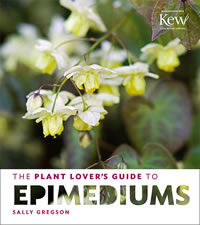 Kew Gardens has begun a very helpful series of books for gardeners known as The Plant Lover’s Guides. One of the best, partly because of the scarcity of other books on this topic, is The Plant Lover’s Guide to Epimediums by Sally Gregson. The availability of both species and hybrid epimediums has exploded in recent years, and this guide will introduce you to the new Chinese epimediums – “these are the divas” – as well as all the old favorites for dry shade. I’m especially impressed with the photographs as I know from experience the delicate flowers of this genus are very difficult to capture.
Published in the May 2015 Leaflet Volume 2, Issue 5.
Weeds of North America
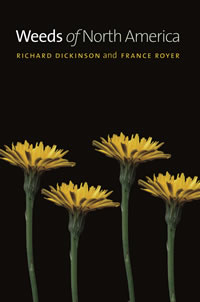 “Weeds of North America” is an excellent new guide to more than 600 invasive plants throughout the United States and Canada. Designed in field guide style, the photographs are a particularly strong feature of this book, with 3-5 for each plant, including leaves, flowers, and seeds. The text includes a description of the life cycle, jurisdictions that have identified the plant as noxious, and details on the reasons for concern, including displacement of native plant habitat, toxicity to livestock, and/or status as an alternative host of a serious plant disease.
Published in the May 2015 Leaflet for Scholars Volume 2, Issue 5.
TNC Global Invasive Species Team
Archived website of The Nature Conservancy’s Global Invasive Species Team which was disbanded in March 2009. This website is an archived snapshot and is no longer being updated or maintained.
Patio Produce
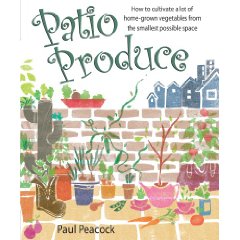 As a first time vegetable gardener, I was looking for a resource for planting and growing vegetables from a small space: my deck. This handy book, Patio Produce: How to Cultivate a Lot of Home-Grown Vegetables from the Smallest Possible Space by Paul Peacock really helped me start my garden. It simply showed me how to make the most out of my pots and how to plan for a reasonable crop yield. I especially enjoyed the chapters on how to grow vegetables on the patio. The author has an A-Z plant list and inside there are detailed step-by-step instructions on how to grow on the patio, including an “at a glance” table that contains helpful information on the plant’s pot size, sowing dates, care, and harvest information. The short but thorough snippets on specific plants, such as raspberries, strawberries, potatoes, and tomatoes helped me understand how to plant and take care of my crops.
University of British Columbia Botanical Garden
Located in Vancouver, B.C., the gardens are “rich with interesting plants and informative signs.”
Integrated Pest Management Information
Integrated pest management fact sheets from WSU for the home and garden.
WSU Extension Hortsense
Answers to common gardening problems.
The Seasoned Gardener
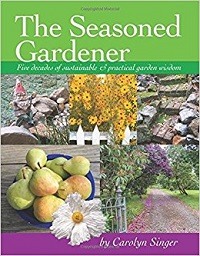
Grass Valley, California is on the outer rim of our region, but the gardening columns Carolyn Singer has written for her local paper are worth knowing about, especially for gardeners in the foothills of the Cascades. “The Seasoned Gardener” is a compilation of those columns and gives advice for areas with lots of rain and a wider temperature range than for those of us close to the Sound.
She is also very experienced with the ravages of deer, and throughout gives ways to manage Bambi. A couple of older titles by Singer, recently acquired by the Miller Library, address this concern more directly. “Deer in My Garden” (2006 – with much of the writing done while the author spent the summer of 2005 in Seattle) led to “Deer in My Garden: Volume 2” (2008), the first with an emphasis on perennials and subshrubs, while the latter considers groundcovers and edgers.
Both are part of “The Yucky Flower Series,” honoring the advice of her then 3-year-old grandson: “The deer wouldn’t eat yucky flowers!” So that is what she planted and her deer-resistant recommendations are based on her own experience, or those of gardeners who grew trial plants for her, knowing that in the interest of science (or cervid consumer selection), the trial plants might disappear.
While yucky to deer, the selected plants are all quite lovely to gardeners and would make many other recommended plant lists. Most are drought tolerant and adapted to a wide temperature range. Best of all, the author enthusiastically rates the maintenance requirements of most as “EASY!” to “VERY, VERY EASY!” Deer or no deer, these are great garden plants.
Excerpted from the Spring 2015 Arboretum Bulletin.