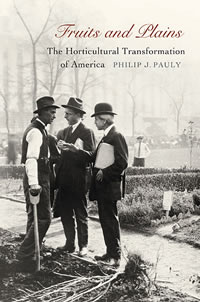
 Philip Pauly was a professor of history at Rutgers University. His book, Fruits and Plains , was published by Harvard University Press. These are high academic credentials for a book that at first glance appears to be about gardening. But this is no ordinary gardening book. As suggested by the sub-title, The Horticultural Transformation of America, this is a serious study of the importance of horticulture to all aspects of American life particularly from the founding of the country well into the 20th century.
The key here is the term horticulture. To Pauly, “In general conversation it is an upmarket synonym for gardening” and includes the design, selection, and maintenance of plants in private and public gardens. But he uses the term more broadly and claims that in the 1800s, “horticulture was equivalent to what is now call plant biotechnology.”
The early history he recounts is focused on utility of gardens, particularly fruit producing trees and shrubs. Later he turns to arboriculture, highlighting the arguments for and against native and exotics species; century old arguments that continue today.
But of perhaps greatest interest is chapter nine, “Culturing Nature in the Twentieth Century”. Here are some keen insights to focus of gardeners today and the cultural environment at the time of the founding of the Washington Park Arboretum.
Excerpted from the Spring 2012 Arboretum Bulletin.
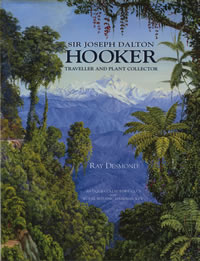 Sir Joseph Dalton Hooker: Traveler and Plant Collector (2001) by Ray Desmond is a marvelous travelogue, masking as a biography. Our hero took two multi-year expeditions (to Antarctica, New Zealand, and Australia from 1839-1843; and to India and the Himalayas from 1847-1851) as well as shorter trips to Morocco, Palestine, and the United States.
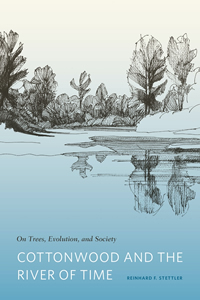 Cottonwood and the River of Time by Reinhard Stettler explores an unlikely topic, cottonwood trees and their kin including poplars and aspens. A retired University of Washington professor of forestry, the author writes an engaging natural history beginning with a single tree, an old matriarch near the Snoqualmie River. While eventually global in scope, many of the examples continue to be set in the Pacific Northwest.
 Thru the lens: 50 years of the Japanese Garden is a nearly hour-long documentary on DVD that explores both the history and current activities in the garden. Several docents, gardeners, and supporters are interviewed. I found the in-depth presentation of the tea ceremony particularly interesting. This documentary has a limited availability, but can be viewed with headsets at the Miller Library.
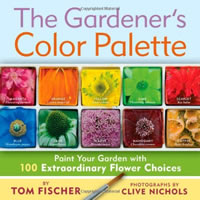 The Gardener’s Color Palette at first glance is a pretty book, but I was prepared to dismiss it as having little information of consequence. However, like with most books, it is important to read the author’s introduction. Tom Fischer’s second sentence summarizes his intent: “Flowers are nature’s most direct and accessible route to enjoying the pure pleasures of color.”
 David George Gordon wrote a delightful booklet (48 pages) in 1994 titled Field Guide to the Slug. After chuckling over the concept, I found there was a lot of information packed in those few pages.
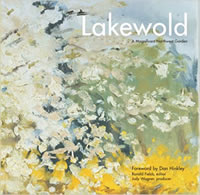 Among my favorites of recent new books is Lakewold: A Magnificent Northwest Garden. It reminds me of a well-crafted exhibit catalog, beginning with detail from an oil painting of the garden on the cover.
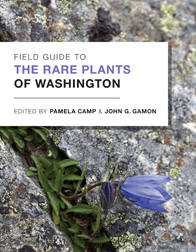 Most field botany guides help with identifying the most common trees, shrubs, and wildflowers. Field Guide to the Rare Plants of Washington takes a very different approach by choosing as its subjects over 300 of the rarest plants, ferns, and lichens in the state.
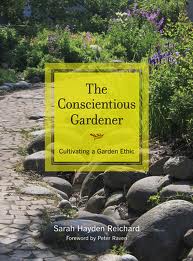 Sarah Reichard, the late Director of the University of Washington Botanic Gardens, is also the author of an important book for gardeners: