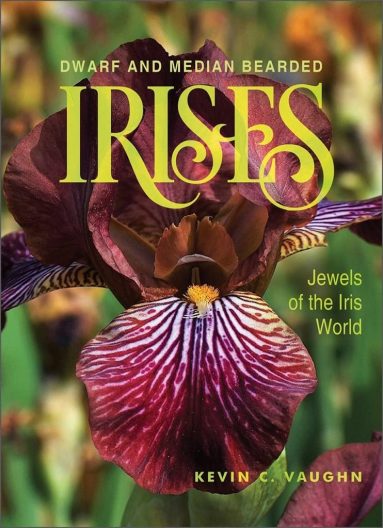
 Kevin Vaughn is an active grower and breeder of iris in Oregon. His newest book, “Dwarf and Median Bearded Iris” focuses on the development of varieties smaller than the more familiar tall bearded selections. These are very useful garden plants, as they do not dominate their setting or requiring the staking often needed by their taller cousins. The history of their development may be of interest only to the most devoted iris fan (yes, I’m guilty as charged), but the author balances this with innovative planting designs and good suggestions for companion plants. He also names his favorite varieties and many are available from one of the several iris gardens in our region.
Long-time Arboretum Foundation members will remember Jean Witt (1921-2016), who was the widow of Joe Witt after whom the Winter Garden is named. Jean was also well known as an iris breeder, and especially of the medium size varieties. Until reading this book, I didn’t realize how instrumental she was in the creation of these classes that were only recognized and defined in the mid-20th century. New varieties from her breeding have continued to be introduced on her behalf up until the last few years. One of my favorites is ‘Little White Tiger’ from 2009.
Excerpted from Brian Thompson’s article in the Spring 2023 issue of the Arboretum Bulletin
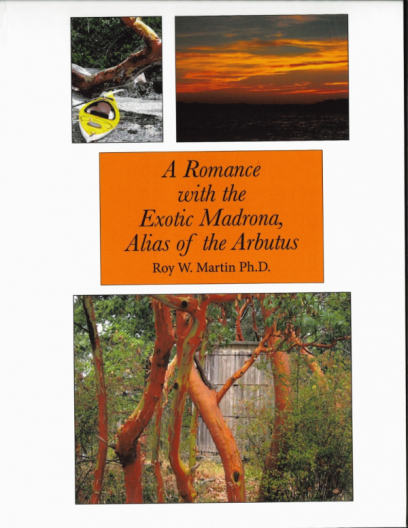 Roy Martin is a retired University of Washington professor of anesthesiology and bioengineering. He is now pursuing a very different passion, the genus Arbutus, best known locally by A. menziesii, the Pacific Madrone. Eleven species are recognized and in “A Romance with the Exotic Madrona, Alias of the Arbutus,” Martin explores them all, visiting their native ranges in Mexico, western North America, and around the Mediterranean.
 The Royal Horticultural Society (RHS) has recently been producing excellent single genus books. Known historically as botanical monographs, the works of the past twenty years give equal importance to horticulture. While the many species are considered for their habitats and qualities, so are the many selected varieties or developed cultivars that are important to gardeners. Illustrations are much more prominent than in older books, and include paintings by botanical artists, contemporary and historical, and excellent photography.
 One of the most unusual titles in the Miller Library collection is “A Virgin for Eighty years,” by Linda Eggins, a book about the genus Aucuba, and primarily one species, A. japonica. The reason for the title? It’s complicated.
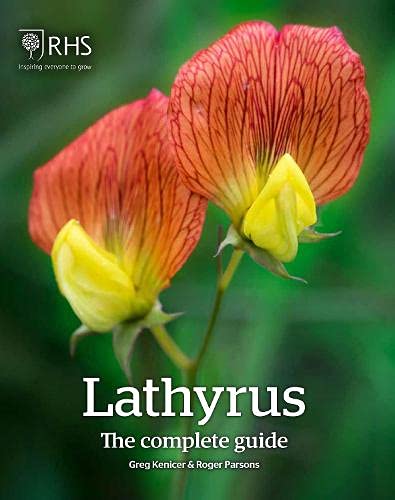 The Royal Horticultural Society (RHS) has recently been producing excellent single genus books. Known historically as botanical monographs, the works of the past twenty years give equal importance to horticulture. While the many species are considered for their habitats and qualities, so are the many selected varieties or developed cultivars that are important to gardeners. Illustrations are much more prominent than in older books, and include paintings by botanical artists, both contemporary and historical, and excellent photography.
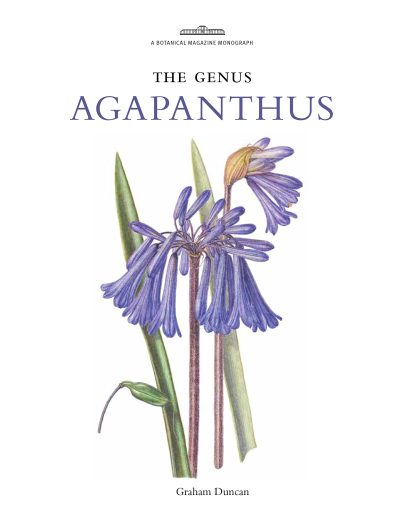 The British Royal Botanic Gardens (RBG) has recently been producing excellent single genus books. Known historically as botanical monographs, the works of the past twenty years give equal importance to horticulture. While the many species are considered for their habitats and qualities, so are the many selected varieties or developed cultivars that are important to gardeners. Illustrations are much more prominent than in older books, and include paintings by botanical artists, contemporary and historical, and excellent photography.
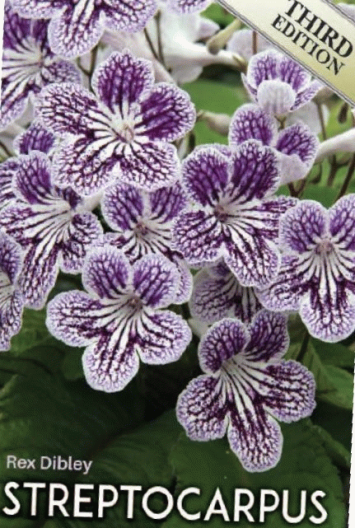 About 20 years ago, I drove a very narrow roadway in northern Wales in search of Dibley’s Nursery. I had recently discovered the genus Streptocarpus, a houseplant that is closely related to African violets (now considered to be in the same genus). All my reading confirmed that Dibley’s was THE source in Britain, if not the world, for this plant. A visit was mandatory.