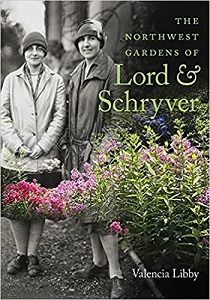
I have been interested in the history of horticulture in the Pacific Northwest from an early age. However, I only recently learned of the work of landscape architects Elizabeth Lord and Edith Schryver and their practice based in Salem, Oregon from 1929 to 1969. Their story is told in compelling detail in The Northwest Gardens of Lord & Schryver, a new book by Valencia Libby.
Elizabeth Lord (1887-1974) was a member of a prominent Salem family; her father was a governor of Oregon. After his death, she became the frequent companion of her mother, from whom she learned about gardening and an appreciation of native plants. Lord was already in her late 30s by the time her mother died, leaving her with an inheritance, but also the need to establish a career. She decided to study at the Lowthorpe School of Landscape Architecture for Women in Groton, Massachusetts, one of the very few institutions for women interested in this field. “It was a program worthy of any modern department of landscape architecture and included an emphasis on horticulture that is rarely found today.”
Edith Schryver (1901-1984) was from the Hudson Valley of New York and also attended Lowthorpe, but at an earlier time than Lord. Her superior skills as a student quickly led to a position with Ellen Shipman in Manhattan, a landscape architecture firm consisting of only women. In June 1927, both Lord and Schryver boarded a ship as part of a trip co-sponsored by Lowthorpe to visit outstanding European gardens.
Meeting shipboard, they quickly became close friends, and spent four months traveling in Europe together, only part of the time with the Lowthorpe group. Upon returning, Lord still had a year of studies to complete, but by early 1929 they moved together to Salem where they shared a home and garden for 45 years. The firm of Lord and Schryver completed designs in Oregon and Washington for about 200 clients, many of them residential gardens, but also public parks, institutional grounds and a variety of other facilities.
Their impact was greater than just the work on specific projects. Early clients included Richard D. and Eula Merrill of Capitol Hill in Seattle. Libby’s research suggests the work of Lord and Schryver influenced the Merrill daughters, Virginia Bloedel and Eulalie Wagner, in their later creations of the Bloedel Reserve and Lakewold Gardens respectively.
Lord and Schryver were noted for their interest in finding new plants and introducing them to gardeners and the local nursery industry. They were familiar with what was being offered on the east coast and they traveled widely. Unlike many in their profession, this “expertise identified them as consummate plantswomen.” They also embraced the innovations in educational outreach, including the new media of radio, speaking on programs intended for home gardeners and especially for women.
We are fortunate that their legacy is preserved today by the Lord & Schryver Conservancy, which maintains the women’s home and garden, known as Gaiety Hollow. Also open to the public in Salem is the historic gardens at Deepwood Museum and Gardens, the former home of Alice Bretherton Brown, a Lord & Schryver client from 1929 until 1968. This is an important book in the history of both landscape design and the development of ornamental horticulture in the region, and it is also a real pleasure to read.
Published in Leaflet for Scholars, Volume 9, Issue 1, January 2022


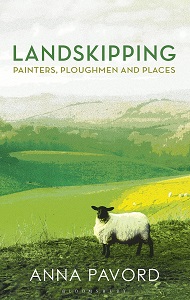 After moving from a lifetime in New York City to the flatlands of central Illinois, my friend Cecile decided to buy landscapes painted by local artists to teach the family how to look at the land around them that seemed oppressively monotonous. That was my introduction to the idea of seeing landscapes from different perspectives. Landskipping shows the reader two ways of looking at rural Britain that emerged in the late 18th and early 19th centuries. Along the way, the book describes many engaging places.
 In the late 19th century in western Canada there were two women who had a lot in common. Mary Schäffer Warren (1861-1939) and Mary Vaux Walcott (1860-1940) were both of Quaker families living in Philadelphia, arguably the center for science and culture in America at the time. They both developed strong interests in the natural world, and developed the skills to paint in watercolors the native plants they found.
 Catharine Parr Traill (1802-1899) and Susanna Moodie (1803-1885) were sisters who immigrated to Canada from England in 1832. Both newly married, they were part of a movement of settlers from Britain seeking to escape poverty by moving to Upper Canada (now the province of Ontario), where they hoped to establish a prosperous new home.
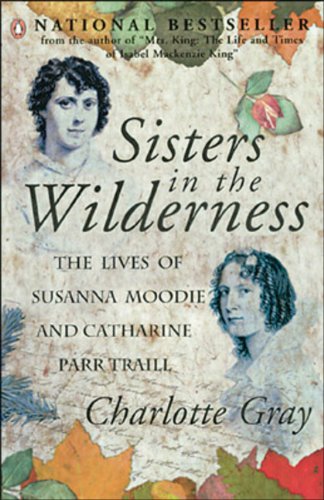 Catharine Parr Traill (1802-1899) and Susanna Moodie (1803-1885) were sisters who immigrated to Canada from England in 1832. Both newly married, they were part of a movement of settlers from Britain seeking to escape poverty by moving to Upper Canada (now the province of Ontario), where they hoped to establish a prosperous new home.
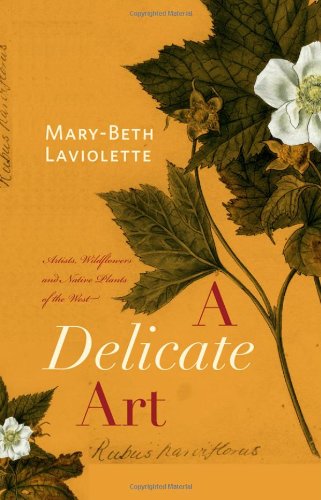 In the late 19th century in western Canada there were two women who, while not sisters, had a lot in common. Much of their stories are found in “A Delicate Art: Artists, Wildflowers and Native Plants of the West” by Mary-Beth Laviolette.