Skip to content

Outdoor learning environments : spaces for exploration, discovery and risk-taking in the early years

[Outdoor Learning Environments] cover

Why do childhood play and learning in the outdoors matter? The short answer is because then we are less likely to destroy it. Good habits start early. With knowledge and habits established in a young generation, the outdoor paradise of the Pacific Northwest will be here for us in the future.

Nature inspires curiosity, learning, and renewal. In a time of widespread tech addictions, expanding cities such as Seattle, and changing behavior and cultural values, connecting with the outdoors contributes in unique and important ways to our health, well-being, and survival in the long run.

Outdoor Learning Environments: Spaces for Exploration, Discovery and Risk Taking In the Early Years guides educators, policy makers and community builders to developing positive and engaging outdoor learning environments for children. Editors Helen Little, Sue Elliott and Shirley Wyver, as well as other authors, researchers and practitioners, present a range of ideas drawn from contemporary education theories, research and practice. Australia is the location of the publication, but it could be anywhere in the world.

The book highlights how educators interweave learning and the environment, beyond management-style supervision. Positive approaches to risk-taking are considered, with risk-taking defined as events, behaviors and consequences that are associated with some degree of uncertainty about the outcomes. Designing and planning for outdoor learning are included in a way that incorporates children’s voices and cultural perspectives. Education for sustaining a healthy environment is explored. The editors, at the same time, address the issue of ensuring that outdoor spaces and equipment align with relevant regulations and safety requirements.

Outdoor Learning Environments opens minds of children and caring adults to the wonders and realities of our environment and to working collaboratively toward sustainable futures with wisdom and heart.

Excerpted from the October 2019 Leaflet Volume 6, Issue 10.
Gardeners World Magazine

The magazine associated with the BBC tv show Gardeners’ World. Published in the United Kingdom.

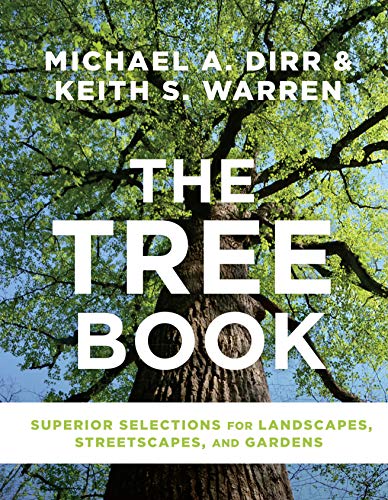
The Tree Book: Superior Selections for Landscapes, Streetscapes, and Gardens

Michael Dirr is the guru of woody plants.  Beginning in 1975, his “Manual of Woody Landscape Plants” – through six editions as of 2009 – has been required reading for any horticultural student.  These books are very technical and rely on line drawings to illustrate their subjects.

Working with Timber Press, Dirr changed directions in 1997 with the publication of “Dirr’s Hardy Trees and Shrubs.”  Described by the author as “a photographic essay that profiles and highlights the most common woody landscape plants,” this proved an excellent way to reach a more general gardening audience.  This style continued with “Dirr’s Encyclopedia of Trees and Shrubs” (2012).

While this last book will remain an important reference because of its inclusion of shrubs and helpful lists of selection criteria, the photographic essay approach reached a new height with the publication of “The Tree Book.”  For the first time, it is written with a co-author, Keith Warren.  While Dirr is from the southeast, spending his academic career at the University of Georgia, Warren is a retired tree breeder and nurseryman from Oregon.  His voice makes this new book especially valuable to gardeners in the Pacific Northwest.

Photographs are still the eye-grabbers of this huge book (940 pages!), but the text has been expanded to achieve the right balance of being informative without excess detail, and is often very funny.  Reading about Sourwood (Oxydendrum arboretum), I learned that in its native Georgia it can reach 60’, but “in the dry summers of the West, a 20’ height is a big tree.”  The authors claim this as a favorite species, looking good in all seasons, with the best in the fall: “Like a drum roll, the fall color comes on slowly and intensifies, finally reaching a crescendo.”

The authors do an excellent job of highlighting the best of new cultivars or selections of their subjects.  For example, I learned of nine cultivars of one my favorite trees, the Persian Ironwood (Parrotia persica) – I only knew of one!  There is even a newly available species, Parrotia subaequalis, which in Oregon has fall color that “is consistently brilliant red, brighter than P. persica.”

This is a reference book and not available to check out from the Miller Library.  However, if you are planting new trees, or want to learn more about trees, I recommend visiting the library and seeking out this book.


Published in Garden Notes: Northwest Horticultural Society, Fall 2019


Pacific Northwest Medicinal Plants: Identify, Harvest, and Use 120 Wild Herbs for Health and Wellness

[Pacific Northwest Medicinal Plants] cover

Can plants heal our bodies? Searching for answers to this basic question, Scott Kloos provides a revealing excursion in “Pacific Northwest Medicinal Plants: Identify, Harvest, and Use 120 Wild Herbs for Health and Wellness”, published by Timber Press in 2017. This comprehensive field guide and reference work covers Alaska, British Columbia, Oregon, Washington, and Northern California.

Kloos shares what he has learned from more than two decades of wildcrafting and working with plant medicine. He runs his own school as well as a folk medicine business. In helping people understand traditional uses of medicinal plants, he acknowledges some level of uncertainty and risk involved. Self-treatment is strongly not recommended; consulting a qualified practitioner is advised.

In the book, Kloos first describes basic botanical concepts, tools for harvesting, formulas for making medicine, ethical and sustainable wildcrafting practices, herbal safety, and a breakdown of the harvesting season. Photographs taken by Kloos accompany the plants he profiles. He provides detailed descriptions of each plant: their growth habits, parts of the plant, identifying characteristics, where one is likely to find the plant, the best time of year to harvest, and how to harvest the plant. Medicinal uses of the plant and methods of preparing each part of the plant as medicine are described. Cautionary notes throughout the book alert readers regarding such matters as toxicity, dosage precautions, and uses with other medications or during pregnancy. It is imperative to consider potentially harmful effects of an herb.

For thousands of years, plants have been the chief source of medicine around the world. Healers have prescribed many cures from the flora around them. Nevertheless, there is a lot we don’t know. It is important to let your doctor and other health practitioners know which herbal remedies you are considering taking. Meanwhile, reading this book can help you cultivate a more healthy respect for the wild, bonding with the living world in all it offers us.

Excerpted from the August 2019 Leaflet Volume 6, Issue 8.

BugGuide.Net

The site includes guide to identifying insects,discussion forums, and a vast collection of images. “We are an online community of naturalists who enjoy learning about and sharing our observations of insects, spiders, and other related creatures.”

Bee Basics: An Introduction to Our Native Bees

A 48 page booklet by By Beatriz Moisset, and
Stephen Buchmann. Published by the USDA Forest Service and Pollinator Partnership Publication. Topics include biology, species guide, life cycles, foraging habits, and conservation.

Global Plants on JSTOR

(UW Restricted) “… the world’s largest database of digitized plant specimens and a locus for international scientific research and collaboration.”

Native Plants PNW

An encyclopedia of Pacific Northwest native plants with information on range, habitat, identification, and use by people and animals.

Native Plant Finder

A database to find native plants by zip code which is sorted by the type of plant (herbaceous or woody) and by the number of moths and butterflies supported. Created by the National Wildlife Foundation.

My Hair is a Garden

[My Hair is a Garden] cover

Can we tend to our sense of self the way we tend to a garden? Can a garden teach us self-acceptance and resilience? Cozbi Cabrera’s picture book, My Hair is a Garden, demonstrates the way a little girl who is teased for her appearance takes heart in the kind guidance of an older neighbor who is a gardener. A garden contains beauty in many forms, and a tree is not better than a ground cover: “They’re both beautiful […] even though they’re so different.” The neighbor teaches the girl practical lessons in caring for her hair, but more importantly and subtly, she sows in her the seeds of self-confidence.