A list of the best books, articles and websites on urban farming.
Straw Bale Gardens Complete
 I was surprised to learn that there is a new way to grow vegetables. Inside straw bales. Yes, that is what I said, inside straw. This new book by Joel Karsten, Straw Bale Gardens Complete (Cool Springs Press, 2015), explains a method of growing and harvesting crops which is useful for increasing productivity while reducing labor. The chapters thoroughly cover planning your straw bale garden, and making straw bale greenhouses. There are extensive pages of garden layouts, including single, two, and three-bale gardens with tomato cages, trellises, and suggested plants. This approach to container gardening is using the straw bale itself, held together with two or three strings, with the outside crust of the bale serving as the container. The straw inside the bale will decompose, making it “conditioned” and ready to plant. The author gives step by step instructions for conditioning to create a warm, moist and nutrient rich rooting environment for seedlings. The author points out that straw bale gardens are ideal if you can’t do heavy lifting, can’t bend over, have poor soil, or limited space.
One thing to keep in mind is the difference between hay and straw, which often are confused. Straw comes from one of the cereal small-grain plants. Most common are oats, wheat, barley, rice, flax and rye. Hay is green, more coarse and wiry than straw. Hay can be baled alfalfa or any dozens of different grasses. Hay is fed to livestock as fodder. It contains all the seed heads inside the bale. But hay is not desirable for bale gardens. The book explains how to find and maintain the best straw for growing plants. If you are looking for a source for straw in the Seattle area, I’ve been able to supply my chickens with straw from The Grange in the University District. I also recommend using organic straw for vegetable gardening because you will want straw that has not been treated with herbicides or pesticides. Organic bales are usually sold at about the same prices as conventional ones.
The Seed Garden: The Art and Practice of Seed Saving
In the summer of 2015, I visited Seed Savers Exchange, a remarkable mecca for growers of heirloom vegetables, herbs, and flowers. Located in rural Iowa, this organization has become world-renowned for its preservation of over 20,000 varieties of mostly food plants, not only providing safe storage for the seeds, but also maintaining the vitality of their collections by selective growing, germination testing, and researching the history of their sources.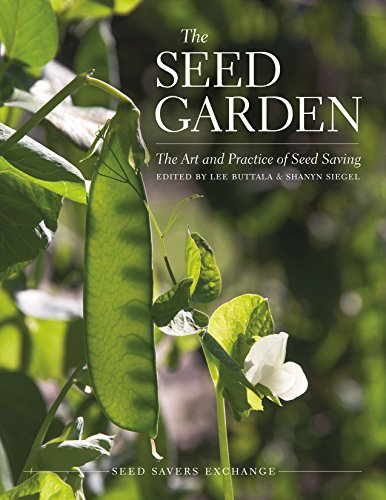
While I would encourage all gardeners to visit Seed Savers, this may not be practical. So instead, considering reading The Seed Garden: The Art and Practice of Seed Saving, published by the Exchange (and written by Micaela Colley and Jared Zystro) in which the basic philosophy and practices of the organization are distilled into very useful handbook for the home gardener.
Like many gardeners, I’ve done a bit of seed saving, and this book starts at that level – assuming a basic understanding of good gardening practices with a reminder that saved seeds are only useful from open-pollinated plants crossed with other plants from the same population. Hybrids will not breed true.
I learned in the entry on lettuce – considered easy for beginners – that these plants are almost completely self-pollinating, and that different varieties only need 10 feet of separation to ensure purity. Lettuce produces abundant seeds, but the quality is best on plants that are allowed to grow to maturity with minimal harvest, suggesting its best to designate a few stock plants for your breeding purposes.
There are also “Master Class” sections that cover more advanced subjects, including building isolation cages, avoiding inbreeding, and doing your own germination testing. Most interesting is the process of extracting seeds from really messy plants, like tomatoes, but even with these, the reader is encouraged to try, using common kitchen tools.
The tone of the book throughout is positive and encouraging. Even the usual negatives can be turned around. “For many gardeners, the sight of bolting lettuce signals that its leaves have turned bitter and unpalatable, but these emerging flower talks also signal an impending harvest of ripened seeds.” After reading this book I’m ready, with my patch of ‘Red Velvet’ lettuce, to become a serious seed saver.
Published in Garden Notes: Northwest Horticultural Society, Spring 2016
Plant Talk – Plant Conservation Worldwide
“Plant Talk was founded in 1995 and was designed as an independent voice to help and support all those fortunate people who work in the conservation of plants; either professionally or as amateurs.”
Helpful Gardener
This website contains an array of articles concerning vegetable, flower, and container gardening. Also provided are directories listing landscape architects and garden designers by state; nurseries and garden centers around the country; a gardening tips section; and public forums.
Digital Librarian: Gardening
A simple alphabetical list of high quality gardening web sites from around the world. Short annotations help you identify the usefulness of each site.
About.com: Gardening Home Page
Washington Gardens
An annotated list of a vast number of public and private gardens open to visitors across Washington State.
National Gardens Scheme: UK GardenFinder
Every year in the UK, over 3600 NGS open gardens (most of them privately owned) welcome visitors. GardenFinder helps you plan NGS garden visits by dates, by location, garden name or by specific garden feature.
Local Harvest
Use the interactive map of the United States to find farmer’s markets, CSA farms (community supported agriculture),farm stands, and other related organizations that support small local farms.