COVID-19 Literature Situation Report
COVID-19 Literature Situation Report is a daily (M-F) newsletter that provides a succinct summary of the latest scientific literature related to the COVID-19 pandemic.
The scientific literature on COVID-19 is rapidly evolving and these articles were selected for review based on their relevance to Washington State decision making around COVID-19 response efforts. Included in these Lit Reps are some manuscripts that have been made available online as pre-prints but have not yet undergone peer review. Please be aware of this when reviewing articles included in the Lit Reps.
Click the SUBSCRIBE button in the right-hand column to subscribe to daily reports delivered to your inbox.
May 18, 2020
COVID-19 Literature Situation Report May 18, 2020

There is no evidence that RAAS inhibitors increase the risk of severe COVID-19 disease. The authors recommend that these medications should not be discontinued in an attempt prevent severe cases of COVID-19.
May 15, 2020
COVID-19 Literature Situation Report May 15, 2020

Models show that even the most efficient contact tracing strategies are not sufficient to bringing the effective reproduction number (R) to below 1 if there are testing delays as short as 4 days. App-based contact tracing, even with coverage as low as 20%, may be superior to conventional contact tracing.
May 14, 2020
COVID-19 Literature Situation Report May 14, 2020

State-wide school closures are associated with fewer COVID-19 cases and deaths per capita. State-wide deaths due to COVID-19 were estimated to be 12% higher for each additional day that schools remained open.
May 13, 2020
COVID-19 Literature Situation Report May 13, 2020
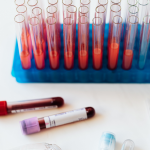
Salazar et al. report safety and improved clinical status among 25 patients with severe COVID-19 after transfusing convalescent plasma from donors with confirmed SARS-CoV-2 infection.
May 12, 2020
COVID-19 Literature Situation Report May 12, 2020

An age-stratified model calibrated Seattle, Washington showed early implementation of social distancing interventions would delay the epidemic curve, while later implementation flattened it. The model indicated that the epidemic would rebounded after cessation of social distancing if testing and contact tracing were not performed.
May 11, 2020
COVID-19 Literature Situation Report May 11, 2020

Syndromic screening of air-travelers at exit or entry and broad communication about COVID-19 symptoms following their arrival has likely delayed the local spread of SARS-CoV-2.
May 8, 2020
COVID-19 Literature Situation Report May 8, 2020

An analysis of smartphone location data and healthcare and economic indicators reveals a strong association between greater declines in mobility in counties that are healthier and wealthier, indicating a social distancing privilege gap.
May 7, 2020
COVID-19 Literature Situation Report May 7, 2020
The COPE Consortium has developed a COVID-19 Symptom Tracker mobile application. User self-report of symptoms through this app can be used to identify COVID-19 hotspots.
May 6, 2020
COVID-19 Literature Situation Report May 6, 2020

SARS-CoV-2 could remain stable at 37°C for at least 24 hours, but heating at 56°C for 30 minutes could effectively inactivate the virus while preserving the stability of viral RNA in both human sera and sputum samples.
May 5, 2020
COVID-19 Literature Situation Report May 5, 2020

Modeling studies that examined national and local (King County) COVID-19 epidemics found that relaxation of social distancing strategies prior to June 2020 could trigger a second wave of infections.
Previous page Next page