Culture of Inquiry and Innovation
UWMC Professional Practice Structure | Our Shared Leadership
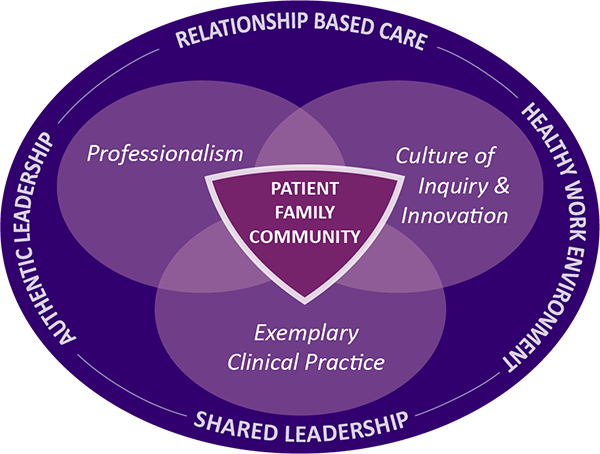
Relationship Based Care is our model of nursing. This model emphasizes the relationship with self, coworkers, and the patient/family, based on work by Mary Koloroutis, MSN, RN
Jump to section:
The Professional Practice Council (PPC), Local Practice Councils (LPCs) and Unit Practice Councils (UPCs) are the central structures by which nurses come together from within and across the medical center campuses to define and guide professional nursing practice. These councils are an example of shared leadership, where bedside nurses and leaders collaborate to improve care. The PPC reports to the Nursing Executive Council (NEC). Information flows between these levels of councils in both directions.
- UPC – Focuses on improvement projects for one unit.
- LPC – Focuses on improvement projects for a specialty area in nursing (ICU, Med-Surg, OR, etc.) and support the UPCs.
- PPC – House wide committee (both campuses) that oversees nursing policies and supports the councils. Made up of LPC co-chairs and more.
- NEC – Oversight council for nursing quality & practice with bedside RNs and nursing leaders.
Northwest campus LPCs
- Critical Care/ED
- Med-Surg
- Periop
- Procedural
- Infusion
- CBC
Montlake campus LPCs
- ICU
- Med-Surg
- Perianesthesia
- OR
- Procedural
- Oncology
- MIC
- NICU
Joint Councils
- Education
- Advanced Practice
- Clinical Informatics
- PPC
Nurses Week Poster Walk
The Nurses Week Poster Walk was a vibrant celebration of nursing excellence across UWMC’s Montlake and Northwest campuses. Posters displayed in the hospital lobbies showcased the impressive work of nurses and interdisciplinary partners, highlighting quality improvement (QI), evidence-based practice (EBP), and research projects, along with initiatives led by Local or Unit Practice Councils and other nursing committees.
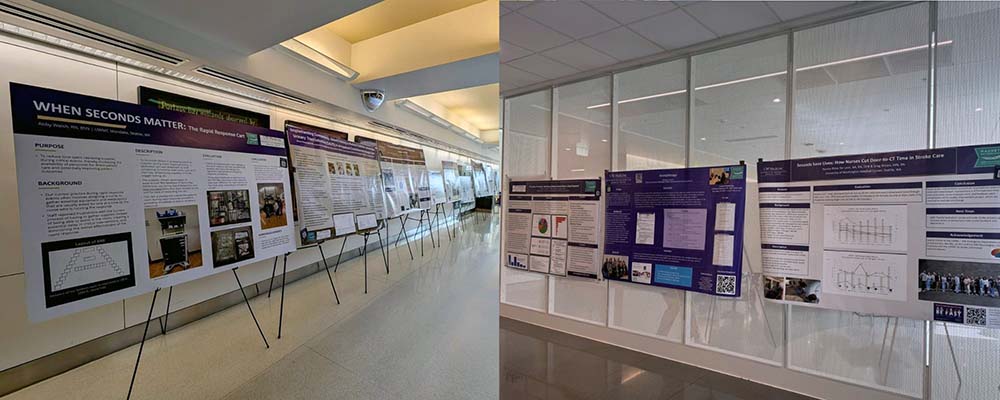
This public display created an opportunity for staff, leaders, patients, and visitors to see the breadth of innovation happening across UWMC. By sharing these projects in a visible and accessible way, the Poster Walk recognized the dedication of nurses who are continually working to improve care and advance professional practice.
The event also reflected UWMC’s strong culture of inquiry, celebrating the curiosity and engagement of nurses who turn questions from practice into meaningful improvements. Highlighting this work during Nurses Week reinforced how the everyday efforts of UWMC nurses align with the Magnet model, demonstrating a commitment to nursing excellence, professional practice, and continuously improving care for the patients and communities we serve.
As visitors, staff, and leaders made their way through the Poster Walk, they had the chance to vote for the projects that inspired them most, and the results reflected the values at the heart of UWMC nursing. Honored with the 2025 People’s Choice Award are:
- Northwest Campus | 5A Welcome, Improving the Patient Experience on an Inpatient Medical Unit
- Montlake Campus | 7NE Stand Tall, Don’t Fall: A team Approach to Patient Safety
Evidence-Based Practice (EBP) Workshops
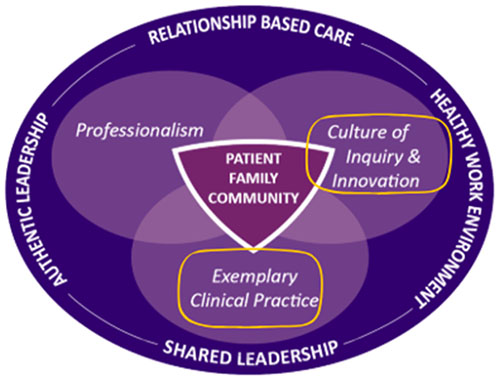
The Evidence-Based Practice (EBP) Workshops was re-launched this year, representing an important step in strengthening UWMC’s culture of inquiry and continuous improvement in nursing practice. This interactive four-hour workshop introduces nurses to the principles of evidence-based practice while building practical skills they can apply in their clinical areas.
The session focuses on developing clinical questions, conducting literature searches, reviewing research articles, and translating evidence into meaningful practice projects. Through hands-on learning and discussion, nurses gain confidence in exploring ideas that can improve patient care and professional practice.
The workshops are co-led by the Nursing Professional Development department and the Clinical Nurse Researcher, combining expertise in education, practice, and research. Together they provide practical tips, tools, and examples from UWMC projects, helping nurses see how ideas from the bedside can grow into meaningful improvements in care.
Seattle Nursing Research Conference 2025
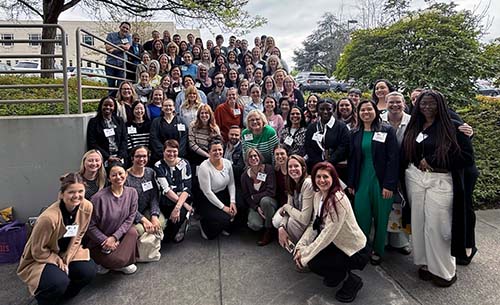
The 2025 Seattle Nursing Research Conference was an inspiring and high-energy 2 day event that highlighted the remarkable work of nurses across University of Washington Medical Center – Montlake and Northwest campuses. UWMC nurses were strongly represented, sharing more than 30 poster presentations along with several podium presentations that showcased the depth and breadth of innovation happening across our organization.
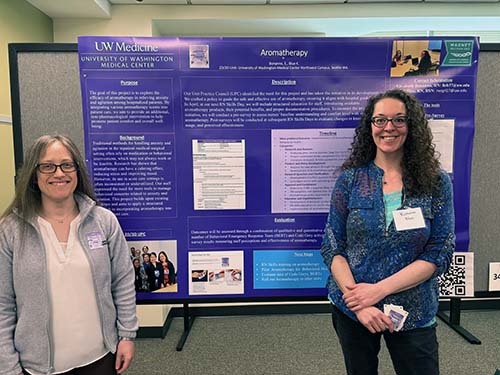
UWMC had strong participation from staff nurses, unit practice council members and leaders who attended to support their colleagues and share their quality improvement (QI), evidence-based practice (EBP), and research projects. The conference also brings together nurses, leaders, students, and researchers from organizations across the Pacific Northwest, creating opportunities for exchanging ideas that advance nursing practice across our healthcare community.
The conference provided an important platform for nurses to share their work with external audiences, highlighting the incredible contributions UWMC nurses make every day to advance nursing practice and improve the exceptional care provided to our patients and community.
Awards:
Best Podium: Heather Richards & Melissa Newell – Effect of Pre-Operative Gabapentin on Length of Stay in the Post Anesthesia Unit
People’s Choice Poster: Liz Bonanno & Kat Blue - Aromatherapy
Well-being at UWMC
Over the past year, CARE4U focused deeply on making support feel more human and accessible by strengthening warm handoffs, expanding peer to peer and leader connections, and ensuring that individuals could find the right resources at the right time, without unnecessary barriers. Our suicide prevention and awareness efforts further emphasized early connection, compassion, and care, helping to create a culture where no one has to navigate stress and distress alone. Strategies in this space further embedded Stress First Aid tools and conversations into our workplace and promoted use of the CARE4U-customized Stress Check-In Tool.
CARE4U also made meaningful strides in supporting teams and embedding trauma-informed practices into the fabric of our organization. Our expansion of debriefing structures, through critical incident stress management optimizations, grief support opportunities in partnership with Spiritual Health and Well-being, and restorative circles in partnership with our UWMC Equity, Diversity and Inclusion team and the UWM Office of Healthcare Equity, created more opportunities for those who work and practice at UWMC to process, reflect, and heal together after difficult experiences.
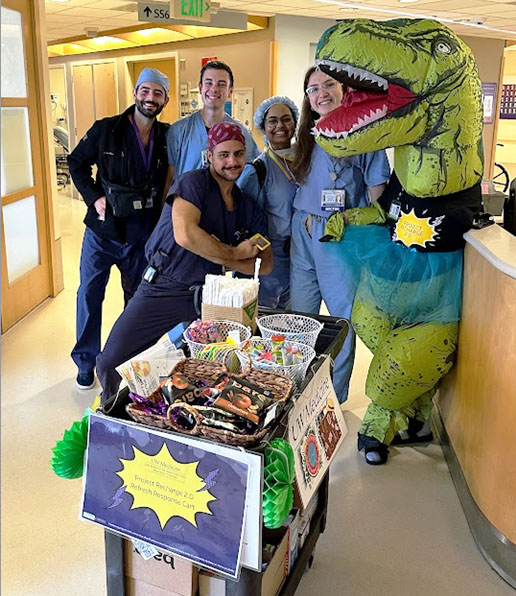
CARE4U continued a pilot of well-being break rounding through “Project Recharge”, bringing connection and thoughtful and practical well-being tools (and treats!) directly to the bedside or other work areas on both days and nights at both campuses and we are beginning to expand to our off-site ambulatory sites as well. Through evaluations of Project Recharge, we learned of the dramatic success and impact to UWMC, leading to further allocation of funding and resources to support this initiative to continue into 2026!
Programs like Schwartz Center Rounds, Visual Thinking Strategies, and peer-led initiatives, like Moral Distress Champions, Healthy Work Environment Projects, and Well-being Grants, fostered connection, emotional safety, workflow optimizations and re-imagining, and a sense of shared humanity in the workplace. At the leadership and systems level, CARE4U prioritized equipping leaders with practical, compassionate tools and integrating well-being into everyday structures through training, resource development, and advocacy.
Reducing Hospital Acquired Pressure Injuries (HAPI)
At UWMC–Northwest in 2025, wound care leadership formed an interdisciplinary work group in response to an increase in device–related HAPIs in patients receiving non invasive ventilation (NIV). The group included nursing, respiratory therapy, wound care, and supply chain. The team reviewed individual cases, identified themes, and examined current evidence to develop a focused intervention. Interventions included creating an educational flyer, in person education for RNs and RTs on skin assessment and documentation, assessing mask selection, fit, and strap adjustment to avoid excess pressure, and the addition of a thin foam preventative dressing to formulary. Following implementation, NIV related MDR HAPI incidence decreased by approximately 75%. The project’s success will be shared in a podium presentation at SNRC in April 2026.
Building on this success, discussions and planning began in late 2025 during weekly quality huddles and Nursing Quality Council meetings to develop a plan to sustain and advance HAPI prevention initiatives throughout 2026. These efforts were guided by the anticipated expansion of CMS HAPI reporting requirements, to proactively strengthen prevention practices and performance outcomes.
Magnet Summit
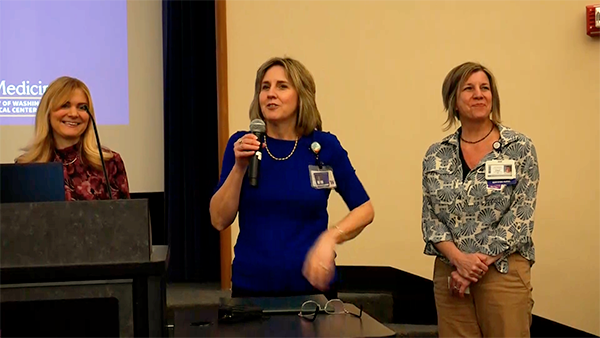
The UWMC Magnet Summit was a powerful and energizing event that brought together more than 200 nurses and leaders from the Montlake and Northwest campuses to celebrate the strength of UWMC nursing and our shared commitment to excellence. The day created a meaningful opportunity for staff across campuses to come together, connect, and recognize the incredible work happening throughout our organization.
A highlight of the summit was hearing from Susan Grant, whose leadership and passion for nursing excellence helped set the tone for the day. Her reflections reinforced the vision of Magnet as more than a designation—it is a commitment to the values that guide our professional practice and the impact nurses have on patients, families, and the broader community.
Throughout the summit, nurses from across UWMC shared how our Professional Practice Model and the Magnet domains come to life in everyday practice. These presentations highlighted how engaged nurses, strong teamwork, and authentic relationships with patients and families create the foundation for exceptional care. The summit celebrated the dedication and voice of UWMC nurses, whose engagement and leadership continue to shape a culture of nursing excellence.
The event also marked the exciting launch of our Elev8 journey, bringing energy and shared purpose to the next chapter of UWMC’s Magnet story. By bringing together nurses from both campuses to celebrate achievements and look ahead, the Magnet Summit reflected the collaborative spirit and commitment to excellence that continue to elevate nursing practice across UWMC.

Single Sign-on iPhone Deployment
During 2025, UW Medicine began the deployment of single sign on iPhones for our RN and PCT staff—the goal of the project was to improve nurse efficiency and streamline workflows. By assigning each nurse and nursing assistant a single phone number, the need to update Nurse Call systems and Epic whiteboards every shift was eliminated, saving valuable time and reducing errors. The enhanced device capabilities, including a larger display for easier messaging, chart review, and documentation, along with integrated applications such as Epic Rover and Haiku, enabled more efficient, real-time patient care.
Features like biometric login and decreased need for multifactor authentication simplified secure access to essential tools including Outlook, Teams, Clinical Toolkit, and Vitals platforms. Addition of communication and care apps such as CBORD for meal ordering and Dispatch for patient communication further improved coordination. Staff-focused apps like UKG, clinical toolkit and Micromedex supported employee satisfaction and safety. Improved battery life, caller ID masking, personalized contacts, and the Avaya Mobile App enhanced usability, while the AT&T FirstNet partnership ensured reliable communication through both Wi-Fi and cellular networks during emergencies.
Collectively, this technology advancement has positioned UW Medicine for future innovations such as Ambient AI and Smart Rooms, meaningfully enhancing nurse efficiency, communication, and patient care delivery. A huge thank you to Lisa Puliafico and the whole IT team for their support in this project.