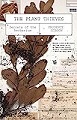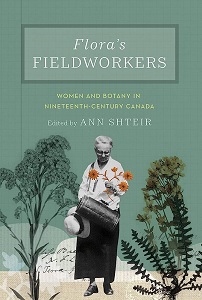
In the nineteenth century, Canadian women got their hands dirty in lots of botanical projects.
Flora’s Fieldworkers fills some gaps in the history of these women’s work. The book grew out of a 2017 workshop, “Women, Men, and Plants in Nineteenth-century Canada,” at York University in Toronto.
Some women in this volume collected plants. A few sent plant samples to William Jackson Hooker at Kew Gardens in England for his
Flora Boreali–Americana and to other plant seekers. Several women established or participated in organizations promoting or educating about botany and horticulture. Others produced botanic or floral art – paintings, albums, quilts. Nearly all gardened.
Flora’s Fieldworkers describes these endeavors, often placing them in a context of pushing the boundaries of the roles socially prescribed for women. Gardening and floral art were women’s work. Everything else in botany required women skillfully to insert themselves into the male-dominated establishment.
Christian Ramsay (1786-1839), the Countess of Dalhousie, amassed great quantities of plant specimens in Canada (and India and Scotland). Some are still preserved in several herbaria. She sent samples to Hooker, which he used. Like almost all the women in this volume, Lady Dalhousie taught herself botany, and she became expert. Her collecting opportunities came as she followed her husband’s diplomatic career. In her case, as in others, the author reminds us that England’s empire-building hovered in the background.
Catherine Parr Traill (1802-1899) was the most famous woman in this collection, though much of her fame grew from her work as a children’s author and natural historian. Plants played a large role in such works as her
The Backwoods of Canada, along with the birds and small animals. She combined careful and accurate plant descriptions with the context of her own sense of connection. If she could not find a new plant described in her small botanical library, she happily invented her own name for it.
Traill began collecting plants soon after her arrival in Canada from England in 1832, continuing for seven decades and writing detailed descriptions of each. With the help of her niece, Agnes Fitzgibbon, Traill published two volumes (both using standard nomenclature),
Canadian Wild Flowers and
Studies of Plant Life in Canada
, both available through the Miller Library.
Ramsay, Fitzgibbon, and Traill join numerous others in this enlightening volume on early women botanists up north.