
Current Funding Awardees
New Pilot and Feasibility Awardees

Nicole Liachko, Ph.D.
Research Associate Professor
Department of Medicine
Division of Gerontology & Geriatric Medicine
Evaluation of outcomes from diabetes and amyotrophic lateral sclerosis (ALS)
Type 2 diabetes (T2D) is associated with a lower risk of developing amyotrophic lateral sclerosis (ALS), and ALS patients have a lower than expected incidence of diabetes. However, the inverse connection between T2D and ALS has not been mechanistically understood in either patients or animal models. We hypothesize T2D-related metabolic phenotypes protect against the effects of disease processes in ALS, and/or that ALS-linked cellular and molecular disturbances counter diabetes. To examine these connections, we will generate a new mouse model of mixed ALS and T2D, and test metabolic, neurologic, and neuropathological outcomes. Completion of this project will lead to the first examination of how T2D impacts outcomes in ALS, and whether ALS leads to cellular changes that protect against diabetes, generating new research directions for understanding and treating both ALS and diabetes.

Elizabeth Rhea, Ph.D.
Research Assistant Professor
Department of Medicine
Division of Gerontology & Geriatric Medicine
Defining the CNS-driven metabolic effects of novel insulin receptor agonists
This project studies how the brain’s response to insulin affects body weight and blood glucose control. In obesity, insulin has trouble reaching the brain, which disrupts signals that normally help regulate appetite and metabolism. We will test whether a novel, highly selective stable insulin receptor agonist delivered to the brain is able to restore these signals. Using a mouse model of obesity, we will examine whether this treatment can affect food intake, body weight, insulin sensitivity, and glucose metabolism, while also measuring insulin signaling within key brain regions. Findings may establish a new therapeutic strategy that targets brain insulin pathways to treat obesity and type 2 diabetes.
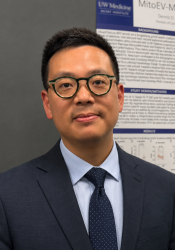
Dennis Wang, M.D., Ph.D.
Assistant Professor
Department of Medicine
Division of Cardiology
EV-Mito as Biomarkers of Metabolic Stress and Cardiovascular Risk
Chronic inflammation is a major driver of diabetes, obesity, kidney disease, and heart failure, yet the upstream signals linking metabolic stress to inflammation remain poorly understood. Extracellular vesicles containing mitochondrial components (EV-Mito) are emerging as potential mediators and biomarkers of mitochondrial stress and inflammation. Plasma EV-Mito levels will be evaluated in longitudinal human cohorts to determine whether they associate with cardiovascular risk and respond to metabolic therapies such as GLP-1 receptor agonists. The long-term goal is to develop EV-Mito as biomarkers that improve risk prediction and help identify treatment-responsive inflammatory pathways in cardiometabolic disease.
Continuing Pilot and Feasibility Awardees

Stephen McCartney, M.D., Ph.D.
Assistant Professor
Department of Obstetrics & Gynecology
Division of Maternal Fetal Medicine
Determining the Role of Glucose Utilization in Immune Cell Function at the Maternal Fetal Interface
Pregnancy complications including fetal growth restriction, preeclampsia, and preterm birth are linked to both placental inflammation and metabolic dysfunction, yet treatment options remain limited due to gaps in understanding the complex interactions between immune and metabolic processes at the maternal-fetal interface. This proposal investigates how glucose metabolism influences immune cell function at the maternal-fetal interface across normal pregnancy. Using single-cell flow cytometry, transcriptomics, and metabolomics assays, we will assess energy pathway utilization and metabolic phenotypes of immune cells during each trimester of pregnancy. Findings from this study will clarify how immune and metabolic networks coordinate during normal pregnancy and may provide insight into novel pathways to develop targeted therapeutics for pregnancy complications.

Nicholas Chavkin, Ph.D.
Assistant Professor
Department of Pediatrics
Division of Cardiology
Age-related loss of Y Chromosome on Metabolic Dysfunction
As men age, a portion of blood cells undergo mosaic loss of the Y chromosome (mLOY), which is the most common post-zygotic mutation in people. Men with mLOY have higher rates of mortality and age-related disease progression, but the effects of mLOY on metabolic dysfunction have not been investigated. In this project, we will test the hypothesis that mLOY affects metabolic dysfunction from diet-induced obesity by establishing and evaluating models of mLOY in human primary blood cells and transgenic mice. Understanding the role of mLOY in metabolic dysfunction could determine new hematopoietic-related mechanisms regulating metabolism and provide new insights into the relationship between aging and obesity.
Current New Investigator Awardees

Courtney Glavin, Ph.D.
Assistant Professor
Department of Speech and Hearing Sciences
Metabolic Health and Cochlear Stress: Non-Invasive Biomarkers for Hearing Loss in Diabetes and Aging
Individuals with diabetes mellitus are more than twice as likely than those without to develop sensorineural hearing loss (SNHL), yet the relationship between these conditions is poorly understood. We propose that this connection may be related to the high metabolic demands of the cochlea, the sensory organ of hearing, which relies on a tightly regulated electrochemical gradient – the endocochlear potential (EP) – to maintain proper function. Specifically, we hypothesize that the EP is dysregulated in individuals with type 2 diabetes mellitus (T2DM), which subsequently leads to cochlear dysfunction and SNHL. To test this hypothesis, we will assess the effects of short- and long-term blood glucose fluctuations on cochlear function in individuals with and without T2DM using otoacoustic emissions, a non-invasive measure that is sensitive to subtle changes in cochlear health. The long-term goal of this work is to shed light on the mechanisms behind T2DM-related hearing loss and to enable the early detection of subclinical auditory decline associated with diabetes.
New McAbee Fellowship Awardee

Huaquing Zheng, Ph.D.
Postdoctoral Fellow
Department of Medicine
Division of Metabolism, Endocrinology and Nutrition
Type 2 Diabetes and Smooth Muscle Cell Phenotypic Switching in
Atherosclerosis
Dr. Huaqing Zheng’s McAbee Fellowship project investigates how diabetes-associated triglyceride-rich lipoproteins (TRLs) contribute to atherosclerotic cardiovascular disease in type 2 diabetes. Her research focuses on how specific TRL subpopulations promote inflammatory changes and phenotypic switching in arterial smooth muscle cells, accelerating plaque progression. Using advanced single-cell profiling, mouse models, and lipoprotein fractionation technologies, this work aims to uncover new mechanisms linking diabetes to cardiovascular disease. The findings may identify novel therapeutic targets to reduce residual cardiovascular risk in people with type 2 diabetes.