Children
May 18, 2021
Analysis of implementation costs of a nutrition intervention in Malawi childcare centers published in Food and Nutrition Bulletin
Categories: Children, Nutrition, Publication
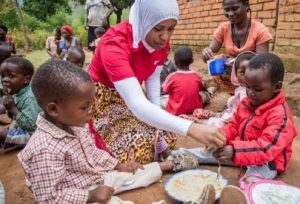 Women, infants, and children need the right quantity and diversity of nutritious foods to support healthy growth and development and to prevent an intergenerational cycle of malnutrition. Meeting this complex need requires coordinated efforts across sectors; however, there is a wide information gap on costs and cost-effectiveness of implementing nutrition intervention strategies that combine agriculture, health, and nutrition components.
As part of the Strengthening Economic Evaluations for Multisectoral Strategies for Nutrition (SEEMS-Nutrition) initiative aimed to fill this gap, Dr. Carol Levin (Clinical Associate Professor, Global Health) and researchers at the International Food Policy Research Institute (IFPRI) examined the costs and benefits of an integrated nutrition and agriculture intervention designed to improve the nutritional quality of meals provided through Malawi’s community-based childcare centers (CBCCs)—finding its estimated benefits (assessed as part of a related impact analysis) outweighed the intervention costs. (more…)
February 23, 2021
Researchers receive award to explore low-cost hearing testing technology for universal hearing screening for children in Kenya

Dr. Irene Njuguna, Dr. Dalton Wamalwa, Dr. Sarah Benki-Nugent, Dr. Grace-John-Stewart
Being hearing impaired as a child can be an uphill struggle on top of the usual trials and tribulations of growing up, learning to make friends, and attending school. Globally, approximately 34 million children, many living in sub-Saharan Africa, have disabling hearing loss resulting from head trauma, illness, exposure to loud noises, or certain medical treatments. Early detection and treatment are crucial to prevent children from enduring delays in speech, language, social, and academic development. Due largely to the prohibitive cost of hearing screening equipment (~$7,000 for what is considered standard equipment), hearing screening is rarely conducted in children. (more…)
October 14, 2020
UW, Kenyatta National Hospital, and University of Nairobi researchers receive award to develop HIV screening strategies in Kenya
Categories: Awards, Children, HIV, Research, Youth
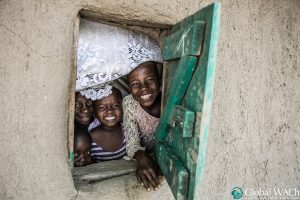
As prevention of mother-to-child transmission of HIV programs globally continue to increase reach and effectiveness, fewer children are living with HIV, but a growing proportion has had HIV exposure. HIV-exposed uninfected (HEU) children in sub-Saharan Africa are a rapidly growing population in need of care to ensure their optimal health and well-being. Compared to HIV-unexposed children, HEU children are more vulnerable to risks of illness and death and may have poorer neurodevelopmental and growth outcomes. (more…)
September 28, 2020
Dr. Sarah Benki-Nugent with UW and University of Nairobi collaborators receive award to build environmental health research capacity in Kenya
Categories: Awards, Children, HIV and Co-Infections
 There is very little data on air pollution exposures in sub-Saharan Africa, and even less is known about the impact of this important exposure on early childhood brain development.
Dr. Sarah-Benki (Clinical Assistant Professor, Global Health) and a multi-disciplinary team of maternal-child health researchers from the University of Washington and the University of Nairobi lead the Kenya Healthy Home Healthy Brain Project (KHHOP), a research partnership focused on the impact of environmental pollutants on child neurodevelopment in urban Kenya. (more…)
July 29, 2020
Dr. Patty Pavlinac receives grant to explore enteric pathogens and antimicrobial resistance
Categories: Children, Gut Health and Child Survival, Research
 Children hospitalized with severe illness in sub-Saharan Africa (SSA) are at high risk of morbidity and mortality following discharge from hospital, but mechanisms driving this vulnerability are poorly understood and there are no recommended interventions specifically targeting the post-discharge period.
Dr. Patty Pavlinac, Assistant Professor in the Department of Global Health and Co-Director of Global WACh’s Gut Health and Child Survival Priority Area, is the Principal Investigator of a newly awarded National Institutes of Health (NIH) R01 grant to explore the mechanisms underlying this risk, including how azithromycin—an antibiotic commonly used to treat pediatric infections—affects children’s health and nutritional outcomes in SSA.
The findings will inform the development of interventions to reduce the risk of death, re-hospitalization, and growth faltering following hospitalizations among this vulnerable group of children.
May 22, 2020
New study will investigate how latent co-infections affect clinical outcomes in HIV-infected Kenyan children
Categories: Awards, Children, HIV and Co-Infections

African children with delayed HIV diagnosis have a high risk of death, and there is an urgent need for novel strategies to improve their care. As HIV treatment expands across Africa, Global WACh researchers seek to understand the complex interplay of infectious diseases and HIV infections, which is pivotal to the development of more effective treatments. Dr. Jennifer Slyker (Associate Professor, Global Health; Adjunct Associate Professor, Epidemiology) is leading a new study funded by the National Institute of Health (NIH) to investigate how common, asymptomatic co-infections affect clinical outcomes in critically ill HIV-infected Kenyan children during hospitalization. (more…)
May 19, 2020
SEEMS-Nutrition estimates costs of early childhood development programs in Malawi
Categories: Children, Nutrition, Research

The Strengthening Economic Evaluation for Multi-sectoral Strategies for Nutrition (SEEMS-Nutrition) project, led by Dr. Carol Levin (Health Economist and Associate Professor, Global Health), has a unique opportunity to collect cost data alongside six on-going interventions and to generate new evidence on costs and cost-effectiveness of multi-sectoral projects in five country settings. Visit this website to learn more about SEEMS-Nutrition.
The project applied its costing evaluation approaches to retrospectively estimate the costs and impact for an integrated agricultural, early childhood development, and school feeding randomized-control trial conducted in Malawi. (more…)
November 21, 2019
Global WACh Research Assistant and DGH Thomas Francis Jr. Fellowship recipient, Hannah Atlas, conducts field research for children’s health in Nepal
Categories: Children, Nutrition, Schools, students
 Second-year MPH in Global Health and Global WACh Certificate student, Hannah Atlas, is a very familiar face around Global WACh. Prior to enrolling at UW in the fall of 2018, Hannah worked as a study coordinator for the Toto Bora Trial and ABCD Study led by Drs. Judd Walson and Patty Pavlinac, co-directors of Global WACh’s Gut Health and Child Survival (GHCS) scientific priority area, for 2 years.
She also coordinated a small pilot study aimed at assessing the composition of the gut microbiome among HIV-exposed children and worked with Dr. Donna Denno, a technical advisor for GHCS, supporting the coordinating body of the Environmental Enteric Dysfunction Biopsy Consortium.
As a graduate student, Hannah has continued working with our investigators on two clinical trials of azithromycin, an oral antibiotic used to treat bacterial infections, to reduce mortality and morbidity of discharged hospitalized children under age five.
(more…)
June 7, 2019
Dr. Sarah Benki and Kenya Healthy Brain Project receives EDGE Pilot Award for environmental health research
Categories: Awards, Children, HIV, Research
 Environmental exposures in sub-Saharan Africa have received little attention despite data suggesting high levels of air pollutants and metals. Environmental pollutants are harmful to infants’ developing brains and may lead to poor neurocognitive outcomes into adolescence and adulthood. Supporting early brain development is crucial for lifelong success in adolescence and adulthood.
Dr. Sarah Benki (Department of Global Health) is leading the newly launched Kenya Healthy Brain Project, a multi-disciplinary maternal-child environmental health research collaborative housed in the University of Nairobi that aims to build local research capacity, with the idea of moving research into policy practice to reduce exposures that threaten cognitive potential in children. (more…)
January 31, 2019
Dr. Sarah Benki-Nugent awarded UW Global Innovation Fund to launch environmental health research collaborative
Categories: Awards, Children, Environment
Every year, the UW Office of Global Affairs’ Global Innovation Fund receives dozens of proposals from UW researchers and offers seed funding to the most outstanding projects that spark cross-continental and multi-disciplinary research collaborations, innovative study abroad programming, and more.
We are so pleased that Dr. Sarah Benki-Nugent (Clinical Assistant Professor, Global Health) and her team (listed below) is one of 20 awardees this year! (more…)
Previous page Next page