Skip to content

The Spirited Garden: Creative Private Retreats

Meet the Board tours have been a mainstay of the NHS summer for many years.  Private gardens showcase the passion and dedication of their creators, often including unusual quirks of interests.

Capturing this fervor and the distinctive visions of several Washington and Oregon gardens is The Spirited Garden: Creative Private Retreats.  Photographed by Doreen L. Wynja, and written with Lorene Edwards Forkner, this is one of the most engaging private garden tour books I’ve seen.

The photographs are stunning as you would expect.  But they also tell stories.  This can be a gardener peeking through foliage, another resting in a hammock while playing with a frisky cat, or the borrowed landscape of a meadow, distant forest, and lone hiker on a two-page, full bleed spread.

The text, both as an introduction to each chapter, and as caption to the photographs, was the real surprise.  Wynja and Forkner create a lively discourse with their subjects, teasing out little snippets of story that make you want to know the gardeners, not just their gardens.

For long-time NHS members, some of these gardeners will be familiar.  Most poignant is the chapter about the late Pat Riehl, former president of NHS, who with her husband Walt established a stumpery and fern garden on Vashon Island.  Gillian Mathews also has a long history with the NHS, and her cozy garden makes you want to stop in for tea – or maybe a glass of wine.

Ann Amato’s exuberant garden blurs the distinction between indoors and out with over five hundred houseplants, many spending their summers outside.  There is vibrant plant energy in almost every space from kitchen to bathroom to basement.  At the time of this writing (early August 2025), I’m looking forward to her upcoming NHS webinar on hardy begonias.

Wynja’s selection of this and other overflowing gardens is understandable after seeing her own home in the final chapter.  Having a “need for visual stimulation,” she collects foliage plants (only a few with flowers), many pots (some intended for that purpose, while others not), and the many, many tools of the gardener.  As described in one caption, this is “cramscaping!”

Reviewed by: Brian Thompson on August 12, 2025

Published in Garden Notes: Northwest Horticultural Society, Fall 2025
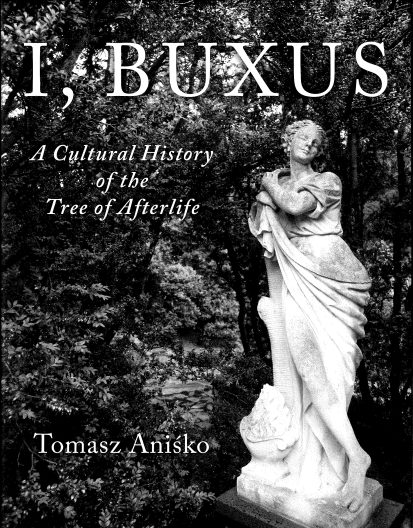
I, Buxus: A Cultural History of the Tree of Afterlife

I, Buxus tells the story of common boxwood (Buxus sempervirens) written from a most interesting perspective: a first-person narrative by the plant itself!  She (her chosen pronoun dating to Roman times) laments that “few people know about me much more than the fact that I make a fine garden ornament.”

Buxus, assisted by author Tomasz Aniśko, describes her book in the sub-title as A Cultural History of the Tree of Afterlife.”  It is an engaging story.

She is very proud of the order she brings to a garden, “acculturating the unruly flowers” and is often found edging gardens of all types.  Because of slow growth, she rarely outgrows her intended size.  The use of boxwood for topiary dates back to antiquity and has been especially popular in European cultures since the Renaissance.
Groves of boxwood planted in cemeteries or surrounding sacred shrines is common in both Christian and Muslim traditions.  While trees in the surrounding countryside might be harvested, those in these spaces are considered holy, and are let be.

The very dense quality of her wood has made boxwood very useful for small tools, especially those associated with spinning and weaving.  Throughout the 19th century, engraved boxwood plates of plant illustrations, cut across the grain, were considered by book printers the equal, and for some purposes better, than the more common copper plates.

While Buxus is sharing her cultural history, she does not address the several threats – alas – to her well-being.  Especially worrisome are the box tree moth (Cydalima perspectalis) and the boxwood blight (Calonectria pseudonaviculata) that have devastated many of her sisters, especially in Europe.

How “I, Buxus” came to the Miller Library is an interesting story in itself.  Sold only through a source in Poland, our initial inquiry asked for our patience while “our government resolves the temporary stop in shipping to the USA.”  Fortunately, that stop was resolved and we received the book in about six weeks.

Because this book is scarce, it is not available to check out.  However, I’m sure Buxus would appreciate you exploring her story in the comfort of the Miller Library on a dreary winter’s day.

Reviewed by: Brian Thompson on November 18, 2025

Published in Garden Notes: Northwest Horticultural Society, Winter 2026

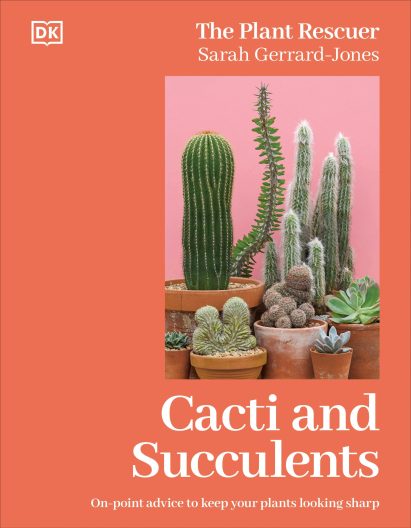
Cacti and Succulents: On-point Advice to keep your Plants looking Sharp

In my childhood home, we had a window seat off the living room. But it wasn’t for sitting. Instead, it displayed my mother’s beloved cacti collection. Facing south, the lighting was perfect and the plants thrived.

As an adult, my houseplant collection has very few cacti, but I learned early the value of these plants and other succulents in an indoor garden. Sound interesting? The new book Cacti and Succulents by Sarah Gerrard-Jones will help you get started or make sure the collections you already have are thriving.

In the last 10 years, the publishing of houseplant books has boomed; this is one of the best. The many selections are skillfully described in both text and photos. Each entry, and the extensive introduction (100 pages!), provide all the details you’ll need. Lighting, temperature, feeding, water, soil or substrate are precisely and easily explained. It’s hard to go wrong.
Other related topics are introduced, including growing cacti outside, public gardens to visit for seeing large collections, and places where plants grow in the wild. This last section is followed by insights on the seriousness of poaching; many of these selections are endangered.

This is more than just a technical manual. Gerrard-Jones easily shares her enthusiasm, and profiles several other avid growers. One is Tyler Thrasher, whose collection in Oklahoma numbers in the thousands, and has good advice for any plant parent: “Be forgiving when you lose a plant.” Mellie Lewis has the UK’s National Collection of the tender succulent Aeonium. Her advice on watering? “Follow the three Ds: drench, drain, dry.”

One lesson I learned is the distinction between sun cacti and forest cacti, the latter including the popular Christmas cactus (Schlumbergera species and hybrids). A venerable example is “Granny”, an 80-year-old, four-foot-wide centerpiece passed down to Sara Blanchard in Vermont from her grandmother. From December to May it is covered in fuchsia-colored flowers.

I can relate. I also have a  Schlumbergera passed down from my mother. Not quite as large as “Granny”, but still vigorous and equally cherished.

Reviewed by Brian Thompson

Excerpted from The Leaflet, Volume 12, Issue 12, December 2025

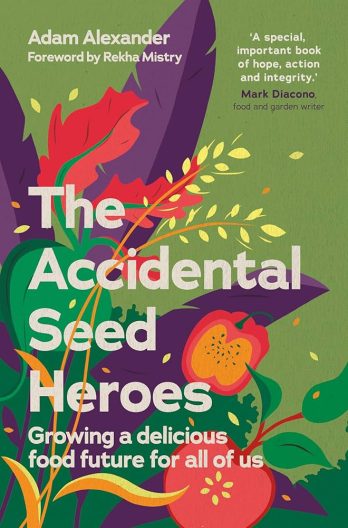
The Accidental Seed Heroes: Growing a Delicious Food Future for All of Us

For millennia farmers and gardeners everywhere have saved seeds from their best plants each season to improve the next year’s crops. In The Accidental Seed Heroes Adam Alexander argues that in the quest for food crops that can survive climate change, “Indigenous farmers, independent local breeders, and obsessive and passionately committed amateurs and professionals who believe in freely sharing their work” are the best ones to keep us alive. They can maintain and develop traditional crops and breed new cultivars that use little or no chemical fertilizer and, he stresses, taste delicious.

Many contemporary people and places already doing that work appear in this book. Each chapter describes challenges and successes relating to a different plant, mostly vegetables. Throughout Alexander argues against the planting of monocultures, which are particularly likely to be afflicted by disease, and against the practices of the giant seed companies that promote those monocultures and control new cultivars by patenting them.
In the chapter “A Future Full of Beans” the author follows the search for improved varieties of several kinds of beans – lima, fava, greasy, soy, navy. Local variants called Farmers’ Varieties lead the way, as they do in every chapter. He cites his own practice with greasy beans, traditionally grown in Appalachia. Due to climate change they now grow well in his garden in southern Wales.

Navy beans figure in climate change, too. To make Heinz baked beans in Britain, 52,000 tons of navy beans are imported every year to a single factory. It produces three million cans of baked beans every day. Brits do like their baked beans. Most of the imports are from one source, the U.S., which is worrisome. With climate change and perhaps development of new Farmers’ Varieties, navy beans may soon grow in Britain.

Look to other chapters, on wheat, peas, apples, eggplant, and other crops for many more tasty seed stories of hope for the future.

Reviewed by Priscilla Grundy

Excerpted from The Leaflet for Scholars, Volume 12, Issue 12, December 2025

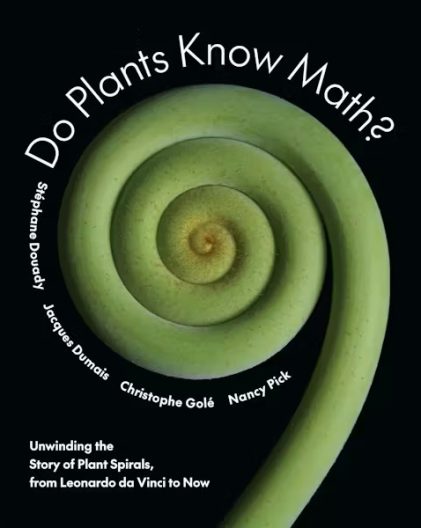
Do Plants know Math?: Unwinding the Story of Plant Spirals, from Leonardo Da Vinci to now

As an undergraduate in college, I was a math major. My career has not made much use of this education, but I do like mathematical puzzles. When we received a review copy of Do Plants Know Math?, I was intrigued.

Is this a math book? There are some scary-looking equations here and there. But it is mostly a biographical history book, presenting the very human stories of observing and documenting the spiral patterns of plant growth using mathematical principles.

Some of these were known in ancient times but forgotten, only to be rediscovered much later. For example, the famous Fibonacci sequence, named after a 13th century Italian, is really much older, dating back to Sanskrit poets in India in the 3rd century BCE.
The four authors are multi-international, being from Algeria, Canada, France, and the United States. Unlike many books with multiple authors, the overall voice is very consistent and clear.

It is also fun to read, as the authors are deeply enthralled with the subject. “In building their spirals, plants obey fundamental laws of science—and why shouldn’t that gradual unfolding strike our brains as utterly entrancing and thrillingly beautiful?”

At the end of each chapter, there are “Try Your Hand” exercises, ways to test the theories with simple projects. Once example walks you through the steps to make a kirigami maple leaf and suggests comparing it with the real thing. Both are beautiful.

Presented at the end of the book is “A Spiral Dinner” with all the recipes needed from drinks to dessert. As you prepare, you’ll observe the patterns in pineapples, cabbages, artichokes, and even strawberries. Delicious!

Each chapter begins with poetry:

Don’t
you
wonder,
Broccoli,
Whether you repeat
yourself? I mean, really repeat
your self? How much self-similarity is enough?

Reviewed by Brian Thompson

Excerpted from The Leaflet, Volume 13, Issue 1, January 2026

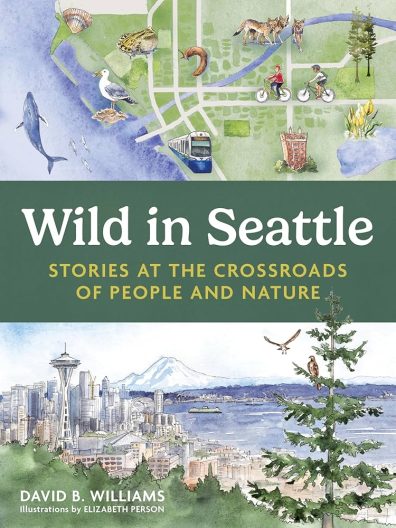
Wild in Seattle: Stories at the Crossroads of People and Nature

“Morning walk with binoculars” is what I call my weekly trek from the Elisabeth C. Miller Library across the Union Bay Natural Area to the bus. I look for birds along the way. That pattern echoes the suggestion of David B. Williams’s book to spend some time noticing nature while walking in Seattle.

Wild in Seattle is a collection of the Street Smart Naturalist newsletters Williams writes weekly, each two or three pages long. Its three sections – “Geology,” “Fauna,” and “Flora and Habitat” – lay out various discoveries Williams has made patrolling the city on foot. He emphasizes that one need not be a professional scientist to enjoy these encounters.

In “The Giddiness of Time” he writes about the rock used to build the Exchange Building at Second Avenue and Marion Street. It is Morton Gneiss, which formed 3,524,000,000 years ago, the oldest rock most of us will ever see. He combines that information with description of the rock’s appearance: “[It] resembles what would happen if you took a series of photos while stirring together cans of pink and black paint.” The entry is typical of the content of most entries, description plus a little background information.

In “Tails of the City: Cattails,” Williams cites the cattails’ many uses by Indigenous people: stalks for weaving material and down for pillows, mattresses, and even for burial rituals. He lists several of the wetlands cattails call home that have been lost to development but names as a bright spot the restored wetland at the Center for Urban Horticulture I cross every week. It’s a great spot for birds.

Reviewed by Priscilla Grundy

Excerpted from The Leaflet, Volume 13, Issue 1, January 2026

The Vasculum or Botanical Collecting Box: Symbol of the Nineteenth-Century Botanist, now an Obsolete Relic

Do you own a vasculum? If you were an active field botanist a century ago, the answer would undoubtedly have been a resounding yes!

Also known as a botanical box, these cylindrical, metal containers that opened along one side were used for temporary housing of collected plant specimens, protecting them from being crushed. They also provided a humid environment until the plants could be pressed into herbarium specimens.

One of the newest and most unusual books in the Miller Library is The Vasculum or Botanical Collecting Box, which tells the history of these scientific tools, beginning in the 1700s. Makers of early examples experimented with different construction materials, with tinplate becoming the most common, although some were made of wood, canvas, or other metals.
In the 20th century, their original purpose waned, but strapped over a shoulder, they became a pre-backpack accessory for children. Many were highly decorated or painted with bucolic scenes. Today, they are valuable collector’s items!

Régine Fabri, the retired former head of the library at the University of Liège in Belgium, researched and wrote this book in French. She inherited her grandmother’s vasculum dating from around 1900 and “had no idea that my grandmother’s beautiful box was not just a child’s toy, but a piece of real scientific equipment.”

In an unusual publication twist, the English edition was first written by DeepL Translate, a machine translation service. This draft was then proofread and revised by Henry Noltie from the Royal Botanic Garden Edinburgh.

Winner of the 2025 Annual Literature Award from the Council on Botanical and Horticultural Libraries, the book’s text is extremely well-researched and documented with extensive notes and a bibliography. However, it is the over 300 photographs and other images that will catch your eye. They document how this scientific tool became a cultural icon, extending even into the 21st century as stylish handbags or baskets. Who knew that botanists could become fashion trendsetters!

Reviewed by Brian Thompson

Excerpted from The Leaflet, Volume 12, Issue 11, November 2025

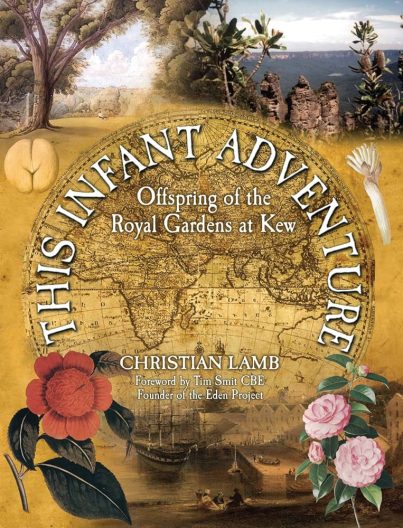
This Infant Adventure: Offspring of the Royal Gardens at Kew

The multiple botanic gardens established mainly under the direction of Sir Joseph Banks at Kew “helped to underpin the [British] Empire’s commercial success and were also instrumental in furthering botanical knowledge around the world,” (p. 23).

In This Infant Adventure Christian Lamb takes the reader to ten of these offspring. Her focus is on the commercial purposes of the gardens and especially on the botanical explorers who worked at and adventured from them. For each garden Lamb describes its history, often noting the tension between those who saw the goal as a pleasure garden only and those who sought scientific collection methods and commercial uses.
Particularly entertaining are her narratives of botanists. In the chapter on the St. Vincent Botanic Garden, Lamb recounts the travels of Captain Bligh and the efforts to transfer breadfruit plants from the East Indies to the West Indies. Her retelling begins with the need for food for sugar cane workers. She acknowledges Bligh’s shortcomings, which led to The Mutiny on the Bounty, but balances his negatives with his efforts to care for his crew and his amazing navigational skills.

In Australia the chapter on the Melbourne Botanic Garden deals mainly with the adventures, accomplishments, and failures of Ferdinand von Mueller, a German who made many plant discoveries and managed to alienate almost everyone.

Lamb writes of her own visits to these gardens. The dust jacket notes that the book was published in her ninetieth year. This reviewer, ninety now, remembers a world in which the British Empire was more widely admired than at present. Lamb’s book carries echoes of that era. She uses place names which have been changed, Ceylon instead of Sri Lanka, for instance. Some of her references to nonwhites reflect formerly common practices now widely viewed as racist. Even so, This Infant Adventure offers riveting stories and a useful perspective on these wonderful gardens.

Reviewed by Priscilla Grundy

Excerpted from The Leaflet for Scholars, Volume 12, Issue 11, November 2025

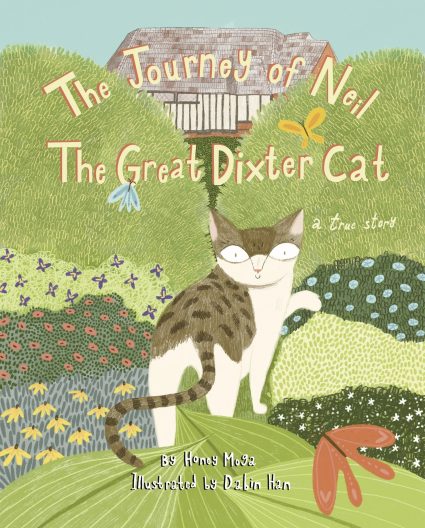
The Journey of Neil the Great Dixter Cat: A True Story

We love all our new books, but some stand out.  The Journey of Neil, the Great Dixter Cat, presented to the library by Fergus Garrett during his September visit to Seattle, tells the fascinating story of a kitten from the streets of Kabul, Afghanistan who came to be a popular fixture at the well-known garden in Sussex. Written by Honey Moga, the kitten’s naming, personality, friendships with Fergus and others at Great Dixter, and adventures with the garden’s resident dachshunds, Conifer and Miscanthus are all presented in Dabin Han’s lively illustrations, along with key elements of the history of Afghanistan. Check it out!
Reviewed by Laura Blumhagen

Excerpted from The Leaflet, Volume 12, Issue 10, October 2025

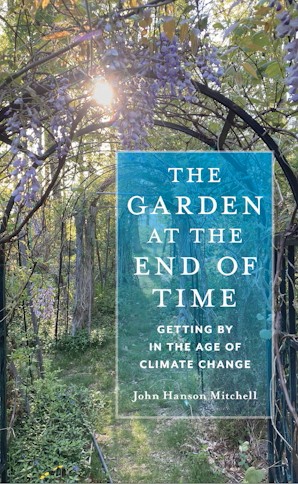
The Garden at the End of Time: Getting by in the Age of Climate Change

Whenever overwhelmed by news of a new climate-related disaster, John Hanson Mitchell buys a new rose bush. He explains it as a philosophical statement of resistance.

The Garden at the End of Time combines descriptions of climate-related problems with an account of his own gardening response. Each chapter is named for his latest rose purchase. Near the end of the book, in “Reine Marie Rose,” he never names the rose in the chapter; he just assumes you know that is what he bought.

Mitchell builds his theme around the last chapter in Voltaire’s Candide. There, after surviving multiple disasters, such as the huge 1755 earthquake in Lisbon (real), Candide (fictional) retreats to cultivate his garden. Mitchell reports his own conversations with a real ecologist he calls “Pangloss Rosen,” named for the Pangloss who accompanied Candide and tried to convince him that this is “the best of all possible worlds.”

The book includes a history of gardens, a history of sanctuaries, and many accounts of contemporary climate problems. One positive example is rewilding, a project to return farmland, the Knepp Estate in England, to its status before it was farmed. A history of English agriculture, beginning in the Stone Age, follows.

For all its weighty messages, The Garden at the End of Time presents its material lightly. To gardeners it brings more reasons to keep on cultivating.

Reviewed by Priscilla Grundy

Excerpted from The Leaflet for Scholars, Volume 12, Issue 10, October 2025