In the summer of 2000, I visited England, intent on seeing gardens. One of the highlights was The Bressingham Gardens in Norfolk, famous for its island beds of herbaceous perennials, allowing viewing from all sides.
Almost as an afterthought, I visited the adjacent garden of Foggy Bottom, noted mostly for conifers. Here the island beds were more like continents. In my journal at the time, I wrote: “a variety of textures and, notably, colors…sometimes with subtle color combinations, other times more garish.”
 Today, I would look at this garden with different eyes. Fortunately, I can do that with the 2023 publication of “Foggy Bottom: A Garden to Share” by Adrian Bloom. My impression now is a garden well-balanced between woody and herbaceous, conifer and broad-leaf, evergreen and deciduous. The brash colors have mellowed, as to be expected from a more mature garden and gardener.
Bloom has a clear intent expressed through both images and narrative. “You, as a special guest, in going through this book, are being given a private tour by me, Head Gardener and owner of Foggy Bottom.”
At over four hundred large-format pages, this is a full-day tour, but very worthwhile. I first flipped through looking at Bloom’s excellent photographs, but was easily drawn in by the conversational commentary. Each bed is observed and described from various angles, over many years, and in all seasons. Mistakes are freely admitted, as are unexpected successes.
After taking this long view, Bloom examines the plants more closely. In part, this is by expected types such as ferns, grasses, and bulbs. Other groupings are by distinctive features such as bark, foliage in many hues, or plants that facilitate a design feature, such as creating rivers of foliage or flowers through other plantings.
Most intriguing to me was the history of the garden, including photographs from the time of my visit. I was there on the eve of major change, as many trees were removed soon after my visit, and several beds completely redesigned. I have no immediate plans to travel to England, but when I do, a return to Foggy Bottom will be a must.
Reviewed by: Brian Thompson on February 12, 2024
Published in Garden Notes: Northwest Horticultural Society, Spring 2024
 For example, the June 2023 issue included an article titled “The Irises of Benton End,” describing the hybridizing efforts of artist Cedric Morris (1889-1982) at his home in eastern England. Written by Sarah Cook, who maintains the largest collection of Morris’ hybrids, the article includes photographs of all the 28 known survivors, along with the derivations of their names, including of friends, favorite places, and resident cats.
 Therefore, I was skeptical when learning about a new book titled “Orchid Muse.” Did we really need an addition to the already bulging shelves on this plant family? My mind changed only after reading praise for the book by Doug Holland, Director of the Peter Raven Library at the Missouri Botanical Garden, who described it as “a happy reminder of why I fell in love with plants and the history of botany.”
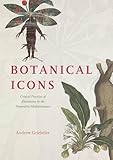 a lasting impression” she provided was extensive and quite varied. Many are in her personal collection.
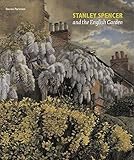 before she went, I asked about her favorite books in the Miller Library collection. I was not surprised that the list of books “that have made a lasting impression” she provided was extensive and quite varied. Many are in her personal collection.
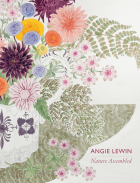 before she went, I asked about her favorite books in the Miller Library collection. I was not surprised that the list of books “that have made a lasting impression” she provided was extensive and quite varied. Many are in her personal collection.
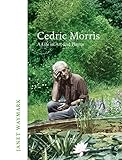 In Cornwall, he became part of the artistic community, and continued to draw and paint plants. He moved to London, where he met fellow painter Arthur Lett-Haines (known as ‘Lett’), who was to become his partner in life and art. Morris was private and quiet where Lett was highly social,which proved helpful in promoting Cedric’s art. They spent the 1920s moving in artistic circles in England and Paris, where they were associates of Marcel Duchamp, Man Ray, Francis Picabia, Ezra Pound, and others. Although Morris was exposed to all the art movements of the day (Futurism, Abstraction, Surrealism), and no doubt absorbed some of their influences, he was steadfast in his love of color and the depiction of plants and landscapes for their own intrinsic interest. Before the Second World War, he and Lett traveled throughout western Europe, where he continued to find subjects for painting.
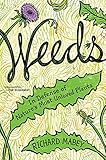 a lasting impression” she provided was extensive and quite varied. Many are in her personal collection.
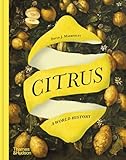 a lasting impression” she provided was extensive and quite varied. Many are in her personal collection.
 I was not surprised that the list of books “that have made a lasting impression” she provided was extensive and quite varied. Many are in her personal collection.