Skip to content

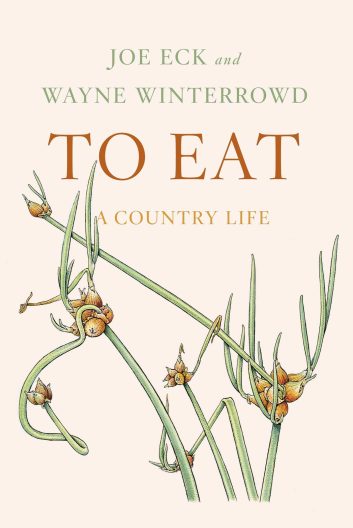
To Eat: A Country Life

Joe Eck and Wayne Winterrowd shared over 40 years together, most of it at a home they called North Hill in Readsboro, Vermont.  This is a long time for any couple, but especially noteworthy for gay men.  Their garden inspired many books, written by each singly or by both.  The Miller Library has eight of their titles on subjects that include annuals, tender perennials, roses, and garden design.   Winterrowd’s “Annuals for Connoisseurs” (1992) is one of my personal favorites.

Eck and Winterrowd met in a gay nightclub in Boston during the late 1960s.  Often such encounters are brief, but they spent much of the night talking together and walking the Boston Common.  They never parted.  Eager for a rural life, they found their Vermont home a few years later, initially making their living as school teachers before transitioning to full-time garden designers and authors.

Most of their books celebrate the many aspects of their life together at North Hill, including raising a son.  Their final book, “To Eat: A Country Life” was started jointly in 2010, but after Winterrowd died suddenly that fall, Eck was left to finish it alone.  The book was published in 2013.  The men shared many passions, but eating had “always been central.”

Bobbi Angell, a noted botanical artist who lived near North Hill, provided the illustrations for “To Eat.”  She also has an essay in the book about a lunch with the couple shortly before Winterrowd’s death.  In a conversation musing about their place in rural Vermont, she concludes: “Wayne and Joe’s life–their plants, their friends, their stories–came from around the world, city and country alike.”

Excerpted from Brian Thompson’s article in the Fall 2022 issue of the Arboretum Bulletin
The Beginner’s Guide to Growing Great Vegetables

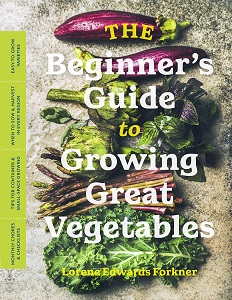
Not just for beginners, Lorene Edwards Forkner’s latest vegetable gardening book is chock full of good advice for all gardeners. If you are a beginner, I suggest reading the opening chapter, “Gardening 101.” For everyone, the chapter entitled “Garden Planning” will help you decide what type and especially how much food growing is realistic for you, including options if you do not have garden space. Like ornamental plants? These are encouraged for edible fruits or flowers, or to attract beneficial insects to protect or pollinate your food crops.The book’s core is a month-by-month calendar showing both the planning and the doing for the time of year, including seasonal essays. For example, September is the time to plan for your fall and winter garden, planting cover crops and saving seeds. October is about cleaning and feeding the garden for the future, especially after the first frost, and creating or enhancing your process for making home compost.Forkner encourages experimentation and keeping a journal of the results. She happily shares her personal experiences, good and bad. “Over the years I’ve experimented with sowing ornamental corn, winter wheat, and fancy French melons. Ultimately, I decided that homegrown popping corn is highly overrated, and my cat took up napping in the middle of my ‘wheat field.'” She concludes that the two tiny Charentais melons her efforts produced “were absolutely delicious–well worth the time and garden space they occupied all summer.”While similar in some ways to her 2012 publication The Timber Press Guide to Vegetable Gardening in the Pacific Northwest, this book incorporates nine more years of Forkner’s experience. Check it out!

Reviewed by Brian Thompson for the Leaflet for Scholars, August 2022, Volume 9, Issue 8.Editor’s note: A longer version of Brian’s review was originally published in the Autumn 2021 issue of Northwest Horticultural Society’s Garden Notes.

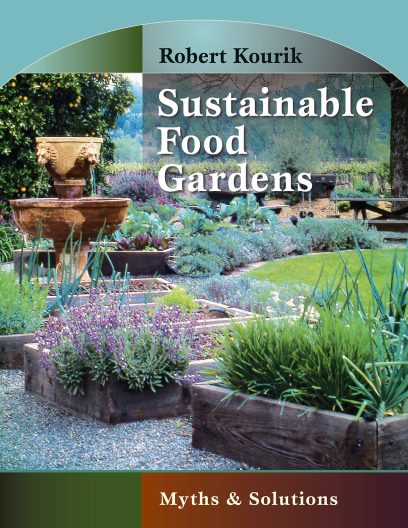
Sustainable Food Gardens: Myths and Solutions

Robert Kourik has eight books in the Miller Library, the earliest from 1986.  In all of these, he emphasizes the importance of adopting gardening practices that work with nature.  He is especially interested in the root systems of plants and ways to maintain soil integrity while conserving water and nutrients.  Based in Santa Rosa, California, at the southern edge of our region, his writing is easily transferable to Pacific Northwest gardeners.
In the years since his first book, he has continued to learn.  His newest title, “Sustainable Food Gardens,” takes the reader on this educational journey.  Many of his opinions have evolved in the last 35 years and some have completely changed.  Kourik is a good teacher.  He has conversational approach to his writing and is good at providing sources and reasons for his opinions, recognizing that some contradict traditional thinking.

At well over 400 pages with large outer dimensions, this is a hefty book.  I think it is best treated as a reference resource, to read individual chapters as needed.  Important concepts are sometimes repeated if relevant in multiple chapters.  While some may be frustrated by this structure, I found it very useful.  It is also important to know this does not have a dictionary of food plants.  While there are recommended choices for certain situations, another book is likely required for choosing your food crops.

Kourik encourages the food gardener to be realistic about the scale and setting for their garden.  What works on a large organic farm, might not be as effective on your small backyard plot or p-patch.  Some sustainable planting practices are only intended for warmer climates.  Be realistic, too, about the amount of maintenance a food garden requires and don’t over commit yourself.

One chapter is devoted to container gardening, recognizing this may be the only option for many urban gardeners.  The intricacies of drip water systems are thoroughly presented, as are the many other concerns of soil choices, fertilizing, and plants that are best suited for this growing environment.  But Kourik recognizes that the simplest approach is often the best.  “The quick-and-dirtiest way to grow plants like tomatoes on a deck or driveway is to buy a sack of potting soil or compost, lay if flat on its widest side, slit it open, and plant it with tomato or pepper seedlings.”


Excerpted from the Spring 2022 issue of the Arboretum Bulletin


Vegetable by Vegetable: A Guide for Gardening Near the Salish Sea

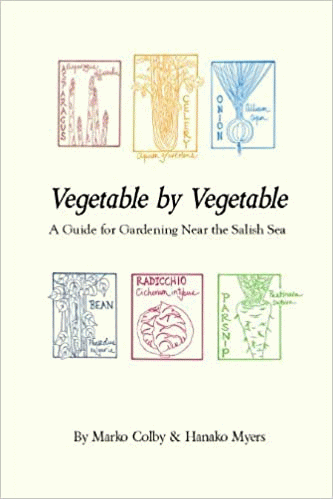
Marko Colby and Hanako Myers are organic gardeners in Quilcene, Washington, growing both vegetables to sell in markets and vegetable starts for home gardeners.  From their experiences answering the questions of their seedling buyers, they have put together a small (83 pages) but very useful book titled “Vegetable by Vegetable: A Guide for Gardening Near the Salish Sea.”
The sub-title recognizes the similarity of climates over a wide range of coastal British Columbia and Washington.  As an example, they note how the growing season around Puget Sound is more comparable to northern Vancouver Island than to much closer areas just east of the Cascade Mountains.

The advice is very direct and encouraging.  For tomatoes, “few varieties have complete resistance to fungal disease and some amount of disease is normal (Try not to worry too much!).”  I recommend you give this user-friendly little book a try.

Excerpted from the Spring 2022 issue of the Arboretum Bulletin

Heirloom Vegetable Gardening : a Master Gardener’s Guide to Planting, Seed Saving, and Cultural History

The book “Heirloom Vegetable Gardening” was a classic almost from the moment it was first published in 1997.  The author, William Woys Weaver, is a rare scholar of the kitchen garden with a PhD in food ethnography, or the study of cultural eating habits.
Weaver easily could have written a pompous tome.  Fortunately, he is a skilled writer and hands-on gardener (and cook, too) who combines dry wit with both practical and historical information.  I am not an extensive vegetable gardener, but his stories are compelling and I happily read the encyclopedia of recommend varieties from cover-to-cover.

If you do grow your own veg and enjoy experimenting, this book is an investment that will pay in long-term dividends.  Now there is a new (2018) edition.  While much of the descriptive material and selection of the varieties is the same as the original, there are minor updates and additions.  Both editions are available from the Miller Library.

The author is especially interested in how certain foods have connected different cultures.  For example, I learned that lima beans are well named, originating in Peru possibly 7,000 years ago and named in English after that country’s capital city.  The Spanish occupiers observed that the indigenous people reserved the crop for the elite of their society.

Is that why the Spanish disseminated these delicious beans to the rest of the world?  Perhaps.  However, when Weaver was asked to cook a dinner of American foods by friends in Germany, he had trouble finding a source for lima beans.  Northern Europeans have not embraced this food like Americans because they are a warm weather crop and don’t thrive north of the Alps.

Weaver references many historical writings and includes a gigantic bibliography of cited sources in his appendices.  Many are quite old (dating back to 1591) but still very useful for gardening tips, such as putting out whiskey to discourage crows from corn.  “I would use the brand of corn whiskey called Rebel Yell.  It seems to fit the remedy and evoke some of the sounds I now associate with the birds at the height of their raucous inebriation.  Incidentally, it works.”


Published in Garden Notes: Northwest Horticultural Society, Winter 2019

American Grown

American grown book cover Michelle Obama needs no introduction and even her book “American Grown,” describing the White House Kitchen Garden she started, is already well known. For some, this may be an easy book to dismiss as a public service announcement, or worse, as a political statement. This is unfortunate, because it is a good gardening book, both for techniques and as a model of how gardening improves people’s lives in many ways.
This book has many authors. The White House gardening staff share their experiences and appreciation of the garden along with basic cultural advice, geared to both the new gardener and to those unfamiliar with the wide range of delicious foods they can easily grow. White House chefs share tips on harvesting and preserving, and provide recipes that make it simple to add more fruits and vegetable to your diet.

Equity and diversity are quiet, background themes in “American Grown”, but it clear that in this garden “equality is a key part of the message of planting day. We are all down in the dirt. Anyone present can help dig. There is no hierarchy, no boss, and no winner.”

Obama also reaches out to those involved with community gardens, school gardens, and food resources across the country (including Will Allen), and with other programs that encourage exercise for youth and healthy school lunch choices.

One such garden is the New Roots Community Farm in San Diego, where gardeners from Uganda, Kenya, Vietnam, Mexico, and Guatemala began working together. “At first, they weren’t sure how people from so many different countries would get along—especially since the garden had only two hoses to share and the farmers often didn’t speak the same language. But their enthusiasm and determination drew them together.”

Excerpted from the Winter 2018 Arboretum Bulletin.

Rhapsody in Green: A Novelist, An Obsession, A Laughably Small Excuse for a Vegetable Garden

Rhapsody in Green cover

If you have ever sighed wistfully while leafing through garden design books lush with illustrations of meadowy expanses, sweeping perennial borders against a backdrop of graceful tall trees, gently trickling water features, charming gazebos, and kitchen gardens large enough to feed a ravenous extended family, then British novelist Charlotte Mendelson’s Rhapsody in Green will provide a welcome relief.

She is wickedly self-deprecating (referring to herself at one point as Incapability Mendelson), and many urban gardeners will identify with her grand ambitions for a very limited space. Her writing is full of sharp wit, and brims over with fierce enthusiasm (for unusual varieties of edible plants in particular). Is it foolhardy to keep trying—and failing–to grow heirloom apple trees, or is it laudable indomitability? You may laugh in recognition when Mendelson describes her “seed worship,” a frenetic compulsion to acquire heaps of seed packets for plants she may never have space to grow, or time to sow. Gardening projects fall by the wayside (germinating seeds abandoned, fruit leather made from foraged quinces growing a fur of mold) but Mendelson’s devotion to the garden finds her wandering away from her dinner guests to go putter among the leaves in the dark.

Despite the vicarious exhaustion of accompanying Mendelson on her journey of gardening trial and error, what makes this a compelling book to read is the quality of the writing, and the incisive attention to detail. She may struggle to eke a single zucchini or patch of mint out of her small plot, but Mendelson is keenly attuned to the natural world and to the unalloyed happiness that we find in growing things—even if we sometimes kill them. The book is arranged by season (subheadings include: “Wasting Money Wisely,” “Tristesse of Germination,” “The Fallacy of Mint,” “Tree Envy,” “On Being a Bad Gardener”). You may find yourself chortling one moment and stunned silent by her closely observed and beautiful description of the natural world the next.

Some books have bibliographies, but this one has “The Blacklist:” books which will “lead you astray; approach with caution.” Mendelson singles out Joy Larkcom as the author who started her on this path to ruin. She recommends The Organic Salad Garden as the most important title for the aspiring edible gardener.

Food and the City: Histories of Culture and Cultivation

Food and the city book jacketThe UW Farm is a great example of the increasing interest in urban agriculture, but this is not a new movement. Food and the City: Histories of Culture and Cultivation provides historical snapshots of food growing projects from around the world, concentrating on the late 19th century through the mid-20th century. Two global depressions and two world wars made this a particularly difficult time for city dwellers.
These essays were developed from lectures given at a “Food and the City” symposium held at the Dumbarton Oaks research institution in Washington, D.C. in May 2012 that “…sought to historically contextualize the current discourse on urban agriculture.” I found the chapter written by Laura Lawson and Luke Drake of Rutgers University particularly engaging with its focus on American cities and because Lawson was a co-author of the 2009 book Greening Cities Growing Communities: Learning from Seattle’s Urban Community Gardens.

Both books bring an academic perspective on this very human activity of gardening. However, neither is locked in a strictly scholarly discourse. At the end of Lawson and Drake’s chapter in Food and the City, the authors conclude “In cities across America, food is being grown to feed families, to enliven communities, to provide economic opportunities, and to educate young and old…it is reassuring to realize that gardening for food is a normal part of the urban landscape…”

Published in the November 2016 Leaflet for Scholars Volume 3, Issue 11.

The Wildlife-Friendly Vegetable Gardener

The Wildlife-Friendly Vegetable Gardener jacket
Here’s a book on growing edible crops with a unique perspective, that our vegetable gardens can be planned and designed to encourage or at least coexist peacefully with wildlife. For example, you may not want to share your lettuce with slugs and snails, but you can make the garden hospitable to predators that consume mollusks (such as birds, toads, lizards, foxes, and skunks).

Many of the author’s recommendations are common-sense organic approaches to gardening, such as starting with the soil: respect the microorganisms and other soil-dwelling life forms by not over-tilling and disturbing soil structure; observe nature in your garden (keep a journal or sketchbook) and get to know the insects—beneficial and nuisance—and their life cycles, and the other creatures who visit regularly or seasonally.

Design elements in a wildlife-friendly edible landscape include a “perennial backbone” of fruiting trees and shrubs (fruiting ornamentals that will attract birds and other animals and dissuade them from eating the fruit you’ve planted for your own consumption), a water source, and “decoy plants” planted as a border around plants you intend to harvest for yourself. Some of the ideas here require a fair amount of space: not every urban food gardener has room for a hedgerow, or can afford to plant extra (sacrificial!) rows of crops for hungry critters. Still, you may have room for a few ornamental plants that attract pollinators or a few aromatic shrubs and herbs (like curry plant, Helichrysum italicum, or santolina, or lavender) that may discourage browsing by deer and rabbits.

Deer and rabbits are grazers, so they may not wipe out an entire crop in one fell swoop in the way that gorgers (such as raccoons) or hoarders (like squirrels) can. My own garden has become a favorite spot for these creatures, and they do not even wait for fruit to ripen before absconding with it. I was familiar with many of the “scare tactics” and devices the author suggests, but I had not thought of putting rubber snakes around fruit tree branches to intimidate birds, squirrels, and small rodents, or perching fake owls atop poles to ward off nocturnal foragers.

The book concludes with design plans for edible gardens that are aesthetically pleasing, functional, and inviting for humans as well as other living beings.

Edible Heirlooms: Heritage Vegetables for the Maritime Garden

book jacketEdible Heirlooms is a great little book! Little only in dimensions and number of pages, as the author carefully defines his purpose and limits his scope, but within those parameters shows you how to grow an outstanding vegetable garden in the maritime Pacific Northwest.

Most important, he sees this endeavor as part of a larger picture. “The challenge for me is to somehow integrate my vegetable-growing practices into a diverse ecosystem and, if possible, enhance biodiversity.” The key for this is to use heirloom varieties that can be regrown from collected seeds. Besides the mouth-watering descriptions, you will also get an excellent history lesson.