 I was surprised to learn that there is a new way to grow vegetables. Inside straw bales. Yes, that is what I said, inside straw. This new book by Joel Karsten, Straw Bale Gardens Complete (Cool Springs Press, 2015), explains a method of growing and harvesting crops which is useful for increasing productivity while reducing labor. The chapters thoroughly cover planning your straw bale garden, and making straw bale greenhouses. There are extensive pages of garden layouts, including single, two, and three-bale gardens with tomato cages, trellises, and suggested plants. This approach to container gardening is using the straw bale itself, held together with two or three strings, with the outside crust of the bale serving as the container. The straw inside the bale will decompose, making it “conditioned” and ready to plant. The author gives step by step instructions for conditioning to create a warm, moist and nutrient rich rooting environment for seedlings. The author points out that straw bale gardens are ideal if you can’t do heavy lifting, can’t bend over, have poor soil, or limited space.
One thing to keep in mind is the difference between hay and straw, which often are confused. Straw comes from one of the cereal small-grain plants. Most common are oats, wheat, barley, rice, flax and rye. Hay is green, more coarse and wiry than straw. Hay can be baled alfalfa or any dozens of different grasses. Hay is fed to livestock as fodder. It contains all the seed heads inside the bale. But hay is not desirable for bale gardens. The book explains how to find and maintain the best straw for growing plants. If you are looking for a source for straw in the Seattle area, I’ve been able to supply my chickens with straw from The Grange in the University District. I also recommend using organic straw for vegetable gardening because you will want straw that has not been treated with herbicides or pesticides. Organic bales are usually sold at about the same prices as conventional ones.
 As a first time vegetable gardener, I was looking for a resource for planting and growing vegetables from a small space: my deck. This handy book,
  In “The Timber Press Guide to Vegetable Gardening in the Pacific Northwest,” Lorene Edwards Forkner gives a whole calendar of ideas of what to plant and what to harvest every month–what’s unusual is that the chapter on January, while having fewer pages, is still on equal footing with June, rather than be relegated to an off-season category.
 Amidst the bumper crop of new food-gardening titles, Backyard Bounty : The Complete Guide to Year-Round Organic Gardening in the Pacific Northwest by Salt Spring Island, B.C. resident Linda Gilkeson stands apart. I put three recent edible plant titles by Northwest authors to the test by trying to find answers to commonly asked questions in them. Whether you are a beginning gardener or an experienced (or jaded!) old hand, this book will neither insult your intelligence nor blind you in a blizzard of technicalities. If you want to know about soil in raised beds, what to grow over the winter, or how to protect your grapes from predacious raccoons, this is the place. Though it lacks photos of primped and prinked up fruit and veggie glamour, the information is well-organized and clearly presented. I learned enough from reading it that I may just have to own a copy.
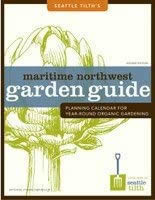 Wondering what’s the best time of year to sow your cilantro seeds or plant onion sets? The Maritime Northwest Garden Guide: Planting Calendar for Year-Round Organic Gardening by Seattle Tilth (and multiple authors over the years)defines a complete time-line for sowing a wide range of edibles and flowers. Also included are a number of excellent articles on organic gardening techniques, like summer cover crops and recipes for preventing powdery mildew.