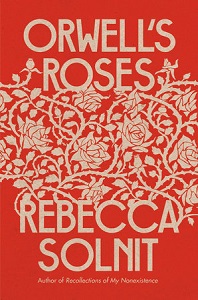
“In the spring of 1936, a writer planted roses.” Each of the seven sections of Rebecca Solnit’s new book starts with a version of this sentence. The writer, of course, is George Orwell. The book develops from his devotion to roses and particularly to the roses he planted in Hertfordshire in 1936.
In a 1946 essay, “A Good Word for the Vicar of Bray,” Orwell described planting “five fruit trees, seven roses and two gooseberry bushes, all for twelve and sixpence,” ten years earlier. Except for one tree and one rose bush, all were still flourishing.
A few years ago Solnit visited the garden and found the trees gone but some roses enthusiastically blooming. She became convinced that Orwell’s love of roses revealed an important aspect of his life, which is generally seen as pragmatic and focused on harsh realities. She describes this book as “a series of forays from one starting point” (p.15), that 1936 planting. It is beautifully written. Solnit could probably make a description of threading a needle delightful to read.
Each chapter details part of Orwell’s life and connects it to the roses and by extension, to pleasure gained from other flowers, trees, and nature in general. In a 1946 essay “Why I Write,” Orwell explained that he didn’t ever want to lose the affection and wonder he had felt for nature as a child. In an early novel, “The Clergyman’s Daughter,” Orwell creates a miserably unhappy title character, but she finds a moment of delight in a discovery of wild roses. Solnit writes that Orwell did not believe in permanent happiness but did very much believe in the possibility of moments of pure happiness – in his case often connected to roses.
The chapter “We Fight for Roses Too,” describes the origin of the suffragist motto “bread for all, and roses too” (p. 85). Surprisingly, it originated in a 1910 article in “The American Magazine” by Helen Todd. Todd heard a young woman say about a suffragist rally in southern Illinois, that the thing she liked best was that it was “about women votin’ so’s everyone would have bread and flowers too” (p.85). Todd later sent back a pillow marked with the words “’Bread for All and Roses Too.’” Solnit uses this motto as a lead-in to Orwell’s thinking – full of socialist pragmatism but seasoned with a sprinkling of floral pleasure.
Although I have chosen passages in the book that relate specifically to roses and nature, a majority of “Orwell’s Roses” deals with Orwell’s life and thinking. The chapter “Buttered Toast” describes Orwell’s experiences in the Spanish Civil War, but also notes that amid the squalor and rats he found beauty: “. . . if you searched the ditches you could find violets and a kind of wild hyacinth like a poor specimen of a bluebell’” (p. 103, from “Homage to Catalonia”).
Solnit writes that “The gardens of Orwell are sown with ideas and ideals and fenced around by class and ethnicity and nationality” (p.149), which Orwell acknowledged. She includes a brief history of roses coming from China to England and gives some of the many associations that have grown around the plant, including Elton John’s singing about Princess Diana as “England’s rose” (p. 176).
Shortly before he died in 1950, Orwell asked that roses be planted on his grave. When Solnit visited the site, they were still blooming.
Published in the Leaflet, March 2022, Volume 9, Issue 3.
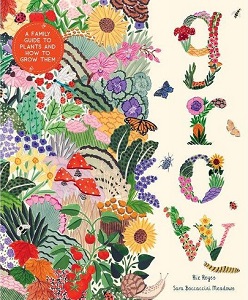 Pacific Northwest horticulturist Riz Reyes worked with illustrator Sara Boccaccini Meadows for his debut children’s book, Grow, new this year from Magic Cat Publishing. This vibrant “family guide to plants and how to grow them” introduces the botanical relatives and superpowers of familiar plants and fungi. Each short section features a different familiar plant (including mint, daffodils, pineapple, carrots, tea, aloe, maple and eight more), with informative text and colorful images detailing the plant’s life cycle, its history with people, and a related hands-on project. This book is uniquely useful and completely enchanting!
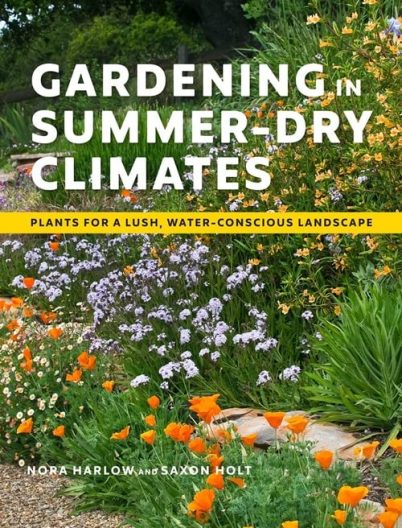 Gardeners are quick to discover that the Seattle area, and most of the coastal areas of the Pacific Northwest, tend to be dry in the summer and wet in the winter, despite our collective rainy reputation. Many popular gardening books are from regions with reliable summer rains. The plant palette these books suggest don’t work here without lots of supplemental water.
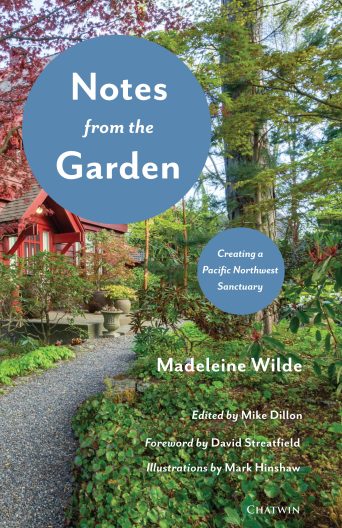 Madeleine Wilde was the author of a gardening column in Seattle’s “Queen Anne & Magnolia News” that ran for over 20 years. Near the end of her life in 2018, she asked her publisher, Mike Dillon, to compile and edit those columns into a book. “Notes from the Garden” has recently been published, a treasure to be cherished by all local gardeners.
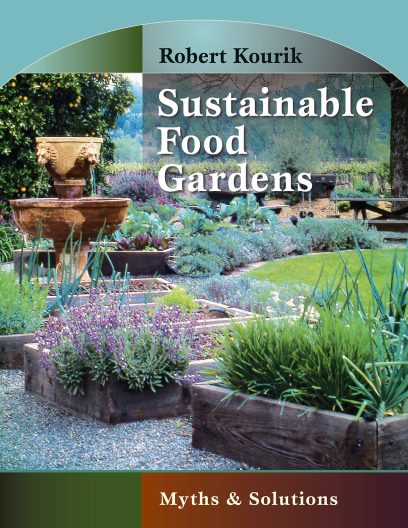 Robert Kourik has eight books in the Miller Library, the earliest from 1986. In all of these, he emphasizes the importance of adopting gardening practices that work with nature. He is especially interested in the root systems of plants and ways to maintain soil integrity while conserving water and nutrients. Based in Santa Rosa, California, at the southern edge of our region, his writing is easily transferable to Pacific Northwest gardeners.
 Typically, I don’t like books that claim to be the “ultimate” in the title as they usually disappoint. I brought this bias to a book from 2016 (but new to the Miller Library) titled “The Ultimate Guide to Urban Farming” by Victoria, British Columbia author Nicole Faires. I can’t claim expertise on urban farming and its many aspects, but I was very impressed by the thoroughness of this manual on the topic.
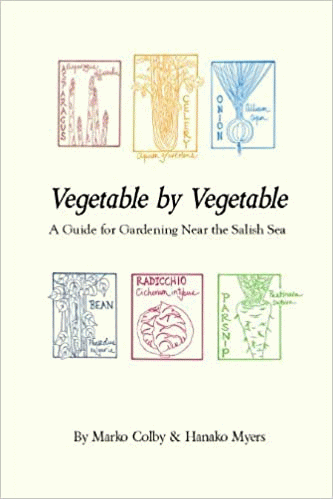 Marko Colby and Hanako Myers are organic gardeners in Quilcene, Washington, growing both vegetables to sell in markets and vegetable starts for home gardeners. From their experiences answering the questions of their seedling buyers, they have put together a small (83 pages) but very useful book titled “Vegetable by Vegetable: A Guide for Gardening Near the Salish Sea.”
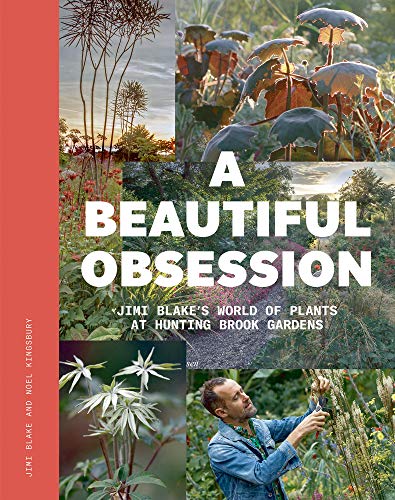 I was fortunate to hear Jimi Blake speak at the virtual annual meeting of the Hardy Plant Society of Oregon in November 2021. He radiates enthusiasm for garden plants of all kinds, especially ones newly available to keen gardeners, expressed in a lovely, Irish lilt.