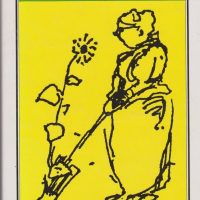
A charming caricature by Sir Edwin Lutyens of Gertrude Jekyll with a spade adorns the cover of Down-to-Earth Women. It attracts the reader and suggests the tone of this 1982 collection of stories about British women gardeners. Dawn MacLeod announces in the preface that “gardens were of little interest to me unless they were personal and subjective” (p. ix), and “Certain gardens could only be made by women” (p. x).
Of the book’s eight chapters, two deal with earlier periods and six with the twentieth century. MacLeod knew personally a number of her later subjects. The book places women in groups, such as medieval nuns, herb gardeners, and flower gardeners. Several of her subjects are known mainly for their writing about plants, but MacLeod assures the reader that she included none unless she was convinced they got their hands dirty in the soil.
MacLeod provides a variety of information about her down-to-earth women. Some had art school training and adapted it, some learned from hired gardeners, many from family members. Ellen Willmott had eighty-six gardeners before she lost her fortune due to German investments before World War I.
MacLeod includes character traits: Gertrude Jekyll was an “ideal aunt,” but “Poor Miss Willmott. It is so hard to find anybody who has said nice things about her” (p. 55). Margery Fish found “clearing bindweed . . . far more exciting than golf or fishing” with a reward of “a barrow-load of obscene twisting white roots and the joy of burning them” (p. 122) .
Perhaps MacLeod’s greatest skill is in describing the gardens the women created. Not only does she name plants, but she explains garden designs, often with comparisons to painting and textiles – very helpful in a book with no design illustrations. She also includes the garden’s environment and its history, as it developed and, sadly, often declined or disappeared. Black and white photos support some of the descriptions.
Down-to-Earth Women contains lots of intriguing information. Like its cover, it is lively and very reflective of its creator’s enthusiastic personality.
Reviewed by Priscilla Grundy in The Leaflet, Volume 11, Number 9, August 2024.

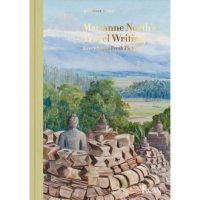 The life and work of Marianne North, the eminent Victorian botanical artist, is well documented. Do we need another book about her? Michelle Payne provides a positive answer in this well-illustrated volume. She aims to modify the dominant image of North as an intrepid lone traveler to the many sites of her art, to show us a different, fuller picture. North always had a cast of helpers around her and benefited from her colonial connections.
 youngest of readers, and the word ‘colored’ is a pointed, satirical use of an antiquated term. The second half of the title indicates the book’s purpose: An Alphabetary of the Colonized World. In form, the book calls to mind children’s books of centuries past, which were meant as vehicles of moral education. This aim is true here, too, but the content is distinctive for its intense focus on plant discovery and naming in the historical context of conquest, colonial exploitation, and slavery. This book is a necessary counter-narrative to traditional white Eurocentric perspectives on botany and human-plant relationships.
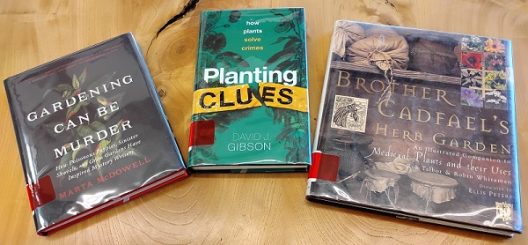 For students contemplating a career in the plant sciences, being a forensic botanist is probably not at the top of the prospective career list. Reading
 In
In 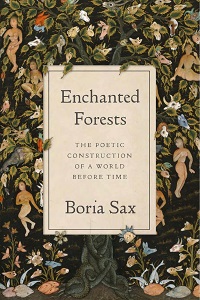 Boria Sax owns a forest. About 80 acres in upstate New York, it’s twice the size of the 40-acre farm once thought enough to support a family. From his investigation of the history of his woods, Sax moves to consider the many ways humans have thought and written about forests over centuries.
 A wood should never be vast. The best woods are small, a few acres in extent, not much more than copses” (p. 82). H. E. Bates’s book is as paean of praise to these small woodlands in England. As the title suggests, the book takes the reader through the seasons, April to April. Bates describes changes in plants, animals, but also air and atmosphere.