Skip to content

Sowing Beauty : Designing Flowering Meadows from Seed

[Sowing Beauty] cover

James Hitchmough is the chair of the Landscape Architecture department at the University of Sheffield in England. On his faculty website, he describes his research as focused on the “ecology, design, and management of herbaceous vegetation.”

In his new book, Sowing Beauty, he emphasizes the practical application of this research, especially for developing naturalistic meadows in public spaces. He is a strong advocate of sowing carefully designed seed mixes, using established plants only as supplements or embellishments.

I recommend this book to all who are designing restoration sites, especially larger sites where sowing seeds is advantageous to manage costs. Hitchmough has considerable understanding and practice with the creation of new herbaceous plantings, including restoration of native grass communities in Western Australia.

Much of this hefty tome is a handbook to the many steps required in the design, installation, and future maintenance of any new planting. He includes several case studies. While many of his installations include non-invasive, exotic species, he also provides charts using natives from various regions of the world that are effective in restoration projects.

For projects that fall under public scrutiny, Hitchmough considers “how human beings interpret and value” naturalistic plantings, concluding that “human responses are generally very complex, but there are patterns.” Fortunately, he provides insights on how to work with these patterns.

Published in the December 2017 Leaflet for Scholars Volume 4, Issue 12.

Meconopsis for Gardeners: the Lure of the Blue Poppy

[Meconopsis for Gardeners] cover

To be scrupulously honest, over twenty years ago, I drank the blue poppy Kool-Aid. I was intoxicated, and have pursued this holy grail of plants ever since. This review therefore is biased. I am under the spell of this legendary plant of superb color and known transitory nature. It thrills and then is, in most cases, gone forever. Well, until the next quest and trial.

So the chance to revel in 384 pages devoted to the blue poppy is pure joy. What does this volume reveal? Christopher Grey-Wilson is well known for his past works on Meconopsis. In this book he has made full use of the expertise of The Meconopsis Group and The Alpine Garden Society in the United Kingdom. This is a trove of information from expert researchers, growers and enthusiasts of the genus. It is a connoisseur’s handbook and a very detailed guide for the aspiring Meconopsis grower.

The photos are enticingly beautiful. They are morphologically detailed, illuminating the subtle species differences, aiding in identification, which helps define suitable habitats and growing requirements. For the novice, the photos show the variety of colors beyond the outstanding sapphire blues of Meconopsis ‘Lingholm’ or M. gakyidiana. It’s a revelation to see the fancy jewel-tone colors of pinks, purples, double yellows and the aptly named white Meconopsis superba. Go straight to page 168 to see the Meconopsis ‘Kilbryde Castle White,’ which will shatter your image of poppies, with its white petals streaked with fine blue brush strokes reminiscent of an Andrew Wyeth painting.

This book has so much: genetics, exact cultivation techniques (in very handy boxed bullet points), suggested siting, legends and lore of the early poppy hunters to excite your thirst, and excellent descriptions of great gardens and nurseries worldwide where poppy cultivation flourishes…places one might visit. Oh dear.

You can’t read this book cover to cover. Dip in. Sip. Savor. It’s very fine.

Published in the January 2018 Leaflet Volume 5, Issue 1.

Encyclopedia of Life

A comprehensive biodiversity database that includes plants with information on names, habitat, growing locations, reference articles, photos, and associated relationships. The database is hosted by the Smithsonian Institution’s National Museum of Natural History.

Rhododendron Species Foundation & Botanical Garden

Home to one of the largest collections of species rhododendrons in the world, the garden displays over 700 species of rhododendrons and allied plants. Located in Federal Way, the garden is open Tuesday through Sunday year-round.

Farmer Will Allen and the growing table

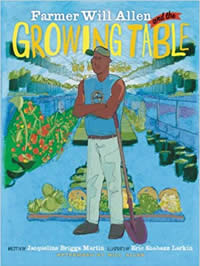
Farmer Will Allen book cover The story of Will Allen and his urban farming non-profit organization (described in his book “The good food revolution”)has inspired a book found in the children’s section of the Miller Library. “Farmer Will Allen and the Growing Table,” written by Jacqueline Briggs Martin and illustrated by Eric-Shabazz Larkin, focuses on the role neighborhood children played in helping Allen’s enterprise be successful.
In vivid colors, this book captures the diversity of food produced in these greenhouses, including the pools for tilapia, chickens for eggs, sprouts for quick greens, and hives for honey. The people are colorful, too, and of many ethnicities and ages.

The children were especially eager to help bring food garbage, and to come back every day to watch the red wiggler worms turn these scraps into compost. There is tragedy in this story, as some of the worms died until the kids discovered the proper care and feeding they required, but in the end, “the squirmy crew has stayed hard at work.”

Excerpted from the Winter 2018 Arboretum Bulletin.

American Grown

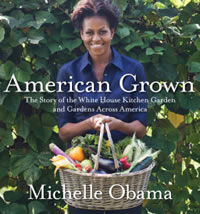
American grown book cover Michelle Obama needs no introduction and even her book “American Grown,” describing the White House Kitchen Garden she started, is already well known. For some, this may be an easy book to dismiss as a public service announcement, or worse, as a political statement. This is unfortunate, because it is a good gardening book, both for techniques and as a model of how gardening improves people’s lives in many ways.
This book has many authors. The White House gardening staff share their experiences and appreciation of the garden along with basic cultural advice, geared to both the new gardener and to those unfamiliar with the wide range of delicious foods they can easily grow. White House chefs share tips on harvesting and preserving, and provide recipes that make it simple to add more fruits and vegetable to your diet.

Equity and diversity are quiet, background themes in “American Grown”, but it clear that in this garden “equality is a key part of the message of planting day. We are all down in the dirt. Anyone present can help dig. There is no hierarchy, no boss, and no winner.”

Obama also reaches out to those involved with community gardens, school gardens, and food resources across the country (including Will Allen), and with other programs that encourage exercise for youth and healthy school lunch choices.

One such garden is the New Roots Community Farm in San Diego, where gardeners from Uganda, Kenya, Vietnam, Mexico, and Guatemala began working together. “At first, they weren’t sure how people from so many different countries would get along—especially since the garden had only two hoses to share and the farmers often didn’t speak the same language. But their enthusiasm and determination drew them together.”

Excerpted from the Winter 2018 Arboretum Bulletin.

The Color of Food

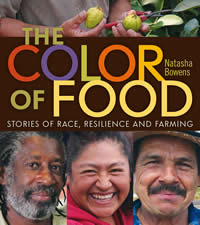
Color of food book cover In describing her book, “The Color of Food,” Natasha Bowens explains, “I never would have imagined that my desire to dig in the dirt would lead me here, digging instead into the stories of farmers of color across America – Black, Latina, Native, and Asian farmer and food activists.” Initially, her interest in improving food and agriculture systems led her to working on organic farms, but often as the only “brown person” there. Through her blog (Brown.Girl.Farming), she discovers there are others like her, and decides their stories need telling.
At the same time, she was learning about her heritage, including the uneasy discovery that her white mother’s ancestors owned her black father’s ancestors. “I’m literally the product of ownership and oppression reuniting, as if to rewrite the story.”

Her trip takes her across the country. For the purposes of this review, I’ll concentrate on stories she found amongst farmers on the West Coast. These include Menkir Tamrat, who came to the United States from Ethiopia for college in the 1970s and now lives in Fremont, California. Missing the special ingredients of the favorite dishes of his native land, he recognized that he would need to grow his own. This is what he does, but also enjoys preparing traditional dishes and some of the intermediate ingredients to sell to Ethiopian markets and restaurants.

In the Skagit Valley of Washington, Nelida Martinez is a Mixteca native – from the state of Oaxaca in Mexico – who now has her own organic farm focusing on raspberries, blackberries, and various vegetables. She made this bold move after her son sickened with leukemia, possibly from exposure to pesticides at the conventional farm where his mother once worked. She describes the experience of Latino farmworkers as “a lot of humiliation for us, and many of us never think about having our own farm because we feel degraded by the work.” Now, she is very pleased to not be working “for anyone else!”

Valerie Segrest is not a farmer in the traditional sense, but rather an advocate for the foraging traditions of her people, the Muckleshoot tribe based in Auburn, Washington. This includes cooking and eating traditional foods in season, a practice that has required compromises because of dams, pollution, or what she calls “European land management styles.” While she appreciates the role of conservation, she argues that the foraging and harvesting of native peoples ensured “a balance with nature where you’re working together and not having dominion over that space. Even as foragers, we use harvesting techniques that make it look like we’ve never even been there while also actually benefitting the plant.”

Excerpted from the Winter 2018 Arboretum Bulletin.

The Good Food Revolution

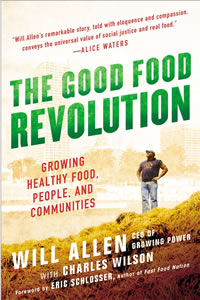
Good food revolution book cover Will Allen grew up on a small farm in the Maryland suburbs of Washington, D. C. His parents grew up as sharecroppers in western South Carolina, very close to the home of J. Drew Lanham. As a young man, he was embarrassed by his heritage, instead hoping to make his career as a basketball player.

A talented competitor in both high school and college, he had a limited career as a professional, primarily playing in Belgium. While in Europe, he had time to observe the local agricultural customs, including the many small farms using traditional, organic practices. This reawakened in his interest in growing food. After starting a successful corporate career in metropolitan Milwaukee, he began farming as a hobby.

In 1993 by chance, he discovered the last agriculturally zoned property in the poor, mostly black northern part of the city. At the time he was in his forties, doing well in his career, but feeling unfulfilled. He decided to purchase the property, leave his safe job, and open a vegetable stand because he “wanted to try to heal the broken food system in the inner-city community where my market operated.”

He also wanted to connect Wisconsin farmers to African American communities, especially as Milwaukee is one of the most segregated cities in the country. “But on our small piece of earth, we struggled and celebrated together—black and white, Hispanic and Hmong, young and old—as we worked to produce healthy food.”

This hasn’t been easy, and much of “The Good Food Revolution” by Allen (with Charles Wilson) is the story of the last 20 years of building what is now a very successful urban farming non-profit organization that not only serves its home community but has fostered similar programs in many other cities. The author is a good storyteller, praising the many individuals who contributed to his work, so that they become your heroes, too. While this work is not a panacea to all of the troubles of racism and poverty, there are many happy endings.

Excerpted from the Winter 2018 Arboretum Bulletin.