“Rare Trees” by Sara Oldfield and Malin Rivers is a most sumptuous book! Filled with excellent photographs, these show both the individual trees and the vistas of the forests they inhabit. This large book (400 pages) is a pleasure just for leafing through.
But this is much more than a picture book. The trees are typically rare because of major threats, most caused by humans. These include clearance for agriculture, unsustainable logging for timber, competition from invasive species, the introduction of new diseases or insect pests, and even plants dug for the nursery trade. The rarity of each species is indicated by its Red List status, a measure developed by the International Union for Conservation of Nature (IUCN). Most in this book are in the Critically Endangered, Endangered, or Vulnerable categories.
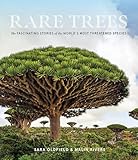 It’s hard to describe the richness of this book, there is so much to both read and absorb. The species are primarily grouped by ecosystem or genera, but departing from that structure is an especially interesting chapter based on usage, such as for medicines, edible fruits, or ornamental plantings. Throughout there are side bars and short essays that expand or highlight the basic facts. While being very clear on the dangers and dire threats, Oldfield and Rivers also give many examples of ways to address the survival of these rarities, while also preserving and typically enhancing the impact on human livelihoods.
An example is the Brazil nut (Bertholletia excelsa), an immense tree that produces an edible crop popular for snacking around the world. These trees are not suitable for orchard culture and are found primarily in the Amazon rainforest. While some measures have been taken to preserve these trees in Brazil and neighboring Bolivia, it is Peru that has developed the most robust management plan. Traditional collecting rights are protected through concessions established by individual families, and as an additional benefit, nearly 2,000,000 acres of rainforest are protected.
I have played recorders since high school and as an adult have acquired several fine instruments. Part of their beauty is the wood used in their making. In a chapter from “Rare Trees” on “Precious Timbers and Music Woods,” I learned much about the biology of the source trees and their history in musical instrument making.
Many are in the genus Dalbergia, the most valuable being D. melanoxylon, known as African blackwood or grenadilla. In addition to recorders, it is the favored wood for clarinets and oboes, and within its wide native range through much of sub-Sahara Africa, it is a popular choice for sculpture.
The range of the genus extends to the new world where other species are used for musical instruments including recorders. Examples are cocobolo (D. retusa) from Central America, and Brazilian rosewood (D. nigra), named for the pleasant fragrance it emits after being cut. This fragrance can linger for years after the instrument is made.
Until recently, these species were numerous enough to meet the demand, but a global rise in using these woods for high-end furniture has put the genus at risk. The authors describe in detail the efforts by various organizations to develop local and sustainable management of these trees.
The authors also want to engage the readers in preservation. An epilogue gives several suggestions on how anyone can help, including “visit your local botanic garden or arboretum to find out how they are helping tree conservation – and support them.” Good advice indeed!
This remarkable book won an Award of Excellence in Plants and Environmental Change from the Council on Botanical and Horticultural Libraries in 2025.
Reviewed by: Brian Thompson on August 19, 2024
Excerpted from the Fall 2024 issue of the Arboretum Bulletin
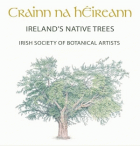 Included are 22 species of trees. As 38 artists contributed to this book, this allows there to be several images and perspectives for each. These include leaves, flowers, fruit, bark, and – for most – a full profile. The illustrations are without commentary other than brief captions that provide the artist’s name, the tree’s botanical name, its name in English and Irish, and the season of the illustration. Discrete rulers provide scale.
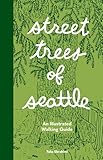 Throughout there are “deeper digs” that tell the highlights of specimen trees, or their neighborhood, or a snippet of Seattle history. For those who like facts, this is a gold mine. The author uses width as the primary measure of size as that proved the most reliable. Other nuggets include the earliest recorded date for a genus in Seattle, or the total number planted as street trees. The most numerous? Maples (Acer) with nearly 37,000, or 22% of the total.
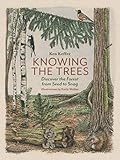 Many of the stories are about animals. A section titled “Litter Critters” highlights the ovenbird, a type of warbler that builds complex nests in the forest duff, or the wood frogs that that survive in leaf litter over winter. “Evolutionary Anachronism” suggests that the Osage-orange (Maclura pomifera) was likely spread historically by long extinct mastodons. While that role has been somewhat replaced by horses, the distribution of the tree is now much more restricted.
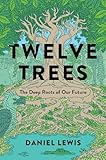 Some of the twelve trees will be quite familiar, such as the coast redwoods (Sequoia sempervirens). Others, such as the gigantic ceiba (Ceiba pentandra) of Central and South America, may be new to readers. New to me was the toromiro (Sophora toromiro), a small tree that is no longer found on its native island of Rapa Nui, also known as Easter Island, although there are efforts to restore it. One chapter even profiles an extinct tree, Humenaea protera, that is the source of much of the world’s amber or fossilized resin.
 This story begins with the winter blizzards of the northern prairie ecosystem of the United States and Canada. Underneath the snow an incredible amount of life continues. This includes the roots of the milkweeds and the various insects, fungi, small mammals and other creatures surviving and even thriving. Exploring this world down to the cellular level, this could be heavy-going, but Lee-Mäder has a light touch, making these complex scientific principles quite easy to understand.
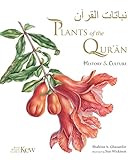 The text gives detailed accounts of the origins, history, and traditional uses of important plants to Muslims and other groups in western Asia and the eastern Mediterranean regions. Some of these plants, like ginger (Zingiber officinale, Zanjābīl in Arabic), have spread widely through human migrations from its native habitat in southeast, maritime Asia.
 nd this process, it is important to understand wetlands in their many forms.
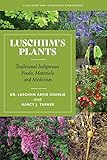 his is how Nancy J. Turner introduces her co-author of “Luschiim’s Plants’, a book on the ethnobotany of the Coast Salish peoples of southern Vancouver Island and the Gulf Islands in British Columbia. The result of 15 years of collaboration, this book discusses native plants from seaweeds to trees.
 as eager for the publication in 2023 of “A Curious Herbal: Elizabeth Blackwell’s Pioneering Masterpiece of Botanical Art,” an excellent reproduction that is near to full-size. Like in the original, these images do not follow a taxonomic system, but rather were done as the live specimens became available. It will not surprise gardeners that the first plate done in early spring is of Taraxacum officinale, the dandelion.