


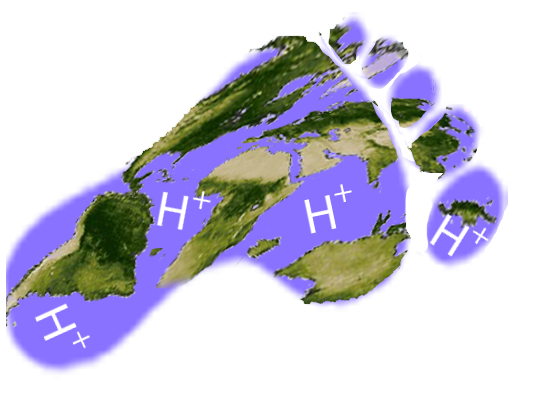
In addition to the famous impacts of atmospheric carbon on global warming, there is an equally worrisome effect of carbon dioxide on the oceans: ocean acidification (or OA for short). Here at I2SEA we have a series of resources about OA, including Our Acidifying Ocean, which is an introductory activity and virtual lab (note: now mobile compatible!).
A student suggested that we start a conversation topic about OA, and here it is! Have you heard about Ocean Acidification? If so, are you worried about it? How do you think we can best raise awareness about it among your fellow students and the general public? Have you seen particularly good links or films about OA that you would like to share? What are you doing to address the problem?
Ocean Acidification >
Ocean Acidification

What is ocean acidification? Ocean acidification is the ongoing decrease of the ocean's pH, due to the larger uptake of CO2 in the Earth's atmosphere. Over the last 200 years, the ocean's pH has fallen by 0.1 pH units, which indicates a 30 percent increase in acidity. The ocean is one of the largest factors in CO2 absorption with 30% of CO2 in the atmosphere being absorbed. When CO2 is absorbed by the seawater, a series of chemical reactions happen, due to the increase in hydrogen ions, and make the water more acidic. Oysters, coral, and clams are shell builders, meaning that they need hard shells and skeletons by combining calcium and carbonate that is in the ocean water. As the ocean becomes increasingly more acidic, most available carbonate ions bond with the excess hydrogen leading to less carbonate ions being available to the shell builders to maintain their shells and skeletons. This means that shell builders are more susceptible to dissolving in the acidic seawater. Also caused by the high CO2 levels, not just in the ocean, are warming temperatures. These warming temperatures lead to these shell builders to become 'bleached' and is most often seen in coral. The coral reject their symbiotic algae that live in their tissue and become white. The coral become vulnerable and without a solid way to sustain themselves, ocean acidification takes a larger toll on the coral and shell builders.
Links referenced: https://www.noaa.gov/education/resource … e%20acidic.
https://www.aims.gov.au/docs/research/c … ching.html