


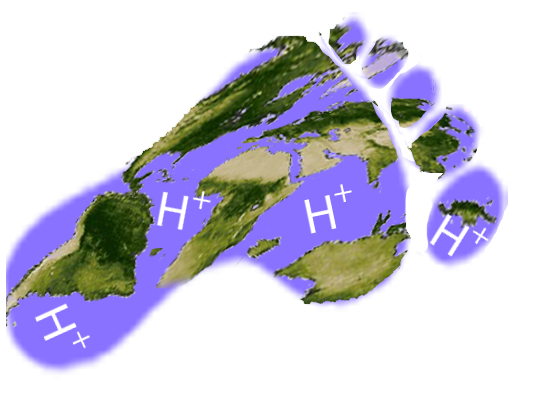
In addition to the famous impacts of atmospheric carbon on global warming, there is an equally worrisome effect of carbon dioxide on the oceans: ocean acidification (or OA for short). Here at I2SEA we have a series of resources about OA, including Our Acidifying Ocean, which is an introductory activity and virtual lab (note: now mobile compatible!).
A student suggested that we start a conversation topic about OA, and here it is! Have you heard about Ocean Acidification? If so, are you worried about it? How do you think we can best raise awareness about it among your fellow students and the general public? Have you seen particularly good links or films about OA that you would like to share? What are you doing to address the problem?
Ocean Acidification >
Ocean Acidification and Shelled Organisms

Ocean Acidification is a very serious problem stemming from carbon emissions. Ocean Acidification happens when excess carbon dioxide is absorbed into the ocean. The water molecules react with the carbon dioxide molecules and create carbonic acids, which in turn increase the acidity and lower the pH of the water. These carbonic acids are extremely detrimental to sea life and are destroying ecosystems around the world. Ocean Acidification is especially harmful to organisms that create shells. The carbonic acids dissolve and weaken these shells, making it hard for these creatures to survive due to loss of protection, a home, and energy. Animals have to exert more energy to build their shells, resulting in less energy being put towards reproduction, leading to a decrease in the species’ population. On top of this, Ocean Acidification makes it difficult for these creatures to build their shells in the first place because of a lack of calcium carbonate. Normally, shelled organisms combine calcium ions with carbonates to make calcium carbonate, a key component of their shells. However, hydrogen ions from the broken-down carbonic acid bond with the carbonate ions to make bicarbonate ions. The organisms cannot extract the necessary carbonate ions from this bicarbonate to make their shells, resulting in weak, thin, and sometimes partial shells.