


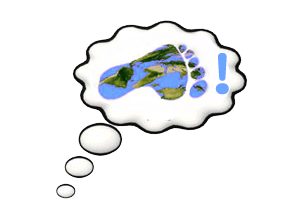
Now that we see what our collective and personal impact is on the planet, let's think big!
What big and bold ideas do you have for reducing personal, community, country and even global carbon footprints?
Use this space to develop and discuss your big ideas! Who knows- maybe one of these ideas can be the next key solution to the global climate challenge!
Think Big >
The balance between the human race and the well-being of our planet

The balance between the human race and the well-being of our planet is quite difficult to balance. People need more and more things that are not exactly friendly to the environment and the planet. what can we do to balance the balance? I think we should reduce as much as possible the objects that we don't really need or replace them with others that are better for the environment. I admit that I also buy some things (clothes for example) that are not really useful to me, taking into account that I have so many good things that I could continue to wear. therefore, I will try as much as possible not to spend so much money on things I don't need, but to invest them in things that will also help the planet.

To add on to you’re point I think people should use more recyclable materials that are biodegradable, as well as organize more events for recycling, cleaning and informational ones too because it is very important to learn about how much one piece of plastic can damage the environment, and the ways that our pollution can affect animals and plants. We need to be aware that we are the cause of pollution and that only we can fix pollution and save our planet.

I completely agree! I often buy new items without considering what I already have and how my purchases will affect the planet. I feel it is important to pay attention to the packaging of items and minimize our purchases of plastic or other packaging materials that are harmful to our planet. It would also be great for communities to continue to transition from plastic products to more paper products. In addition, it is essential to enforce recycling and composting policies to limit the amount of waste dumped on land, making its way to our ocean, polluting the water, and hurting marine animals. We definitely need to be more conscious of our daily actions and their effects. Has your community taken any effective steps to further protect and heal our planet? Do you have any other ideas on how to do so?

I also agree very strongly marlow. It is important to recycle as much as possible.My community hasn't done this but i have researched a lot on cleaning plastics.One project I found interesting was an organization called The Ocean cleanup, It took a net attached to two tug boats that collect plastics in ocean hotspots . Although this form of cleaning is effective i feel it is not as sustainable as other projects due to a boat being driven around the ocean a lot which could effect the marine ecosystems as well as effect the carbon footprint.A great way to clean up in your community without needing many tools is to organize ocean and river clean ups, river clean ups are very important because our world only uses 1% of the 71% of water on earth and it is getting limited everyday due to waste in our fresh water.
As demand for new products such as clothing and technology increase, carbon dioxide and greenhouse gas emission follows, and even through beach cleanups and ocean cleanups and efforts to recycle plastics, metals, and rare earth minerals, our efforts to combat climate change do little to reduce climate change itself. While investing in the planting of new trees and ecosystems is an effective way to combat climate change and absorb some of the greenhouse gas emissions from the Earth's atmosphere, companies and government entities can do more to invest in ways to absorb CO2 through new technologies and developments. Much like how new inventions grant are given through the NIH (U.S. National Institute of Health) and government organizations, the UN and other national entities could use some of its own funding to develop a CO2 and greenhouse gas emission invention team composed of internationally-recognized and accomplished resources to develop new materials and processes that could help to temporarily or permanently absorb greenhouse gas emissions. One example of developments of inventions to combat the production of carbon-dioxide is Stanford University's creation of a new carbon-dioxide trapping material in their laboratory. In late February of this year, Stanford chemists were able to revolutionize a new process to permanently sequester atmospheric carbon dioxide using common minerals and materials. With the creation of new dedicated carbon-dioxide fighting invention teams, will the United States and other countries around the world be able to reach its goal of net-zero and 2 degrees Celsius over the next 100 years?
You make a great point about how our habits affect the planet. Reducing unnecessary purchases and choosing eco friendly alternatives is a strong step toward restoring balance between human needs and environmental health. By being mindful of what we buy and supporting sustainable products, we can all play a part in protecting the Earth’s resources for future generations.
I think you make a good point. What a lot of people forget when they buy clothes is that the materials in clothes require energy to grow, process and assemble into our items. The problem is that in countries in the modern world, people find clothes for not so expensive, making them more likely to spend on a whim rather than necessity. An example of this is that you don’t really need more than 2 pairs of shoes, just one for regular wear and one for formal occasions.
I agree with your statement. That us humans needs to be aware of the environment around us and how we are affecting it in today's society. What you said is good to spend less on extra clothing you don't need and things that you don't really use a lot and spend it on more eco- friendly causes. Even if its smaller actions like recycling and choosing sustainable products this can have an impact on this planet.
I agree with your statement I also think you make a good point when you said " I think we should reduce as much as possible the objects that we don't really need or replace them with others that are better for the environment." but I have one question? What can we change to make cloths and other things more safe for the planet and more affordably for the community.