


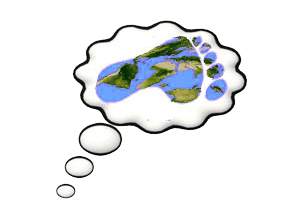
Students from around the world calculated their class mean and standard deviations for their footprints and posted them on our world map.
Do you see differences across the globe? If so, why do you think those differences exist?
Did you use the calculator to try to reduce your footprint down to the average from a citizen of another country? What changes would you have to make to lower your footprint in this way? Are you going to try and take some of these actions in your daily life?
Student Footprints >
Ecology

We live on a very beautiful planet – on the Earth. Our planet has very rich resources: the bright blue of the sky, fresh, crystal-clear mountain lake water, the rich green of the mountains slopes, wild flower, picturesque views – all these sceneries of nature fill us with admiration.
That’s why those who live in cities prefer spending their days off and their holidays far from the noise of the city, to be closer to nature. Perhaps they like to breathe fresh air or to swim in clear water because the ecology is not so poor as in the cities.
Ecology is the study of the ways in which organisms (plants and animals) depend upon each other and upon their surroundings. Each organism requires conditions in order to be able to live and breed. These conditions are its environment by changing the ecological conditions.
So, pollution is one of the most burning problems of nowadays. Now millions of chimneys, cars, buses, trucks all over the world exhaust fumes and harmful substances into the atmosphere. These poisoned substances pollute everything: air, land, water, birds and animal s people. So, it is usually hard to breathe in the large cities where there are lots plants. Everything there is covered with soot and dirt. All these affect harmfully.