


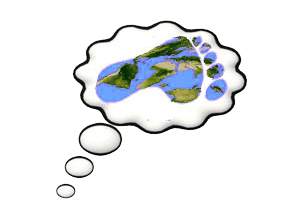
Students from around the world calculated their class mean and standard deviations for their footprints and posted them on our world map.
Do you see differences across the globe? If so, why do you think those differences exist?
Did you use the calculator to try to reduce your footprint down to the average from a citizen of another country? What changes would you have to make to lower your footprint in this way? Are you going to try and take some of these actions in your daily life?
Student Footprints >
Electronic & Car Use

Sadly enough, there are things in my life that I am unwilling to give up. Electronics are a big problem, but I do not want to get rid of them. I depend on them for most things that I do. For example: school work, social media, getting in contact with people, and much more. Research shows that owning and utilizing a cellphone produces 16 kg of CO2. That is a lot of carbon, which is bad for our atmosphere. This also increases our carbon footprint. In science class we learn that carbon can get into our oceans and cause ocean acidification, another big problem. Another really bad carbon producer that I am unwilling to give up is cars. I think most people can agree with me on this. Cars can take you anywhere and everywhere you want to go. Although they have their pros, they also have their cons. Cars produce carbon and bad chemicals that are released into the air. This produces really bad air pollution. What do you think we could do to decrease the amount of carbon we produce by electronics and cars?

Cars knowingly give off more CO2 than cell phones. Although cell phones are a critical part in todays society if you think about it if the carbon dioxide levels become more out of control there will be no reason for cell phones. Cars are a part of just about everyones every day life. Alternatives can be taken to decrease the emission of carbon dioxide like hybrid vehicles and public transportation.