


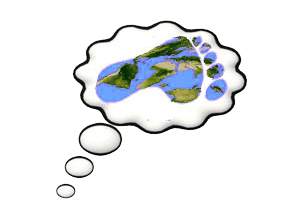
Students from around the world calculated their class mean and standard deviations for their footprints and posted them on our world map.
Do you see differences across the globe? If so, why do you think those differences exist?
Did you use the calculator to try to reduce your footprint down to the average from a citizen of another country? What changes would you have to make to lower your footprint in this way? Are you going to try and take some of these actions in your daily life?
Student Footprints >
Turn the lights off

A lot of people often leave the lights on every time they leave a room. They often do it because they think they will be back really soon and they can turn it off then. Little do they know that temptations are strong, and before they know it, they are distracted and doing something different, forgetting about the lights. This ends up wasting so much electricity for the environment. So every time one leaves a room, they should turn the lights off because they don't know how much they are helping the environment.
I agree, I think that I have a very bad habit of leaving the lights on in my room once I leave it. I think that the best thing to do is to keep only one or 2 energy efficient lights per room. Maybe just use a large candle or lantern to light each room. I know that it sounds ridiculous, but it will definitely be enough to light up a room. Either that or we must make sure to turn off the lights.
I completely agree with you. I often get distracted when I leave a room and forget that the lights are on. While on its own it does not take up much power, compounded over time, many lights can use a lot of power. It is better to open a window if you need light during the day and only use lights at night. It is also important to realize how useful LED bulbs are, as they can use only a fraction of the power incandescent or fluorescent bulbs do. I completely agree with you and how important it is to turn the lights off.
I completely agree with you. I often get distracted when I leave a room and forget that the lights are on. While on its own it does not take up much power, compounded over time, many lights can use a lot of power. It is better to open a window if you need light during the day and only use lights at night. It is also important to realize how useful LED bulbs are, as they can use only a fraction of the power incandescent or fluorescent bulbs do. According to thesimpledollar.com, LED lights use only 10w while incandescent lights use 60w. Additionally, LED lights can last much longer than incandescent lights and be much brighter at the same time. I completely agree with you and how important it is to turn off lights when you leave the room, and if you still find yourself forgetting, consider investing in LED lights.

I agree with this. I think that many people in the world turn on their lights but always get distracted and leave them on when they leave. Leaving our lights on too long can use up to much carbon and electricity which is bad for our planet. If we just make a small adjustment and turn off lights we can help change the amount of carbon used just a little bit.
I agree, I think that I have a very bad habit of leaving the lights on in my room once I leave it. I think that the best thing to do is to keep only one or 2 energy efficient lights per room for practical reasons. Maybe just use a large canteen or lamp to light each room. I know that it sounds flamboyant, but it will definitely be enough to light up a room. Either that or we must make sure to turn off the lights all the time.
I also completely agree. I think that there are so many lights in your house that you might be leaving on that contribute to wasting energy and turning a switch a does so much. I think many people also get distracted or are in rush and forget to turn off lights which takes up a lot of energy more than many realize. It's just a habit most people have and forget to do it, but not only turning off lights when leaving a room but also using natural sunlight during the day when you can, can reduce the amount of carbon and electricity used.