


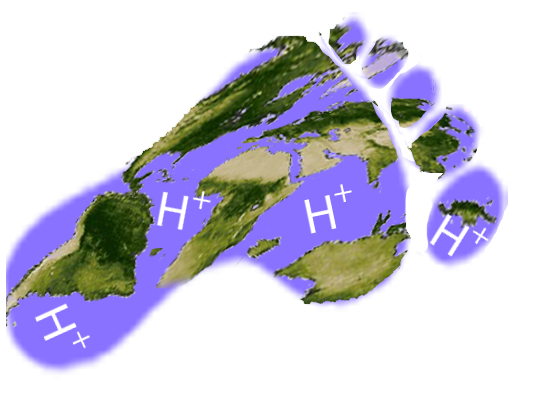
In addition to the famous impacts of atmospheric carbon on global warming, there is an equally worrisome effect of carbon dioxide on the oceans: ocean acidification (or OA for short). Here at I2SEA we have a series of resources about OA, including Our Acidifying Ocean, which is an introductory activity and virtual lab (note: now mobile compatible!).
A student suggested that we start a conversation topic about OA, and here it is! Have you heard about Ocean Acidification? If so, are you worried about it? How do you think we can best raise awareness about it among your fellow students and the general public? Have you seen particularly good links or films about OA that you would like to share? What are you doing to address the problem?
Ocean Acidification >
Ocean Acidification

Ocean acidification is a constant and growing problem in our world today. Pacific Marine Environmental Laboratory defines ocean acidification as "when carbon dioxide (CO2) is absorbed by seawater, chemical reactions occur that reduce seawater pH, carbonate ion concentration, and saturation states of biologically important calcium carbonate minerals". The carbon footprints of people around the world are contributing to the ocean acidification. "OA" affects marine life and animals too. The skeletons of marine creatures are sensitive to acidity. Small changes in the pH of ocean water can impact the chemical communication, reproduction, and growth of marine life according to http://ocean.si.edu/ocean-acidification. Coral reefs, oysters, mussels, urchins, algae, fish, and starfish will all be, if not already have been, affected by OA and the changes in the pH. Unless we begin taking action soon, many species of marine life will be gone because of ocean acidification.

Dear Keiani
Many thanks for posting on this very important and under-appreciated topic!
I wanted to let you and the other ISCFC participants know that on our umbrella I2SEA website (http://i2sea.stanford.edu) you will find numerous resources related to ocean acidification, including a tutorial and virtual lab called "Our Acidifying Ocean" where you can 'conduct' an experiment looking at the future impacts of OA on sea urchin larvae.
And your post, Keiani, reminded me that we should have an explicit discussion page about OA - I will set one up soon!
Jason,
I'll make sure to check out the lab; it sounds really cool! Thank you so much for taking the time to reply to me, I'll make sure to be posting to the OA page when it's up!
Great! I'll reply to this thread when it is!
Keiani- the OA forum is up, and this is now the first post 
I really liked this post and how you brought attention to the topic. I think that when people learn that the ocean dissolves CO2 and therefore takes it away from the atmosphere, they generally just think of the positive aspects of that. I think it is important to understand that this process is not a good thing for ocean. I have been to the Marine Mammal Center in Sausalito and they also mentioned that pH levels are really important for an animal's health, but never really mentioned that it affects the skeletons of animals in particular as well as other effects. Thanks for sharing this and I also plan on reading that article you posted.