


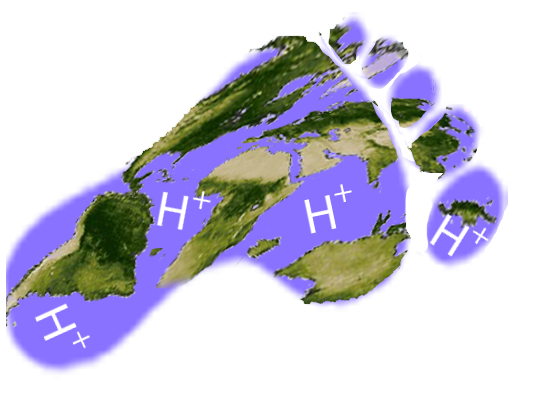
In addition to the famous impacts of atmospheric carbon on global warming, there is an equally worrisome effect of carbon dioxide on the oceans: ocean acidification (or OA for short). Here at I2SEA we have a series of resources about OA, including Our Acidifying Ocean, which is an introductory activity and virtual lab (note: now mobile compatible!).
A student suggested that we start a conversation topic about OA, and here it is! Have you heard about Ocean Acidification? If so, are you worried about it? How do you think we can best raise awareness about it among your fellow students and the general public? Have you seen particularly good links or films about OA that you would like to share? What are you doing to address the problem?
Ocean Acidification >
How Carbon Dioxide is Hurting the Sea

Carbon dioxide not only is hurting our atmosphere creating global warming, it is also targeting our oceans. Carbon dioxide seeps through volcanic vents in the ocean floor. This creates carbonic acid, which is extremely corrosive in large amounts. Also, the carbon dioxide we let into the air mixes with the top layers of the ocean and they "absorb roughly a million tons every hour."(1) It is hard for sea life to thrive in water that is slowly acidifying. Almost nothing lives in the areas that the ocean has the highest concentration of carbonic acid. Seawater in its natural state should have a pH of about 8.2, and so far that number has been reduced by about 0.1. On the pH scale that means that it will because 30% more acidic. This will affect a lot of sea life, and it is not expected that life in the ocean will ever adapt to the acidification in the sea. "Those species have had 'generations on generations to adapt to these conditions,' Hall-Spencer said, 'yet they're not there.'"(1) Coral reefs are one of the sea life this is being affected. "25 percent of all species in the ocean spend at least part of their life in coral reef systems,"(1) and corals are being destroyed by the rising water temperature, overfishing, and the growth of algae are the most immediate effects on the coral, and carbon dioxide effects the reproduction of coral polyps which form the layer of living tissue at the surface of the reef. If they don't reproduce enough then the coral will not grow and will erode, which will kill many species within the coral reefs. There doesn't seem to be a possible way to reverse the effects of carbon dioxide in our oceans. This is too much sea water to try change the water back with chemicals. Scientists are still forecasting in the future what the oceans might look like and how they might be able to fix this problem.
(1) Kolbert, Elizabeth. “The Acid Sea.” National Geographic Magazine - NGM.com, Apr. 2011, ngm.nationalgeographic.com/print/2011/04/ocean-acidification/kolbert-t ext.