


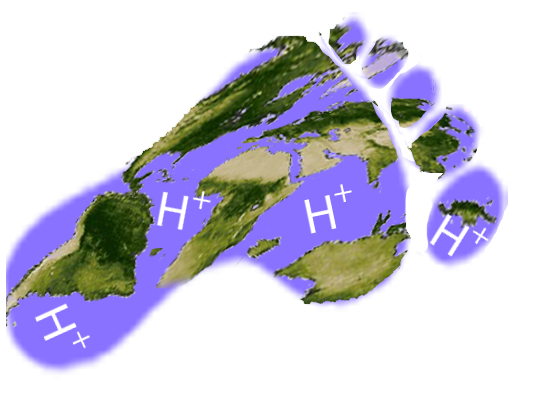
In addition to the famous impacts of atmospheric carbon on global warming, there is an equally worrisome effect of carbon dioxide on the oceans: ocean acidification (or OA for short). Here at I2SEA we have a series of resources about OA, including Our Acidifying Ocean, which is an introductory activity and virtual lab (note: now mobile compatible!).
A student suggested that we start a conversation topic about OA, and here it is! Have you heard about Ocean Acidification? If so, are you worried about it? How do you think we can best raise awareness about it among your fellow students and the general public? Have you seen particularly good links or films about OA that you would like to share? What are you doing to address the problem?
Ocean Acidification >
Ocean Acidification

Ocean acidification has been going on for years and posing a big threat to sea life, yet it is not a widely discussed issue. Our oceans are becoming more and more acidified which is why this problem is known as ocean acidification. But why is this happening? Well to start, our oceans absorb around 30% of carbon dioxide emitted into our air, in fact 1 million tons of carbon dioxide are absorbed each hour by our oceans. This then affects the pH in the ocean, and even a ph drop of 0.1 can mean that the water becomes 30% more acidic. Scientist predict that if our current habits continue the water will become 150% acidic than it was in 1800. Now that you know what is happening to our oceans think about what it affect it will have on our sea life, marine biologist are already seeing the affects of ocean acidification. Researchers are seeing the changes in smaller sea life like pteropods, which lie at the bottom of the food chain they are important to fish, whales, and birds. Pteropods shells are developing slower in the more acidified water, this means that it will take longe r to stabilize their population, at the rate that they will be eaten as food for other animals. But ocean acidification isn't just affection smaller sea life it's also having a big impact on coral reefs. Now coral reefs are a very important part of our oceans as 25% of all species in the ocean pens at least part of their life in a reef. Coral reefs serve as a giant home to fish, turtles, sharks etc. But the rise of acid in our oceans is affecting the coral’s ability to make new colonies, researchers found that certain corals declined by 14% in the great barrier reef. That mean that more and more coral are missing from where they should be, and if this continues to happen then whole ecosystems would collapse leaving many species of sea life homeless.
Sources: National Geographic "The Acid Sea"
CO2 pollution in our oceans in a serious problem which comes from things we do everyday. One third of our C02 emissions from cars and factories is absorbed by our oceans. Oceans have absorbed 30% of C02 over the past 200 years which is about 530 billion tons of CO2. The C02 either gets stored in seagrass or is dissolved in the ocean water. This makes the ocean water more acidic. CO2 pollution affects species with shells by dissolving the shells of the younger shellfish. This is happening to oysters in Oregon right now. Acidification also affects coral reefs. Scientists predict they may be extinct in 50 years. Nearly 35% of marine life is associated with coral reefs. Both of these things affect the entire ocean food web.
The best solution to change ocean acidification is to reduce CO2 emissions. We also have to create marine protected areas and stop harmful fishing practices that would help marine life. Luckily there are many organizations that are look ing at this problem. I found some really helpful information in this article: http://www.nativeenergy.com/how-co2-pol … ocean.html