


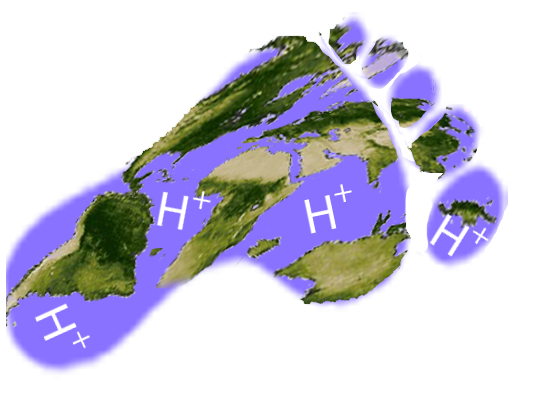
In addition to the famous impacts of atmospheric carbon on global warming, there is an equally worrisome effect of carbon dioxide on the oceans: ocean acidification (or OA for short). Here at I2SEA we have a series of resources about OA, including Our Acidifying Ocean, which is an introductory activity and virtual lab (note: now mobile compatible!).
A student suggested that we start a conversation topic about OA, and here it is! Have you heard about Ocean Acidification? If so, are you worried about it? How do you think we can best raise awareness about it among your fellow students and the general public? Have you seen particularly good links or films about OA that you would like to share? What are you doing to address the problem?
Ocean Acidification >
Possible Solution for Reducing Ocean Acidification

Although increased temperatures and weather conditions are seen as the main effects of climate change, ocean acidification is an equally concerning effect that threatens to harm sea life so drastically it can have repercussions in the global food production.
Ocean acidification occurs when carbon enters the ocean, creating a chemical reaction that eventually results in two bicarbonate ions or increased acidity. Due to our drastic incline of carbon emissions over the past two centuries, the ocean has so far increased its acidity by 30% (a 0.1 drop on the pH scale). Continuing on this trend, scientists know that there will be drastic changes in the ecosystem if the sea’s rising acidity does not stop soon. For example, coral is greatly impacted. Rising acidity makes it harder for coral to get the nutrients it needs and its reproduction is put at risk. Since coral hosts about 25% of sea life, the risk of this one creature puts many other species in danger.
One thing I found during research on ocean acidification is that the ways of chemically counteracting the acidity (such as adding lime, chemically absorbing, and boosting plankton growth) are generally met with concern for ecological side effects. However, one solution (found in a study by Yale) is of lower-cost and lower-risk and utilizes a naturally occurring process: seagrass or kelp. These plants amount to 0.05 of the land’s biomass, however, each day they effective enough to cycle the same amount of carbon as all land-based plants. However, seagrass has been wiped out due to water pollution and diseases, making it a threatened ecosystem. Additionally, kelp is known for absorbing excess nutrients and cleaning waters. In fact, one of the biggest challenges of land based nurseries is that they have too high of a pH (meaning they are more alkaline) because they consume too much CO2.
By using these plants to fight ocean acidification, there many be an eco-friendly, cost-effective, and natural way to counteract ocean acidification while using natural processes. Please give me your opinion: Do you think these plants are a viable solution? Are there other processes that can help stop the increasing acidity?
Sources: http://e360.yale.edu/features/kelp_seag … on_netarts

I recently read an article about Iron Fertilization - A process in which iron is dumped into parts of the ocean that are lacking, which stimulates the growth of Phytoplankton.
Phytoplankton are a crucial part of the marine ecosystem - they self-feed, and are the base for every food web in the ocean. Their growth contributes to both oceanic productivity in population growth, and carbon dioxide removal from the atmosphere.
[read more](http://www.slate.com/articles/technolog … hange.html):
When there is a major problem that affects the entire world, like ocean acidification, there are many ways that the government and major corporations are trying to fix them. Even though doing these things are very important, only very wealthy and powerful groups can do them. Only the government can facilitate the mass addition of iron to the water. Then there is the rest of the population. What can the individuals do to help? Can efforts made by regular citizens make the real difference? Individuals are the ones who started all these problems. Everyday citizens are the ones asking for plastic products and driving personal cars across city lines. Individuals are the ones who don't think about all the effects of their activities. Maybe problems can start getting solved if people make their own personal efforts to reduce their carbon footprint. Although this may be a slow process, the efforts will build up and make a real difference. In fact, that slow build up of carbon dioxide is what caused these problems in the first place.
Read this article to find out what individua l citizens can do to change the amount of carbon being released into the air, and ultimately, into the water: http://climateinterpreter.org/content/h … dification