


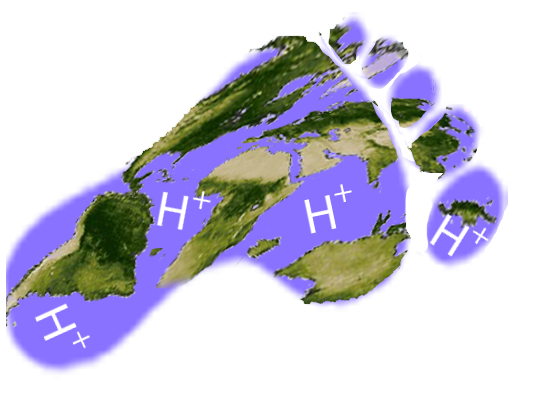
In addition to the famous impacts of atmospheric carbon on global warming, there is an equally worrisome effect of carbon dioxide on the oceans: ocean acidification (or OA for short). Here at I2SEA we have a series of resources about OA, including Our Acidifying Ocean, which is an introductory activity and virtual lab (note: now mobile compatible!).
A student suggested that we start a conversation topic about OA, and here it is! Have you heard about Ocean Acidification? If so, are you worried about it? How do you think we can best raise awareness about it among your fellow students and the general public? Have you seen particularly good links or films about OA that you would like to share? What are you doing to address the problem?
Ocean Acidification >
The effects of Ocean Acidfication

According to http://www.noaa.gov/resource-collection … dification , “The ocean absorbs about 30% of the CO2 that is released in the atmosphere, and as levels of atmospheric CO2 increase, so do the levels in the ocean. This has resulted in an increased concentration of hydrogen ions, which causes the seawater to become more acidic and carbonate ions to be less abundant. Carbonate ions are an important building block of structures such as sea shells and coral skeletons. Decreases in carbonate ions can make building and maintaining shells and other calcium carbonate structures difficult for calcifying organisms such as oysters, clams, sea urchins, shallow water corals, deep sea corals, and calcareous plankton. It can affect the behavior of non-calcifying organisms as well due to changes in ocean chemistry. The ability of certain fish, like pollock, to detect predators is decreased in more acidic waters. Additionally, greater acidity impairs their ability to distinguish between the "smell" of their own species and that of predators. These two factors create an incre ased risk of predation. The entire food web may also be at risk, when these organisms are at risk.” We can stop ocean acidification by cutting carbon pollution drastically and immediately. Today, more than a billion people worldwide rely on food from the ocean as their primary source of protein. If we continue to pollute there will be catastrophic consequences. You can find many solutions to help stop or reduce ocean acidification on this website: http://therevolutionmovie.com/index.php … solutions/
The effects of ocean acidification is causing major harm to marine organisms. According to http://ocean.si.edu/ocean-acidification, the chemical balance of the ocean has shifted to a more acidic state. The chemical balance has shifted because of CO2 dissolving into the water forming an acid. This is causing harm to some marine organisms because the acid in the water is dissolving their shells. We need to work on reducing our carbon footprint, because the population of certain marine organisms could majorly decline as a result of the increase in acidity.

I do agree that we need to decrease our carbon footprint to help the ocean, and all the marine organisms in it.