


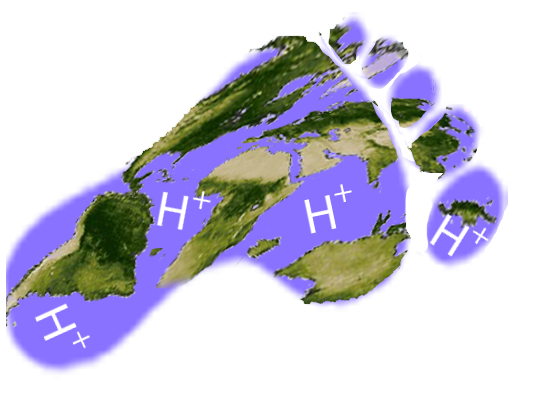
In addition to the famous impacts of atmospheric carbon on global warming, there is an equally worrisome effect of carbon dioxide on the oceans: ocean acidification (or OA for short). Here at I2SEA we have a series of resources about OA, including Our Acidifying Ocean, which is an introductory activity and virtual lab (note: now mobile compatible!).
A student suggested that we start a conversation topic about OA, and here it is! Have you heard about Ocean Acidification? If so, are you worried about it? How do you think we can best raise awareness about it among your fellow students and the general public? Have you seen particularly good links or films about OA that you would like to share? What are you doing to address the problem?
Ocean Acidification >
It's more than just organisms with shells

Personally, when I think of ocean acidification, the quintessential example out of its devastating effects that I think of is the destruction acidifying oceans have caused on coral reals. However, after researching ocean acidification, I learned from the National Oceanic and Atmospheric Administration (NOAA) that ocean acidification affects more than just coral reefs, nevertheless, organisms with shells. Ocean acidification is caused when atmospheric CO2 levels increase, thus creating more H+ ions in the oceans, which absorb 30% of the CO2 in the atmosphere. Because of the increase in H+ ions, carbonate ions, which marine organisms use to build shells, become less abundant. As a result, polyps (organisms that join together in colonies to make coral), crabs, oysters, and several other shell-building (calcifying) marine species die. However, even non-calcifying organisms are directly affected by ocean acidification. According to NOAA, increases in ocean acidity hinder the ability for larval clownfish to find habitat and for pollock fish to detect predators. These ar e only examples of the large amount of non-calcifying organisms that ocean acidification effects. Because oceans are some of the most complex ecosystems in the world, significant changes to the population size of any species, calcifying or not, can have an extreme effect on organisms in other trophic levels, including humans. For example, according to the Alaska Pollock Fishery, 30% of seafood in the US is pollock, thus, if ocean acidification continues to threaten the pollock population, it could pose an extreme threat to humans. Overall, my research on ocean acidification has taught me to broaden my view of ocean acidification and has made me seem ocean acidification as even more of a problem than I thought before. What did you previously know about the issue and what else have you learned?
Sources for research:
http://www.noaa.gov/resource-collection … dification
http://www.alaskapollock.org/pdf/Sustai … ollock.pdf