


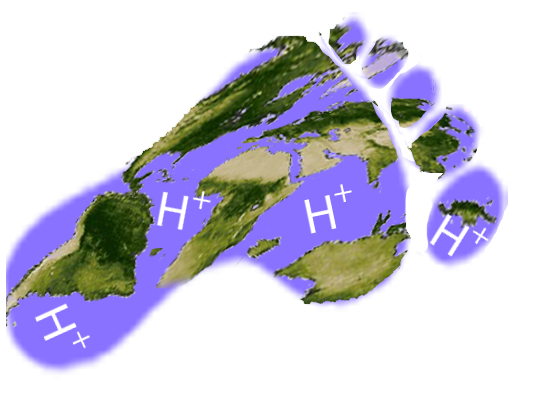
In addition to the famous impacts of atmospheric carbon on global warming, there is an equally worrisome effect of carbon dioxide on the oceans: ocean acidification (or OA for short). Here at I2SEA we have a series of resources about OA, including Our Acidifying Ocean, which is an introductory activity and virtual lab (note: now mobile compatible!).
A student suggested that we start a conversation topic about OA, and here it is! Have you heard about Ocean Acidification? If so, are you worried about it? How do you think we can best raise awareness about it among your fellow students and the general public? Have you seen particularly good links or films about OA that you would like to share? What are you doing to address the problem?
Ocean Acidification >
Act fast before the ocean no longer supports life

Climate change is caused by greenhouse gases ,like CO2, being "dumped" into the atmosphere. CO2 in the atmosphere traps a lot of the suns heat, which is why climate change is happening. Plants help the situation by absorbing some of this CO2 and releasing oxygen. The ocean also helps by absorbing some of the CO2 and dissolves it, but too much CO2 being released means the ocean has to absorb more. And now that it's absorbing more, it can't dissolve such a huge amount at such a fast rate. This means that with more CO2 release ocean water will be too acidic for marine life, and too acidic for us. The drop in marine life will affect our diets because we won't have fish too eat and other animals won't have fish to eat. All of these reasons are why we have to act fast before we're all doomed.

I completely agree with your statement that CO2 release is rapidly accelerating the acidity of the ocean. One example that supports this statement is the decline in growth of crustaceans. Dissolving atmospheric CO2 in the water is lowering the pH (thus entailing that the water is more acidic). When CO2 dissolves into the water it turns into carbonic acid. When a hydrogen atom splits off from H2CO3 it turn into bicarbonate. When the process repeats (hydrogen splitting) the molecule turns into carbonate. When carbonate fuses with calcium it form calcium carbonate. Calcium carbonate is what makes coral, sea urchins, and crustacean shells. More CO2 means less carbonate and more bicarbonate. Less carbonate means underdeveloped sea urchins and crustaceans. Let’s act fast.
I agree completely. Marine life is being harmed by our everyday life. Many people do not realize the effects that it will soon have on us. An example of a catastrophe is the Great Barrier Reef. It is the largest living thing on Earth and is home to thousands of organisms. This is one of the world's greatest natural wonders, and now it is dying. According to the Washington Post, ocean temperatures have raised, causing a "bleaching" event across vast sections of the reef. The coral is turning white and all the animals in the bleached area have left. Scientists think that the reef will never be the same. The Great Barrier Reef is showing us the impact we have on the world. If we let this continue, the whole reef would die, and later all marine life. Just like you said, the ocean affects everyone, including our diet. If it gets worse, all life will start to die. We have to acknowledge how serious our circumstances have become, and start to make a change.
www.washingtonpost.com
I completely agree. Many crustaceans and some fish rely on calcification in order to build their shells and survive. When the pH of water goes down, certain sea creatures such as sea urchins can not grow their shells due to the lack of calcium carbonate.
Calcium carbonate becomes less abundant as a result of co2 emissions. When carbonic acid increases in the oceans, bicarbonate is formed much more as well. As a result, carbonate can’t form, which doesn’t let calcium carbonate form either. Without calcium carbonate abundant in oceans, all calcifying creatures are in danger of going endangered or extinct.