


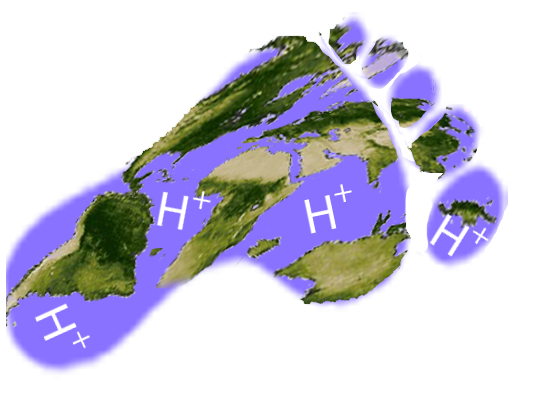
In addition to the famous impacts of atmospheric carbon on global warming, there is an equally worrisome effect of carbon dioxide on the oceans: ocean acidification (or OA for short). Here at I2SEA we have a series of resources about OA, including Our Acidifying Ocean, which is an introductory activity and virtual lab (note: now mobile compatible!).
A student suggested that we start a conversation topic about OA, and here it is! Have you heard about Ocean Acidification? If so, are you worried about it? How do you think we can best raise awareness about it among your fellow students and the general public? Have you seen particularly good links or films about OA that you would like to share? What are you doing to address the problem?
Ocean Acidification >
Increased CO2 in Oceans Harms Aquatic

Due to human activity, the carbon levels in the atmosphere are especially high. The ocean is a natural CO2 sink, where it will absorb CO2 into its waters. However, this increased amount of CO2 absorption has caused severe problems in ocean life, more specifically organisms with calcium carbonate.
When CO2 combines with water, it forms carbonic acids. This acid is what causes the acidification of the oceans. The increase of acid in the ocean is due to carbonic acids breaking down into bicarbonate and carbonate molecules, releasing more Hydrogen positive molecules into the ocean. Carbonate is a lot weaker than bicarbonate, causing the excess hydrogen atoms to bond more with carbonate to form bicarbonate.
This is harmful to the oceans because animals that need calcium carbonate to thicken shells or skeletons aren't getting enough carbonate. Ocean acidification is extremely harmful to the life, since without sufficient carbonate, animals will have weaker shells and weaker skeletons.