


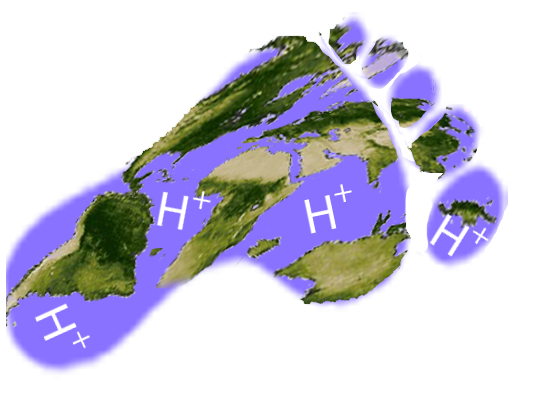
In addition to the famous impacts of atmospheric carbon on global warming, there is an equally worrisome effect of carbon dioxide on the oceans: ocean acidification (or OA for short). Here at I2SEA we have a series of resources about OA, including Our Acidifying Ocean, which is an introductory activity and virtual lab (note: now mobile compatible!).
A student suggested that we start a conversation topic about OA, and here it is! Have you heard about Ocean Acidification? If so, are you worried about it? How do you think we can best raise awareness about it among your fellow students and the general public? Have you seen particularly good links or films about OA that you would like to share? What are you doing to address the problem?
Ocean Acidification >
A Big Issue

Ocean Acidification is a big issue. According to an article by NOAA (https://www.noaa.gov/education/resource … dification), over that last 150 years the ocean has decreased in pH by 0.1. While this may not seem like a lot, it is. This is because the pH scale is logarithmic so this 0.1 increase in acidity is really a 30% increase in acidity. This relates to climate change because our carbon emissions are eventually absorbed into the ocean. While this takes CO2 out of our atmosphere, it creates an even bigger problem for marine life. The CO2 being absorbed in the water creates acid that especially harms calcium-creating organism's ability to create shells, which are necessary to their survival. Ocean acidification is also impacting humans. About 20% of the world's population rely on fish for 1/5 of their animal protein. Our carbon footprint has a bigger impact than just our atmosphere, which is why we need to work to reduce it.
In "The Ocean’s Carbon Balance" https://earthobservatory.nasa.gov/features/OceanCarbon, it talks about how the ocean traps the carbon. By burning fossil fuels, carbon is being increased into the atmosphere, which causes temperatures to rise and ocean levels to rise. As the ocean warms up, the circulation of the water slows down and the water at the surface of the ocean becomes more saturated. The ocean takes up carbon dioxide through photosynthesis by plant-like organisms like plankton. Carbonic acid release hydrogen ions, which combine with carbonate in water to form bicarbonate, which is a form of carbon that doesn’t escape the ocean easily.